For 10 000 years, African communities adapted to climate shifts through flexible, mixed livelihoods. In this article, scientists Leanne Phelps and Kristina Douglass share new research that reveals ancient resilience strategies that could inspire more effective food policies today.
Imagine living in a place where a single drought, hurricane, or mudslide can wipe out your food supply. Across Africa, many communities do exactly that – navigate climate shocks like floods, heatwaves, and failed harvests.
What’s often overlooked in the development policies to tackle these threats is a powerful source of insight: Africa’s own history.
Around 14 700 to 5 500 years ago, much of Africa experienced wetter conditions – a time referred to as the African Humid Period. As wet conditions declined around 5 500 years ago, major social, cultural, and environmental changes ensued across the continent.
We’re part of a multidisciplinary team of scientists who recently published a study about how diverse African communities adapted to climate variability over the past 10 000 years. This is the first study to explore thousands of years of change in people’s livelihoods across the continent using isotopic data.
This continent-wide approach offers novel insights into how livelihoods formed and evolved across space and time.
Prior theories often assumed that societies and their food systems evolved in a linear way. In other words, they developed from simple hunting and gathering communities to politically and socially complex societies practising agriculture.
Instead, what we see is a complex mosaic of adaptable strategies that helped people survive.
For 10 000 years, African communities adapted by mixing herding, farming, fishing and foraging.
They blended different practices based on what worked at different times in their specific environment. That diversity across communities and regions was key to human survival.
That has real lessons for food systems today.
Related stories
- Water woes leave EC farmers high and dry
- Goat and sheep farmers breed smarter to beat climate stress
Our research suggests that rigid, top-down development plans, including ones that privilege intensifying agriculture over diversified economies, are unlikely to succeed. Many modern policies promote narrow approaches, like focusing only on cash crops. But history tells a different story.
Resilience isn’t about choosing the “best” or most “intensive” method and sticking with it. Rather, it’s about staying flexible and blending different strategies to align with local conditions.
The clues left behind
We were able to develop our insights by looking at the clues left behind by the food people ate and the environments they lived in. We did this by analysing the chemical traces (isotopes) in ancient human and domestic animal bones from 187 archaeological sites across the African continent.
We sorted the results into groups with similar features, or “isotopic niches”. Then we described the livelihood and ecological characteristics of these niches using archaeological and environmental information.
Our methods illustrated a wide range of livelihood systems. For example, in what are now Botswana and Zimbabwe, some groups combined small-scale farming with wild food gathering and livestock herding after the African Humid Period. In Egypt and Sudan, communities mixed crop farming – focused on wheat, barley, and legumes – with fishing, dairy, and beer brewing.
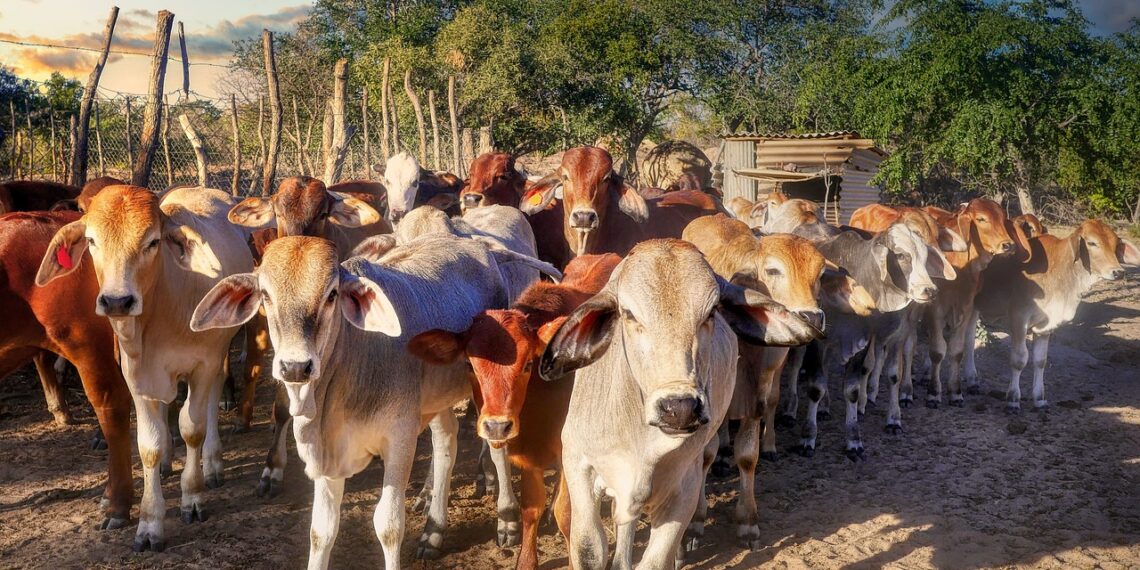
Herders, in particular, developed highly flexible strategies. They adapted to hot plains, dry highlands, and everything in between. Pastoral systems (farming with grazing animals) show up at more archaeological sites than any other food system. They also have the widest range of chemical signatures – evidence of their adaptability to shifting environments.
Our study also used isotopic data to build up a picture of how people were using livestock. Most animal management systems were reliant on grasses (plants such as millet and tropical pasture), and adapted to diverse ecological conditions. Some systems were highly specialised to semi-arid and mountainous environments.
Others included mixed herds adapted to wetter or lower elevation regions. In other cases, animals were kept as stock in small numbers to supplement other livelihoods – providing milk, dung, and insurance against crop failure.
This adaptability helps clarify why, over the past millennium, pastoral systems have remained so important, especially in areas with increasing aridity.
Mixed livelihood strategies
The study also provides strong evidence for interactions between food production and foraging, whether at community or regional level.
Dynamic, mixed livelihood strategies, including interactions like trade within and between communities near and far, were especially apparent during periods of climatic stress. One of these periods was the end of the African Humid Period (from about 5 500 years ago), when a drier climate created new challenges.
In south-eastern Africa, from 2 000 years ago, there was a rise of diverse livelihood systems blending herding, farming and foraging in complex ways. These systems likely emerged in response to complex environmental and social change. Complex changes in social networks – especially around sharing land, resources, and knowledge – likely underpinned the development of this resilience.
How the past can inform the future
Ancient livelihood strategies offer a playbook for surviving climate change today.
Our analysis suggests that over thousands of years, communities that combined herding, farming, fishing and gathering were making context-specific choices that helped them weather unpredictable conditions. They built food systems that worked with the land and sea, not against them. And they leaned on strong social networks, sharing resources, knowledge and labour.
Past responses to climate shifts can inform current and future strategies for building resilience in regions facing socio-environmental pressures.
*This article was first published on The Conversation and written by Leanne N. Phelps and Kristina Guild Douglass.
READ NEXT: G20: Agri-scientists champion smallholders and sustainability