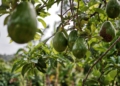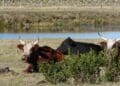
Mpumalanga is a province of diverse landscapes and crops – from summer cereals and legumes in the Highveld regions to the subtropical and citrus fruits of the warmer Lowveld. Just like the rest of the country, it is also a province of challenges to the farming sector.
Yet agriculture, rural development, land, and environmental affairs MEC Busi Shiba believes that her province could help create more jobs and revive the ailing economy through food production.
According to the Mpumalanga Economic Growth Agency, the province is already one of South Africa’s most important farming provinces and a major contributor to exports. The Mbombela district is South Africa’s second largest producer of citrus, while the Highveld regions produce more than half of the country’s soybeans.
The province also contributes to the food basket with maize, canola, sunflower, tropical and subtropical fruit, nuts, and sugarcane.
As part of a series with provincial agri ministers across the country, Food For Mzansi caught up with MEC Shiba for her take on the challenges of the day, and the actions that would create an enabling environment for further growth amongst the farmers of the province.
Tiisetso Manoko: What is the department doing to help small-scale farmers?

Busi Shiba: As a province, we are cognisant of the fact that we have a competitive advantage on grain production, especially maize, soya, canola, and sunflower. We have made it one of our priorities to increase agricultural food production.
To achieve this, we have streamlined our focus along the four main food production corridors, which include vegetables and fruits in the Gert Sibande district, such as citrus and sub-tropical fruit. In this same district, we are expanding deciduous fruit production.
In the Ehlanzeni district, our main food production is maize and sunflower, while in the Nkangala district it is soya.
Our grain farmers in the province are being supported with mechanisation and agricultural production inputs. We are targeting over 17 000 hectares of land to be planted with grains this financial year.
We are assisting our farmers – those without solid markets – to channel their maize to the suppliers who are responsible for the government nutrition programme in hospitals and schools.
Mpumalanga has its fair share of livestock farmers who produce the full range of beef, mutton, poultry, dairy, and wool. What is the department doing about animal health, particularly FMD?
We continue to do routine vaccinations in the vaccination zones of Enhlanzeni, which is the areas of Bushbuckridge, Nkomazi, and Mbombela to ensure the livestock are protected and immune to FMD.
Where there was an outbreak in the province in the Victor Khanye local municipality, the department acted swiftly to contain the disease through quarantine and vaccination of about 26 000 cattle.
There have been no further cases since 10 August 2022.
There has been much talk about – and you mentioned in your budget speech – an agricultural mall that is envisioned to include training, research, and testing facilities, a packhouse, piggery, aquaponics and even cannabis production facilities. What are the plans?
The agricultural mall will be established in the Gert Sibande district in Secunda. We are currently fencing the area.
The creation of the African Continental Free Trade Area provides a unique opportunity to boost growth, to reduce poverty, and to create jobs.
Farmers will benefit from a reduction in non-tariff barriers on goods and services and improvements in trade facilitation.

What is the aim of the youth-driven cattle breed incubation initiative for black farmers in your province?
To increase animal production in the province, we are planning to assist young black entrepreneurs to establish cattle breeding [enterprises] to supply primary producers.
This will be cheaper and will assist the department to support significant numbers of farmers in a short space of time.
This is still in the conceptualisation stage and, as such, cost implications are yet to be determined.
Is there some good news for farmers from the province who are exporting to neighbouring countries like Swaziland and Mozambique?
[Through the African Continental Free Trade Area] there will be income gains by removing long delays across most of the borders and lowering compliance costs in trade, making it easier to do business in Africa and to become integrated into regional and global supply chains.
We as the department assist our farmers with facilitations of negotiations when they reach inter-continental trade agreements, so we create a conducive environment for them.
ALSO READ: Mpumalanga PALS ‘a major step for land reform in Mzansi’
Sign up for Mzansi Today: Your daily take on the news and happenings from the agriculture value chain.