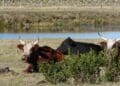
Are you eager to optimise your pasture productivity and enhance your livestock’s well-being? In this episode, Roland Kroon, managing director at Healing Hoove, delves deep into the transformative world of high-intensity grazing.
Kroon specialises in holistic management, a framework that embraces the complexity of nature and moves away from rigid systems. He emphasises the importance of holistic planning in grazing management, highlighting the need to harness the dynamic and ever-changing nature of ecosystems.
“Holistic management is a decision-making process that enables us to harness the complexity of nature,” Kroon explains.
He distinguishes between various grazing systems, emphasising that high-intensity grazing should not be treated as a rigid system imposed on nature. Instead, it should be viewed as a tool within a holistic grazing approach, focusing on animal impact and optimal grazing decisions.
Ensuring optimal animal performance
“High-intensity grazing is about concentrating animals for a short period to improve soil health and incorporate organic matter into the soil,” Kroon clarifies.
Understanding stocking rates and densities is crucial for effective grazing management. Kroon highlights the importance of matching grazing to available forage while emphasising the role of stock density in influencing animal behaviour and ecosystem dynamics.
“Stocking rates ensure enough grazing for animals, while stock densities influence animal behaviour and ecosystem health,” Kroon elaborates.
He stresses the importance of nutritional management in high-intensity grazing, emphasising the need to prioritise animal well-being. He highlights the significance of biological planning to ensure optimal animal performance while avoiding detrimental impacts on livestock health.
“Biological planning ensures that animals’ nutritional needs are met, ensuring sustainable farming practices,” he emphasizes.
Timing and frequency of rotations play a crucial role in the effectiveness of high-intensity grazing. Kroon discusses the significance of adapting grazing strategies to the growing and dormant seasons, ensuring adequate recovery periods for plants, and optimal utilisation of forage resources.
In this episode, he also discusses:
- Role of standing crop and recovery periods;
- Nutritional implications; and
- Integration with other land practices.
Want to know more? Listen to the full episode of Farmer’s Inside Track.
Option 1: Click here to listen on Spotify (all mobile and other devices).
Option 2: Click here to listen on any Apple device.
Option 3: Click here to listen on Google Podcast.
ALSO READ: How to choose prime beef heifers for farm success
Sign up for Farmer’s Inside Track: Join our exclusive platform for new entrants into farming and agri-business, with newsletters and podcasts.