For Daniel Motshwane, the world is truly an oyster—an oyster mushroom, to be precise. Born in Ikageleng township, Zeerust, in the North West province, Motshwane is a man deeply rooted in community values and inspired by his parents’ legacy of hard work and unity.
“I am from a family of seven siblings, which is so united; it’s one of the best things our parents did for us,” he says proudly. His entrepreneurial journey began early, as he recalls selling tomatoes after school to support his mother’s business, while his father was a successful farmer of both crops and livestock.
From these humble beginnings, Motshwane has grown into a dynamic entrepreneur and a driving force in both agriculture and community development. He currently leads Afrique Rising Trading (ART), a social enterprise focused on reindustrialising communities through oyster mushroom farming.
A career forged through hard work
After matriculating, he immediately sought formal employment to support his higher education, alleviating the financial burden from his parents. He pursued a diploma in sale and marketing at Damelin college. To add to his education he pursued several short courses from different institutions throughout the years as he worked.
One of his earliest achievements was at the National Sorghum Breweries, where he advanced rapidly.
“I got three promotions in less than a year, my last being a process supervisor with over 100 subordinates. This was a great milestone achieved.”
Further success followed when he joined South African Breweries, maltings division, where he excelled despite competing with qualified chemical engineers. His drive for self-improvement led him to study sales and marketing management and pursue numerous other courses, establishing a solid foundation for his future ventures.
He eventually decided to branch out on his own, a decision that led to significant leadership roles, including being appointed board chairman of the Cosmetics Export Council of South Africa for six consecutive years.
Founding Afrique Rising Trading (ART)
Founded in 2017, ART began as a platform to promote intra-African trade and link African projects with investors. With over 20 years of groundwork in business relationships across Africa and abroad, ART made its mark at a launch event attended by representatives from more than ten countries.
However, in 2020, the COVID-19 pandemic led Motshwane to shift the company’s focus towards community development through mushroom farming.
“Afrique Rising Trading is now a social enterprise focusing on community development projects through oyster mushroom training, farming, and processing, under the title ‘Reindustrialising communities through mushroom farming,’” explains Motshwane.
His aim is to use this project to tackle societal inequality, which often results in poverty being accepted as the norm in many African communities.
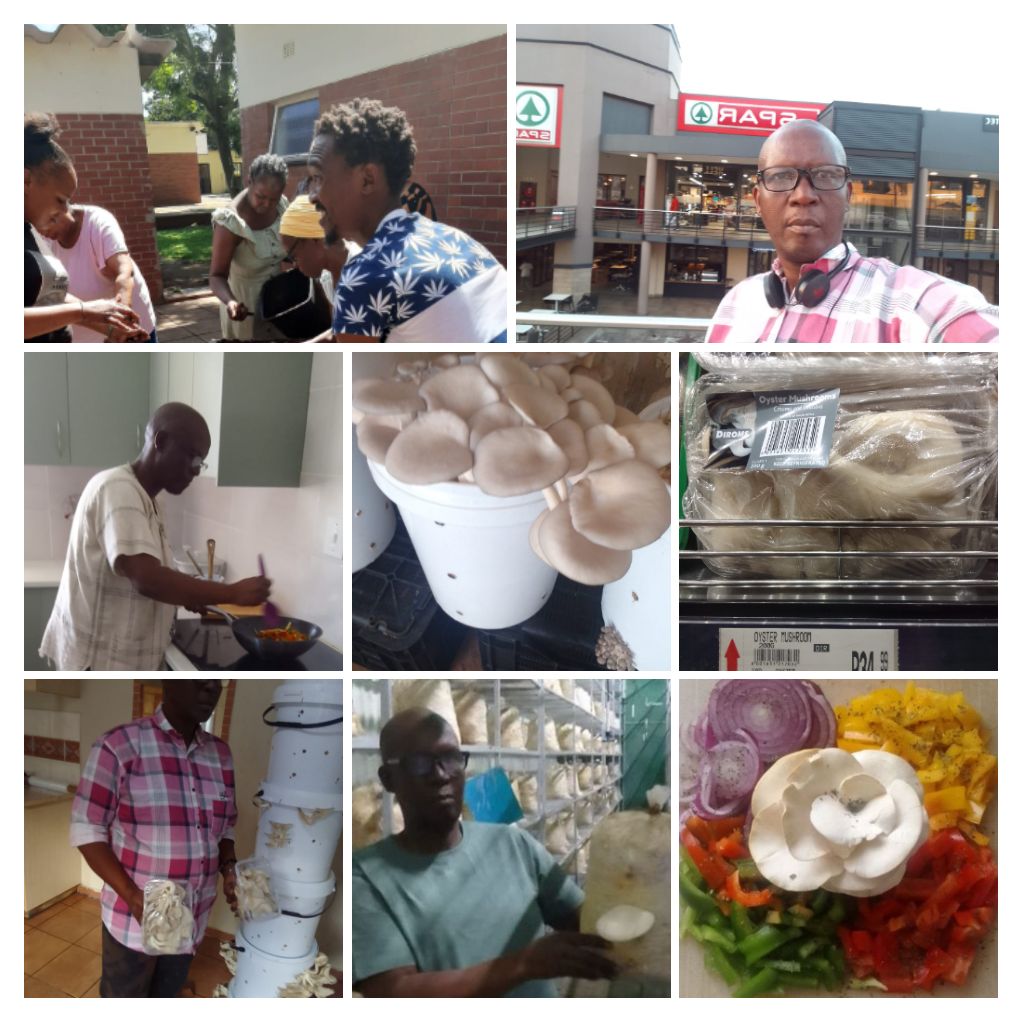
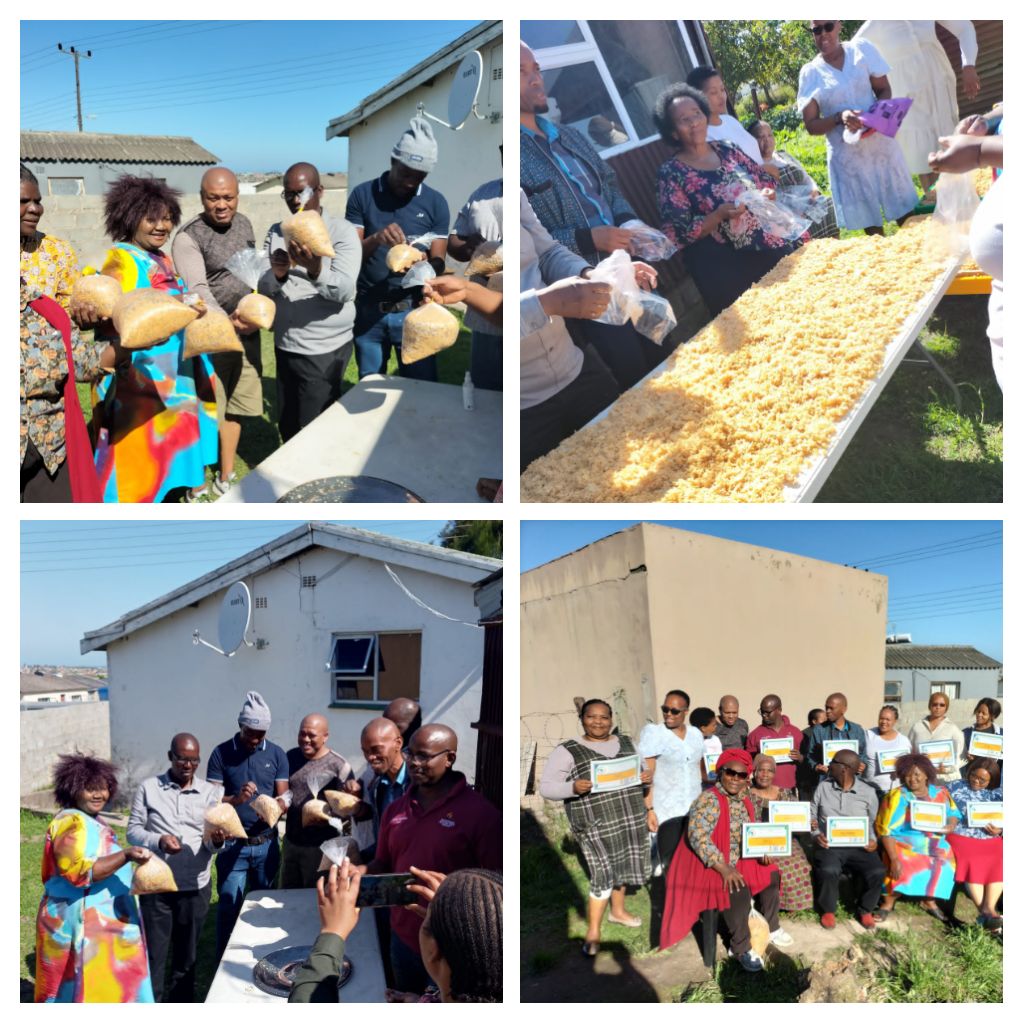
ART provides a comprehensive training and development programme designed to equip individuals with practical skills in mushroom farming. Through workshops and hands-on sessions, trainees learn the full cycle of oyster mushroom cultivation—from spawning to harvesting and packaging. ART collaborates closely with local community organisers and agricultural experts, ensuring that the training reaches a broad audience and builds sustainable, localised production hubs.
The project’s initiative aligns with 13 of the 17 UN Sustainable Development Goals, aiming to inspire economic and social empowerment. ART has already made a national impact, with over 1 000 people linked to its mushroom cluster.
The spark of oyster mushroom farming
Motshwane’s journey into oyster mushroom farming began in Malawi in 2018, where he encountered successful mushroom farmers and received training from leading mushroom experts. Upon returning to South Africa, he developed his own training materials and launched the project in 2022 in Ledig, a community in Bojanala Municipality, North West.
Despite challenges such as a lack of formal education in mushroom farming and initial scepticism from potential trainees, Motshwane persevered. His innovative strategies, such as involving community organisers to collect fees and using his own funds for training materials, allowed the project to gain significant traction.
“I overcame the first one by involving a qualified agriculturist to do the initial training for me. Then for the second one, I came up with the solution of assigning the organisers from each community to collect the registration fee from the trainees,” he explains.
This resourcefulness has been key to the project’s continued success.

A new frontier
Though the oyster mushroom industry in South Africa is still in its infancy, Motshwane sees immense potential.
“We see mainly white, Indian, and Chinese-owned companies growing these mushrooms, and very few black farmers are involved in oyster mushrooms commercially.”
He believes that increased education on the health and culinary benefits of oyster mushrooms could unlock significant opportunities for black communities to engage in the market.
Globally, the oyster mushroom market is expected to grow from USD 54.34 billion in 2023 to nearly USD 84.33 billion by 2030 . Motshwane’s vision is to ensure South Africa captures a substantial share of this market, which he believes could revolutionise rural communities.
Related stories
Combining agriculture and community development
For Motshwane, agriculture has always been intertwined with community development.
“I grew up adoring the idea of social cohesion, sustainable living through collaboration, and community development.”
His inspiration comes from projects like “letsema,” a traditional practice where communities work together in farming, promoting regenerative agriculture, food security, and job creation. Motshwane’s personal motto ‘think, visualise, research, document and start’, are words of motivation he shares with others on their path to success.
Looking to the future, Motshwane is focused on industrialising mushroom farming to create an array of products beyond fresh mushrooms. He envisions mushroom restaurants, franchises selling mushroom-based bread, and innovative products that will foster industries in rural areas. Additionally, he is dedicated to empowering marginalised groups, such as children with disabilities and children of single mothers, through training programmes that promote self-sustainability.
“My goal is not to see us selling our mushrooms fresh, but to develop an array of products that will create industries in our communities.”
His work with traditional leaders, universities, and agricultural colleges is set to further enhance the project’s impact.


READ NEXT: Zabion’s master plan: Diversify to thrive and reach the top
Get Stories of Change: Inspirational stories from the people that feed Mzansi.