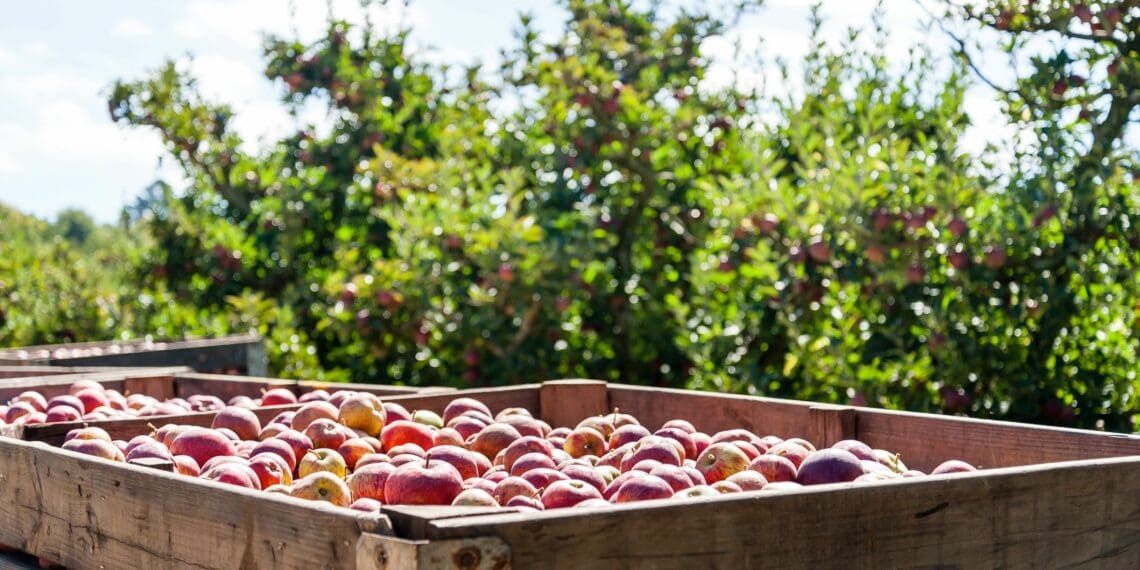
The executive director at Hortgro, Anton Rabe, envisions a promising future for the fruit industry over the next five to ten years. Speaking at a recent Tru-Cape strategy meeting in Paarl in the Western Cape, he emphasised that the local industry could struggle to meet rising global demand if new markets open up.
Rabe said he is confident that the next five to ten years are going to be incredible for the fruit industry and everyone around the table needs to step up.
“Agriculture makes up around 15-18% of the gross domestic product when you factor in the value chain, and people increasingly appreciate the industry’s value. Agriculture has the potential to create jobs, earn foreign currency, and develop stable and safe rural communities,” he said.
Port logistics still a worry
Rabe said the unlocking (or re-unlocking) of new pome and stone fruit markets is a real possibility in the short term and will be a game changer for the industry.
“I believe that India still has a long way to go in terms of market development. There are still significant opportunities in Africa, particularly for apples and pears, which tend to withstand logistical challenges better than stone fruit. The more options we have, the better for us,” he said.

While opportunities are there, Rabe predicts that the logistics crisis will last another year to eighteen months.
“Transnet’s management has improved and is more transparent and accountable, particularly in the port of Cape Town. New equipment has arrived, maintenance has improved, parts are available, and original equipment manufacturers (OEMs) are on board.
Related stories
- Testing year ahead for Tru-Cape and growers
- Citrus farmers profit from juice market amid export challenges
“I trust the productivity problems between Christmas and New Year have been resolved. Even with the wind and equipment failures, I feel optimistic that there’s a silver lining ahead. The upcoming year ahead should be less challenging,” he said.
Attie van Zyl, manager of the Two-a-Day Group, stated that the inefficiencies at the port of Cape Town are costing the Western Cape apple and pear industry around R999 million annually.
Challenges and opportunities
“For apple and pear growers, the estimated cost of the dysfunctional port is R26 300 per hectare. Macroeconomic factors Interest rates are finally coming down, making the cost of capital more affordable. However, the strengthening of the rand is not ideal for exporters,” he said.
Meanwhile, Roelf Pienaar, managing director of Tru-Cape Fruit Marketing, is particularly enthusiastic regarding prospects in the Far East.
“There are great opportunities in emerging markets where our competitors struggle with logistical difficulties. Although we need to tackle the infrastructure issues in South African ports and on our roads, our position at the southern tip of Africa allows us to reach most markets within a relatively short timeframe.
“We are also fortunate to have the rest of Africa right at our doorstep, allowing us to leverage the full spectrum of available fruits. Many of our competitors do not have access to a developing market and significant opportunities that are right within their reach,” Pienaar said.
READ NEXT: 100+ Days in: Ramokgopa charts way forward for GP agriculture
Sign up for Mzansi Today: Your daily take on the news and happenings from the agriculture value chain