 An agricultural consultation and food security group, AgricultSURE, has joined forces with Laeveld Agrochem to support the development of up-and-coming farmers not only in South Africa, but on the entire subcontinent.
According to Kobus Hurter, CEO of AgricultSURE, the partnership has developed over time and was initially based on improvised interaction. However, over the last few years, the group has increased its focus on the development of new farmers and food security at a micro level, which has steadily become an important part of their business.

Until 2014, their emerging farmer development business focused at large on South Africa, but now also includes major projects in southern African countries such as Zambia and Zimbabwe.
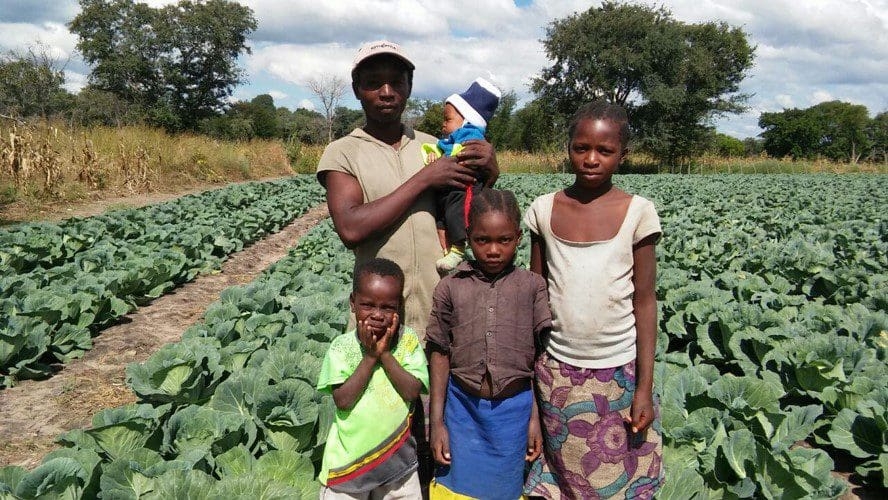
“At some of the agricultural projects in Zambia and Zimbabwe – on the banks of the 2 000km-long Zambezi River – some of our small farmer projects managed to get yields of more than 100 tonnes per hectare on their tomato crop after a mere three to four seasons and with fruit quality improving notably. This is about four to five times better than their former yields of 20 to 30 tonnes per hectare, and which had a large quantity which was lost on account of poor quality.”
Equipping farmers with equipment
Hurter says a large number of smallholder farmers in Africa already have been exposed to farming and that there is sufficient fertile land with access to ample water resources available. There are also many development agencies who provide financial support. The main shortcomings, however, are the lack of optimal resource utilisation, along with inadequate crop input and application equipment.
“The biggest latent opportunity in Africa today is to equip small farmers, whom already have many years of exposure to farming, dealing with limited available input, with quality crop input and equipment. In addition, production areas and supply chains need to be formally structured to properly meet the local demand of farmers. Once this is done, the focus should shift towards developing processing and export markets.”
And that’s where AgricultSURE plays an important role. The group assesses and structures resources based on market demand for agricultural products, sustainability of natural resources, infrastructural development, profiling of farmers, as well as crop input and equipment requirements.
Due to excessive traveling across the subcontinent over the past few years, a large GIS resource database was created, which is supplemented by using advanced remote sensing technology and instrumental to locate prime farming areas.

AgricultSURE’s close collaboration with Laeveld Agrochem and Agri Technovation, which includes precision assessment services, geographic information systems, as well as other agrotechnological services – play a significant role in the assessment outcome.
AgricultSURE has also developed starter packs for small farmers, which are based on the outcomes of these assessments. These starter packs offer a combination of production input (seed, fertiliser and integrated pest management products) as well as application equipment (such as water pumps, a water tank, drip irrigation system, battery-operated and solar rechargeable spraying equipment, etc.) specifically designed to mitigate start up risks among small farmers.
‘Starter packs’ to secure micro-financing

“The objective behind the starter pack concept is twofold. It helps an aspiring farmer to mitigate risk by applying reputable practices at an affordable cost.
“We want to equip the farmer with quality basic input and equipment to farm in a simple way with a reasonably good chance of being successful. Furthermore, it provides farmers with a product that can potentially be funded through micro-financing.
“The departure point with the starter packs is to assess groups of farmers in the same geographical area, by applying our advanced remote sensing system in order to ensure that resources (access to markets, natural resources, infrastructure and the correct individual farmer profile for the type of farming) can sustainably support a project. In collaboration with relevant financial institutions, the contents of starter packs are customised in accordance to specific farming needs to a specific area, and then availed to farmers through micro-financing.”
“We want to build success stories and not just pay lip service. We want to assist people in becoming successful business owners that form an integral part of the agricultural community.” – CORNÉ LIEBENBERG
Creating a ‘fully-fledged farming businesses’
Corné Liebenberg, Laeveld Agrochem’s marketing director, says they are very excited about the formalisation of their partnership with AgricultSURE and the solutions it offers for the economy and especially job creation.

“If we want to turn the economy around, agriculture will have to play an increasingly important role. The coronavirus pandemic has clearly highlighted the importance of food supply. South Africa has abundant land, knowledge, and resources available. The pieces of the puzzle are there, but no one is building it. And that’s what we plan to address.”
Liebenberg says together with AgricultSURE and other partners, such as Agri Technovation, they will equip farmers to not only provide for their own needs through subsistence farming, but also to set up their own agribusinesses from which they can earn an income. In this way, they are not only creating new jobs, but also creating wealth and growing the economy.
Liebenberg says he’s been dreaming of making a difference in this way for over 10 years and has never given up on it. “Covid-19 now forces us to put things in place to make the dream a reality. We were looking for a final push and the pandemic has now made it possible. We want to build success stories and not just pay lip service. We want to assist people in becoming successful business owners that form an integral part of the agricultural community. And if we succeed with that, there is no looking back.”