Monday, October 26, 2026
SUBSCRIBE
22 GLOBAL MEDIA AWARDS
Food For Mzansi
  • News
  • Changemakers
  • Lifestyle
  • Farmer’s Inside Track
  • Food for Thought
No Result
View All Result
  • News
  • Changemakers
  • Lifestyle
  • Farmer’s Inside Track
  • Food for Thought
No Result
View All Result
Food For Mzansi
No Result
View All Result
in Advertorial

Peritum offers exam-free, practical agriculture diploma

by Nicole Ludolph
16th October 2021
At Peritum Agri Institute in Bloemfontein, students get hands-on agricultural training. Photo: Supplied/Food for Mzansi

At Peritum Agri Institute in Bloemfontein, students get hands-on agricultural training. Photo: Supplied/Food For Mzansi

Share on FacebookShare on TwitterShare on WhatsApp

With many agricultural colleges being in a fix, students are increasingly flocking to the Peritum Agri Institute, a private agricultural college in the heart of Bloemfontein where students are enjoying the best of two worlds: full-time employment and a flexible class structure.

Speaking to Food For Mzansi, Peritum’s marketing manager, Odette Shepperson, confirms that they have been inundated with calls from students wishing to register for the 2022 intake. The National Diploma: Plant Production and National Diploma: Animal Production are particularly popular because of the hands-on, practical approach.

Also, Peritum students only attend physical classes every six weeks, making the courses highly suitable for people who work full-time. Shepperson says, “Our students can be employed or farm full-time, earning a salary while obtaining their qualification. It also eliminates the cost of permanent accommodation.”

With Peritum Agri Institute, students are taught to be future facing and embrace technology. Photo: Supplied/Food for Mzansi
With Peritum Agri Institute, students are taught to be future facing and to embrace technology. Photo: Supplied/Food For Mzansi

The accredited diploma courses also differ substantially from those offered by traditional and state-owned universities.

“The national diplomas [take] our students on a journey of continuous learning. Both diplomas consist of 13 study weeks, which are spread over 24 months, with a campus week taking place once every six weeks, from Monday to Friday.”

Furthermore, the Peritum focus on practical experience gives students insight into the real world of agriculture, helping them be better prepared for the sector. Shepperson says that the practical nature of the courses makes it appealing for a wide audience – from those who have just matriculated to professionals who wish to get a formal qualification behind their names.

“Because of the highly practical nature of the diplomas, students also don’t write exams, making it very attractive for any prospective student! Anyone can attend the diploma studies, no matter [their] age or gender. The qualifications consist of modules such as farm business management, staff management, financial management and marketing of agri-products.”

Emphasis on practical learning

Assessment at Peritum takes the form of a portfolio students need to complete. The portfolio is handed out at each study week, and students are expected to complete it by the next study week.

“Each portfolio contains summative, formative and group exercises, and are assessed and moderated by external assessors and moderators. Each portfolio must be 100% and the student gets three chances to be declared competent per portfolio.”

Peritum's course structure is suited for both first time students and full-time workers. Photo: Supplied/Food for Mzansi
Peritum’s course structure is suited for both first-time students and full-time workers. Photo: Supplied/Food For Mzansi

Practical learning at Peritum also means a focus on technology and mechanisation. At the forefront of agricultural technology is John Deere, a global manufacturing company. The use of John Deere equipment forms part of both national diploma courses at Peritum, in a module named “Infrastructure and technology”.

“The practicals on this module are done on a tractor, planter, sprayer and harvester. The practical session includes the driving, operating, maintenance and calibration of the machines and GPS system,” explains Shepperson.

“The module also focuses on precision agriculture and new technological trends, and the role of technological precision farming. Guest speakers and experts assist in facilitating this module and cover topics such as ‘How to implement economy and farm mechanisation planning’.”

Ultimately, the Peritum experience builds a stronger, future-focused agricultural sector. The college’s students are in great demand because they have a thorough understanding of the latest trends and challenges in the sector. “The qualifications consist of modules [that ensure] the student is work-ready as soon as they obtain their qualification.”

To find our more about the Peritum experience, call them on 051 451 1120, or toll free on 086 122 8467. You can also email info@peritumagri.com or visit their Facebook and LinkedIn pages. More details on their courses can be found here.

ALSO READ: Matric finals: Free masterclasses in 10 subjects

Sign up for Farmer’s Inside Track: Join our exclusive platform for new entrants into farming and agri-business, with newsletters and podcasts.
Nicole Ludolph

Born and bred in Cape Town, Nicole Ludolph is always telling a story. After a few years doing this and that, she decided that she might as well get paid for her stories. Nicole began her journalism career writing science articles for learner magazine Science Stars and interning at Getaway Magazine.

Tags: Agricultural educationPeritum Agri Instituteprecision agriculture
Karoo sheep tallow finds new purpose in Mzansi beauty brand
Agripreneur

Karoo sheep tallow finds new purpose in Mzansi beauty brand

by Vateka Halile
22nd October 2026

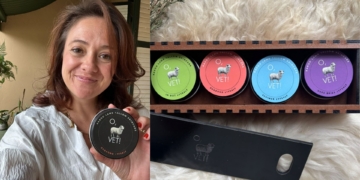
Former journalist Carla Coetzee turned a traditional family remedy into O’Vet Skincare, a thriving brand supplying 15 retailers. Sourcing natural...

Read moreDetails

Why simple farm records beat complex systems

22nd October 2026
Mogogelo farmers receive packhouse and cold storage facilities

Mogogelo farmers receive packhouse and cold storage facilities

22nd October 2026
Godongwana unveils fuel relief and R10 billion El Niño buffer

Godongwana unveils fuel relief and R10 billion El Niño buffer

21st October 2026

Smart irrigation: Precision tools boost crop yields while cutting costs

21st October 2026

Smart irrigation: Precision tools boost crop yields while cutting costs

This week’s agri events: 19 – 23 October

Limpopo teen farmer turns dream into growing poultry business

Reality check: What SA agri interns really experience on the farm

Shoprite opens second food garden competition with R1m in support

Join Food For Mzansi's WhatsApp channel for the latest updates!

JOIN NOW!
Next Post
World Food Day: ‘Food systems captured by big corporations’

World Food Day: ‘Food systems captured by big corporations’

THE NEW FACE OF SOUTH AFRICAN AGRICULTURE

With 21 global awards in the first six years of its existence, Food For Mzansi is much more than an agriculture publication. It is a movement, unashamedly saluting the unsung heroes of South African agriculture. We believe in the power of agriculture to promote nation building and social cohesion by telling stories that are often overlooked by broader society.

Shoprite opens second food garden competition with R1m in support

Costa Rica’s banana battle offers critical field lessons for SA

Africa’s indigenous crops and youth are the secret to ending hunger

Agda conference: Why giving farmers land isn’t enough

Limpopo teen farmer turns dream into growing poultry business

How to protect poultry from damaging sticktight flea infestations

  • Awards & Global Impact
  • Our Story
  • Contact Us
  • Cookie Policy
  • Privacy Policy
  • Copyright

Contact us
Office: +27 21 879 1824
News: info@foodformzansi.co.za
Advertising: sales@foodformzansi.co.za

Contact us
Office: +27 21 879 1824
News: info@foodformzansi.co.za
Advertising: sales@foodformzansi.co.za

  • Awards & Global Impact
  • Our Story
  • Contact Us
  • Cookie Policy
  • Privacy Policy
  • Copyright

Chat Options

About this assistant

This feature generates automated answers summarised from Food For Mzansi articles. By using it, you are interacting with an AI system (provided by Google), not a human. AI can make mistakes. Please refer to the source articles for verification and citation purposes.

Our staff do not check or moderate Lerato’s answers in advance, but may review some later. Our journalists continue to write and edit all the articles Lerato uses as sources.

To estimate unique and returning web users, we store a random browser ID in this browser. WhatsApp users are counted by phone number. The same person using both channels may be counted twice.

I'm Lerato, your AI assistant!
No Result
View All Result
  • News
  • Changemakers
  • Lifestyle
  • Farmer’s Inside Track
  • Food for Thought

Copyright © 2026 Food for Mzansi