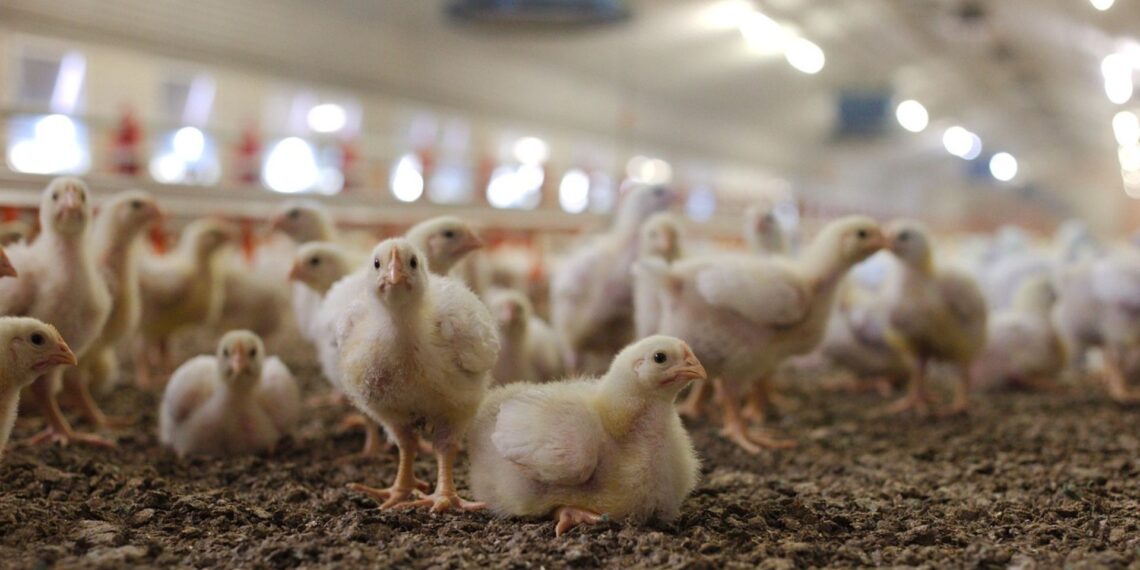
Rainbow Chicken Limited has recorded a significant 81.4% increase to R1.1 billion for the six months ended December 2025 compared to the same period in the previous year, announced CEO Marthinus Stander.
He said the ongoing implementation of Rainbow’s growth strategy, supported by strong demand for chicken, lower input prices and the strengthening of the South African Rand versus the US dollar, has contributed to an improvement in profitability over the first half of the 2026 financial year.
“Revenue grew by 11.3% to R8.8 billion, when compared to the previous period, positively impacted by stronger demand, enhanced channel and product mixes and improved pricing.
“Both headline earnings and headline earnings per share have more than doubled in the current six-month period, by 110.8% to R669.6 million and 109.9% to 74.81 cents respectively. Within its growth strategy, Rainbow continues to focus on disciplined capital investment aimed at improving operational efficiency, increasing capacity, and mitigating biosecurity risk,” Stander said.
Reflecting the state of the poultry industry
Over the six months, replacement capital expenditure amounted to R287.5 million. Key capital initiatives during the period included enhancements to processing and farming equipment, biosecurity investments to control avian influenza (bird flu), the upgrade of the grandparent hatchery, investment into water filtration systems and the commencement of phase two of the IT separation project (as part of Rainbow’s transition from RCL Foods’ platforms).
He further noted, “Our continued emphasis on internally controlled and well-managed operational fundamentals positions Rainbow to respond effectively to evolving demand and to support sustainable performance over time.
“Within South Africa, chicken remains the most widely consumed protein and continues to play a critical role in national food security, particularly in an environment of constrained consumer spending and volatility in red meat and pork pricing following the foot-and-mouth disease and swine-flu outbreaks.”
Related stories
- Mastering poultry feed: Tips to maximise efficiency
- Poultry farmers: A guide to selling to abattoirs
- Brazil’s ambassador clarifies poultry export standards to SA
- No water, no farming: Broken pipes halt KZN women farmers
Stander said feed costs remain the largest component of poultry production costs and, therefore, have a significant impact on the overall competitiveness of the business.
He said Rainbow’s strategy for its animal feed division is firmly anchored in supporting the expanding internal requirements of the growing chicken division, reinforcing the group’s vertically integrated operating model.
“However, in parallel, a meaningful portion of the total feed production is supplied to external customers, positioning the division for growth. The external feed business is underpinned by a strong value proposition focused on high-quality feed, consistent performance and technical reliability, which continues to drive customer retention, market penetration and sustainable earnings growth.”
Growth opportunities in poultry production
According to Rainbow Chicken, poultry production in South Africa has grown at a rate faster than consumption over the past decade, despite significant local and global challenges.
“With a notable decline in feed prices and competitive production costs relative to other major producing countries, the South African industry could be poised to take advantage of growth opportunities. However, having replaced a substantial portion of imports since 2018, import replacement opportunities are limited, and exports will be key to enhanced growth,” Rainbow Chicken stated.
A key pillar for business success is management’s intense focus on people and driving a high-performing culture that delivers results.
“While we remain steadfast in our ambition to be South Africa’s market-leading, best-in-class and lowest-cost chicken producer, we also recognise that Rainbow operates within a highly cyclical and commoditised industry which requires continual reinforcement of the long-term strategy to ensure business continuity is centred on delivering sustainable profitability,” Stander said.
READ NEXT: Cape heatwave havoc: Farmers battle extreme temperatures