Samson Ogbole was in his fifth year of studying medicine when he made the shocking discovery that the university he was attending, was not accredited. This forced him to quit, and start over in a new field – biochemistry.
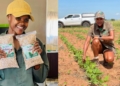
While working his way toward a new degree at Igbinedion University in Nigeria, the farming bug got hold of him. Since then, he has gone on to found Soilless Farm Lab in Ogun State, in South-Western Nigeria. He is currently working on his PhD in biochemistry at the Federal University of Agriculture in Nigeria.
“I am using my biochemistry love to ensure that food production and the food that we produce is healthy,” he says.
He has earned the nickname “Farmer Samson”, and believes that the power of technology is a good path to pursue growth. “We are growing plants in the air and AI based irrigation systems for proper plant monitoring for optimum yield and predictability of food production,” he adds.
His futuristic lab stands on less than a hectare of land, but provides access to 500 hectares of land. The farmers he trains make use of the larger tract of land, where a variety of crops are grown.
Accolades roll in
To Ogbole, farming shouldn’t be seasonal. This inspired him to research growing without soil.
“To produce out of season is one of the major keys to ensure that there is proper poverty alleviation. We can remove the high price of food by removing seasons and increase the wealth of the people,” Ogbole explains.
“The first and biggest challenge was the cultural bias against it of saying this thing is not natural and that it could be satanic. It took a long while to get people to see this as science and not as satanic, so that was the first challenge.”
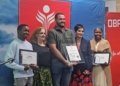
Ogbole received a Royal African Award in 2021, which honors the top 100 young Nigerians who are excelling in their fields. He has received a nomination for the Scientific and Technology Development category of the 2022 JCI Ten Outstanding Young Persons of Nigeria award. He presently serves in the Ooni’s royal court in the Nigerian kingdom of Ife.
He also created a “Work and Learn” initiative to give Nigerian farmers interested in soilless farming, more control.
“Not many people are skilled in this area. Our curriculums have not changed yet to accept this method of farming so there is a need to have a lot of people trained. This is what we are doing; every now and again, we organise free training,” he explains.
“The goal is to steer the knowledge as much as possible.”
This article was originally published via FoodForAfrika.com
ALSO READ: Aquaponics farmer helps smallholders to grow
Sign up for Mzansi Today: Your daily take on the news and happenings from the agriculture value chain.