Saturday, October 24, 2026
SUBSCRIBE
22 GLOBAL MEDIA AWARDS
Food For Mzansi
  • News
  • Changemakers
  • Lifestyle
  • Farmer’s Inside Track
  • Food for Thought
No Result
View All Result
  • News
  • Changemakers
  • Lifestyle
  • Farmer’s Inside Track
  • Food for Thought
No Result
View All Result
Food For Mzansi
No Result
View All Result
in News

Tough times in agriculture ‘could have been cushioned’

“It does not look like we have a plan for when big shocks [in] the world, like the Ukraine-Russia war, happen," a scientist said during a recent webinar on the impact of disasters on South Africa. "It seems like we are always scrambling from one crisis to the other without having an upfront idea of how to deal with the impact”

by Tiisetso Manoko
9th May 2022
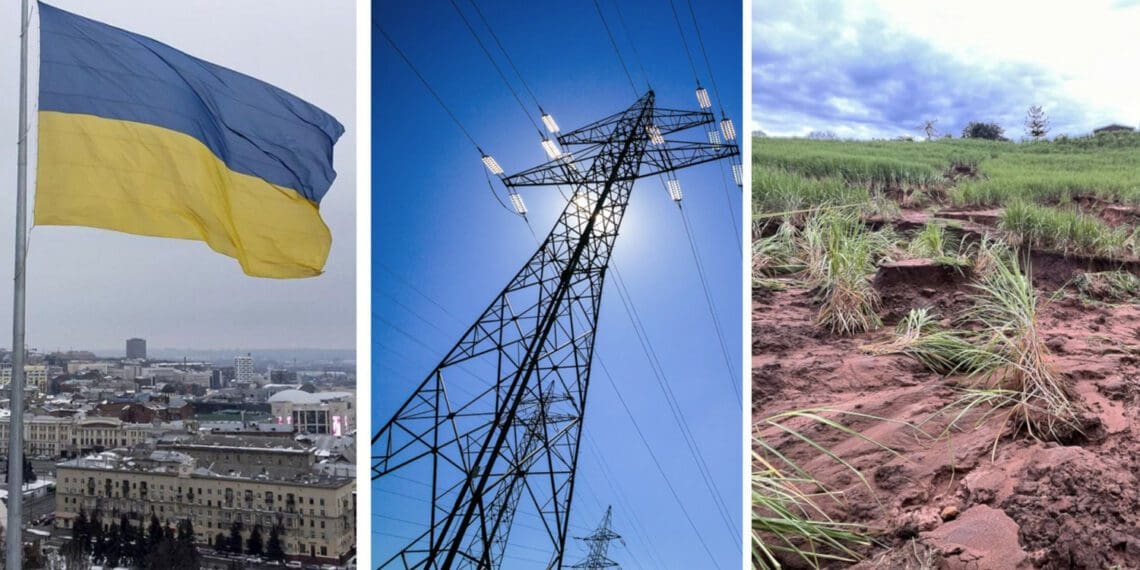
National risk management should receive urgent attention, according to experts who spoke during a recent webinar on the impact of recent disasters on South Africa. Photo: Supplied/Food For Mzansi

National risk management should receive urgent attention, according to experts who spoke during a recent webinar on the impact of recent disasters on South Africa. Photo: Supplied/Food For Mzansi

Share on FacebookShare on TwitterShare on WhatsApp

South Africa’s farming sector has faced some tough times recently, but some of the hardship could have been warded off had the country been better at getting the basics right. This was the gist of a webinar presented last week by the Academy of Science of South Africa (Assaf).

Professor Heinrich Bohlmann from the University of Pretoria. Photo: Supplied/Food For Mzansi

The Assaf Annual Science-Business Leadership Forum was centred around the effects of the Russia-Ukraine war and other disasters on South Africa, but the speakers said that basic management principles such as policymaking, risk management, disaster mitigation and even infrastructure upkeep and proper education, could have softened the compounded effect of several disasters that food producers and consumers have had to face in recent months.

These disasters included the restrictions and economic fallout of the Covid-19 pandemic, the ongoing problems with Eskom, rising petrol prices, the global impact of the war in Ukraine and, most recently, the floods in KwaZulu-Natal.

Prof. Heinrich Bohlmann, an associate professor in the department of economics at the University of Pretoria, was first to speak and said that much of the devastation could have been avoided.

No shock absorption

“We do not have plans in place to proactively deal with disasters that might occur,” Bohlmann said. He felt that policymakers in the country were not planning ahead, but were instead being reactionary to the unexpected.

He was even questioning the country’s handling of challenges that could be foreseen. “Why did we not anticipate what could possibly happen to Eskom? We knew about such problems.

“The agriculture industry needs to start planning now for future disasters and be ready when they hit us.”

If urgent attention weren’t given to risk planning and disaster mitigation, South Africa could find itself in similar, economically stressed situations in the future, Bohlmann warned.

“It does not look like we have a plan for when big shocks [in] the world, like the Ukraine-Russia war, happen. It seems like we are always scrambling from one crisis to the other without having an upfront idea of how to deal with the impact.”

Bohlmann cautioned that farmers were still going to be hit hard by fuel price increases because of the war, and added that “too many taxes” such as the fuel and Road Accident Fund levies were exacerbating the impact on farming businesses.

ALSO READ: Oil shortage: SA oilseed farmers set on planting more

KZN floods made things worse

To emphasise the long-lasting effects of unexpected disaster, and the need for mitigation, Agbiz chief economist Wandile Sihlobo spoke on the impact of the recent floods in KwaZulu-Natal which he believed could potentially be felt for years to come.

Roughly 30% of South Africa’s dairy herd is in the province, along with 12% of the country’s chicken, eggs, and pigs. Furthermore, almost 81% of the country’s sugar is produced in the province. The province is also a major producer of macadamia and other fruits.

Sihlobo said, “These industries were not spared from the damage by the floods. The South African Canegrowers Association indicated that a substantial area [of] fields were destroyed and require a total replant.

“There was also extensive damage to on-farm infrastructure which, combined with field damage, brought a total financial loss in the province’s sugarcane industry to an estimated R222 million.”

Sihlobo said that, especially considering that fertiliser prices are generally higher due to the Russia-Ukraine war, the replanting process will be costly.

Focus on solid infrastructure

Professor Nicola Viegi. Photo: Supplied/Food For Mzansi

Prof. Nicola Viegi, also from the University of Pretoria, said that basics such as infrastructure development and even quality education needed urgent attention.

“Covid-19 made things look bad. Now, with the floods and the war, it is worse. However, as a country we need to take stock of what really happened and build from there.

“We need to start with [the] infrastructure crisis that the country is facing. Fix our roads so that the economy can start running,” he said.

Viegi further said that a clear fiscal policy could help avoid much uncertainty going forward. “There is a greater need now than ever to increase our capacity to meet up with the growing needs of the world.

“Some of these shocks we are experiencing now will be with us for a very long time. We need to know how to deal with them.”

ALSO READ: Cost-cutting rail freight finally arrives for cane growers

Sign up for Mzansi Today: Your daily take on the news and happenings from the agriculture value chain.
Tiisetso Manoko

Tiisetso Manoko is a seasoned journalist with vast experience in community media. He possesses diploma in media studies majoring in journalism, certificate in civic leadership. He loves news from all angles with particular interest in local government, agriculture and politics. He is a staunch Mamelodi Sundowns Football club supporter.

Tags: Covid-19disaster managementKZN floodspetrol pricesRussian-Ukraine war
Godongwana unveils fuel relief and R10 billion El Niño buffer
News

Godongwana unveils fuel relief and R10 billion El Niño buffer

by Tiisetso Manoko
21st October 2026

Finance minister Enoch Godongwana has announced key measures to buffer South Africa’s agricultural sector against global oil shocks and El...

Read moreDetails

Smart irrigation: Precision tools boost crop yields while cutting costs

21st October 2026
Record farm exports overshadowed by growing drought disaster

By-laws vs. livelihoods: Barriers facing WC smallholder farmers

21st October 2026

CPAs urged to register for free governance support toolkits

21st October 2026

Potatoes and tomatoes plunge while avocado prices soar

20th October 2026

Godongwana unveils fuel relief and R10 billion El Niño buffer

Becoming bankable: How to get your farm ready for finance

Limpopo teen farmer turns dream into growing poultry business

Agda pushes for pathways to commercialise emerging farmers

This week’s agri events: 19 – 23 October

Join Food For Mzansi's WhatsApp channel for the latest updates!

JOIN NOW!
Next Post
A recent study compiled by research revealed that a large number of farmers had received no official aid after suffering severe disruptions brought on by the global Covid-19 pandemic. Photo: Pixabay/Supplied

Farmers disrupted by pandemic still struggling

THE NEW FACE OF SOUTH AFRICAN AGRICULTURE

With 21 global awards in the first six years of its existence, Food For Mzansi is much more than an agriculture publication. It is a movement, unashamedly saluting the unsung heroes of South African agriculture. We believe in the power of agriculture to promote nation building and social cohesion by telling stories that are often overlooked by broader society.

Agda conference: Why giving farmers land isn’t enough

Limpopo teen farmer turns dream into growing poultry business

How to protect poultry from damaging sticktight flea infestations

Eskort announces Herman Janse van Rensburg as group CEO

Agda pushes for pathways to commercialise emerging farmers

Karoo sheep tallow finds new purpose in Mzansi beauty brand

  • Awards & Global Impact
  • Our Story
  • Contact Us
  • Cookie Policy
  • Privacy Policy
  • Copyright

Contact us
Office: +27 21 879 1824
News: info@foodformzansi.co.za
Advertising: sales@foodformzansi.co.za

Contact us
Office: +27 21 879 1824
News: info@foodformzansi.co.za
Advertising: sales@foodformzansi.co.za

  • Awards & Global Impact
  • Our Story
  • Contact Us
  • Cookie Policy
  • Privacy Policy
  • Copyright

Chat Options

About this assistant

This feature generates automated answers summarised from Food For Mzansi articles. By using it, you are interacting with an AI system (provided by Google), not a human. AI can make mistakes. Please refer to the source articles for verification and citation purposes.

Our staff do not check or moderate Lerato’s answers in advance, but may review some later. Our journalists continue to write and edit all the articles Lerato uses as sources.

To estimate unique and returning web users, we store a random browser ID in this browser. WhatsApp users are counted by phone number. The same person using both channels may be counted twice.

I'm Lerato, your AI assistant!
No Result
View All Result
  • News
  • Changemakers
  • Lifestyle
  • Farmer’s Inside Track
  • Food for Thought

Copyright © 2026 Food for Mzansi