Formerly known as the homelands in South Africa, the Mthatha region of the Eastern Cape has significant agricultural potential. With ample room for development and a community eager to learn, this was the perfect place for John Deere Africa and the Middle East to embark on a journey of growth that will change the lives of farmers in this area forever.
The S.M.A.R.T initiative
In collaboration with local farmer development groups who provide mentorship for farmers in the area, John Deere identified a number of small-scale farmers in need of the right solutions and mechanisation to grow their farming operations.
“To assess the impact of mechanisation on small-scale farmers, we identified two farmers with different needs and farming entities in South Africa. Some of the biggest challenges farmers in Africa face is access to finance and good mechanisation,” says Zabion de Wee, new business development manager for John Deere in Africa and the Middle East.
“We decided to adapt the John Deere S.M.A.R.T. initiative and custom make it for South African farmers to help solve some of the challenges they face daily in crop production.”
The John Deere S.M.A.R.T initiative has seen great success in Africa. It is focused on providing farmers with the right solution for their operation, the mechanisation they need for better yields, access to finance making the unbankable bankable, reliability at lower costs, and access to training and technology.
“Once we introduce farmers to our products and proper mechanisation, we can provide them with the training and technology they need, specifically suited to their farming operations,” says De Wee. “That, in short, is what the S.M.A.R.T initiative is all about.”
The “full-circle” journey
Approximately eight months ago, the journey started with soil preparation on the rich earth of the Mthatha area (OR Tambo district). The farmers were provided with the specific equipment they needed to optimise the season: tractors, off-sets, ploughs, and planters to better prepare their soil for optimum yields.

“We ensure that we provide the right tools and solutions for these farmers in order to assist them to reach optimal yields. We took into consideration what equipment they had, and only upgraded what was necessary, nothing more,” says De Wee.
“With S.M.A.R.T, we aim to grow the farmers to the level where they can make use of more technology and take advantage of our advance equipment on offer, ultimately to get better yields.”
Traditionally, farming is done by hand or with very old equipment. The problem with older farming methods, like harvesting by hand, is that it is heavily time-consuming and small-scale farmers can only produce a certain amount of work in a day. Farming by hand also limits the growth in hectares. Proper mechanisation is needed for small operations to grow.
“We’re dealing with farmers who have been farming for a long time and can’t reach their true potential. Our goal was to expose them to mechanisation and technologies that they need, but have never used before, to enhance their production,” explains De Wee.
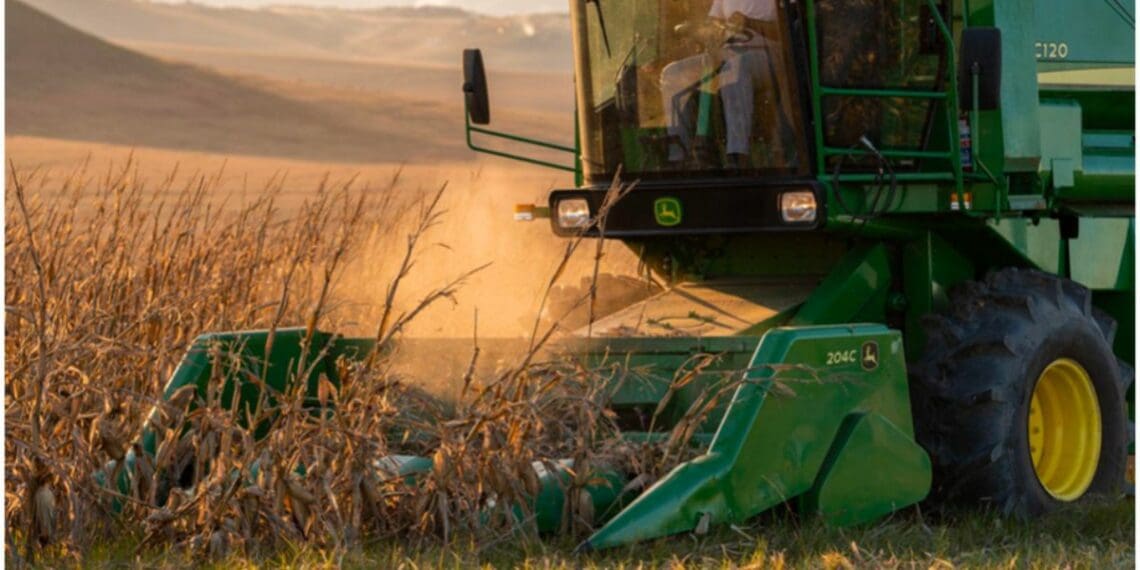
S.M.A.R.T supported the farmers through all the production steps of the season, knowing that harvesting is where most farmers experience their biggest challenges – a combine harvester is one of a farmer’s most expensive machines on a farm.
“We provided the farmers with a C120 John Deere Harvester, bringing the entire S.M.A.R.T project full circle. Harvesting by hand took these farmers almost four months. In contrast, they could complete their harvesting in approximately three days, resulting in better quality produce, ready for market at better prices.
“The excitement of having a C120 Harvester in the field was incredible, and that’s what we wanted to achieve; making technology accessible to farmers who did not have access to these products in the past, and to show that there is a place for everyone in John Deere,” says De Wee.
The results
In the end, the group of Mthatha farmers agreed that S.M.A.R.T farming is a more efficient and sustainable way of farming that can help them improve their yield, decrease their costs, and protect their land for generations to come.
“I started farming with vegetables on five hectares of land in Mthatha in 2015. I used equipment that gave many mechanical issues throughout the season due to it being old and difficult to find parts,” says Mzimasi Jalisai, a farmer in the OR Thambo district.
“In 2021, I was honoured to participate in this S.M.A.R.T initiative and received assistance with mechanisation. The quality of my crop has improved, and where I used to get 3.5 tons per hectare, we harvested 8 tons this season.”

“Through this initiative, I could plant with a good planter and not experience any downtime. Everything I needed to do, I was able to do on time, and it increased my yield from 5 tons to 8.6 tons,” explains Mveleli, a farmer in the OR Thambo district.
“This mechanisation on my farm has put me in a position where I can purchase my own equipment for my business. It has also helped me decrease the timeframe, allowing me to do the work that usually took me three months in two to three days. I can now work more efficiently, and the equipment I use is top-notch. The same level as commercial farming equipment,” he concludes.
At the end of this journey, John Deere was able to show the significant difference that mechanisation makes for small-scale farmers. Not only does it save time, but it increases productivity and efficiency. Mechanisation is an essential tool needed to grow in a world where agriculture is constantly evolving.
What’s next for this initiative?
“The future is exciting, and there are a lot of opportunities in the area that needs to be unlocked. With the support of the John Deere S.M.A.R.T initiative, we can take more farmers to the next level, grow their profitability, and create a more food-secure province. We were able to show what good collaborations with private sectors, NGOs, and the right farmers can do,” concludes De Wee.
John Deere is committed to empowering farmers in Africa and the Middle East to run successful operations. Keep an eye on the John Deere social pages as we explore this incredible journey further.
ALSO READ: John Deere launches new ADT in Mzansi
Sign up for Mzansi Today: Your daily take on the news and happenings from the agriculture value chain.