Ensuring the food safety of your farming operation is a critical exercise. According to Tamsin Davids, owner of Krystal Consulting, obtaining a Global GAP certification is one way to make sure your farming operation meets international food safety standards. Davids joins us on this week’s podcast episode.
The acronym “GAP” stands for Good Agricultural Practices, which Davids describes as a third-party certification framework that enforces a certain level of food safety compliance within farming operations.
“The Global GAP Integrated Farm Assurance Standard covers the whole agricultural production of [ a specific] product. It starts even before the plant goes into the ground or from when the livestock enters the production process.”
Through Krystal Consulting, Davids educates farmers with training and workshops on what Global GAP is and what they need to do to obtain the certification. She says that the standards for the certification are applicable across the world.
“It’s all about mitigating risk. If you look at the requirement of Global GAP, the requirements are the same for a farmer in Brazil as for a farmer in South Africa. It’s an international, global standard that remains the same regardless of your location.”
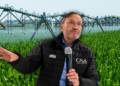
Tamsin Davids, owner of Krystal Consulting
Davids says that, through her interactions with farmers, she realised that few have heard about Global GAP and few know what it entails. She explains that the certification stipulates a variety of criteria based on the type of food being farmed, and farmers of course need to meet these criteria in order to be certified.
Consult an expert
“It is recommended that you get a consultant to conduct a GAP assessment to determine your implementation because this is also the period where you need to prepare for the audit. From there, you would need to schedule a third-party audit by a registered certification body. When you comply with all the requirements, you will receive your global GAP certification, which is valid for one year.”
The cost of a Global GAP certification differs, says Davids. Farming operations differ and the costs are determined by how the operation runs. “The biggest cost would be the third-party audit for the certification. Some other costs might be the consultation fee for the consultant to assist with the implementation of the system and the interpretation of the standard.
“Acquiring personal protective equipment can also be an expensive exercise, as well as wastewater management and pest control. There are several other costs that you need to take into consideration.”
ALSO READ – What farmers should know about Halaal certification
Want to know more? Listen to the full episode of Farmer’s Inside Track
Option 1: Click here to listen on Spotify (all mobile and other devices).
Option 2: Click here to listen on any Apple device.
Option 3: Click here to listen on Google Podcasts.