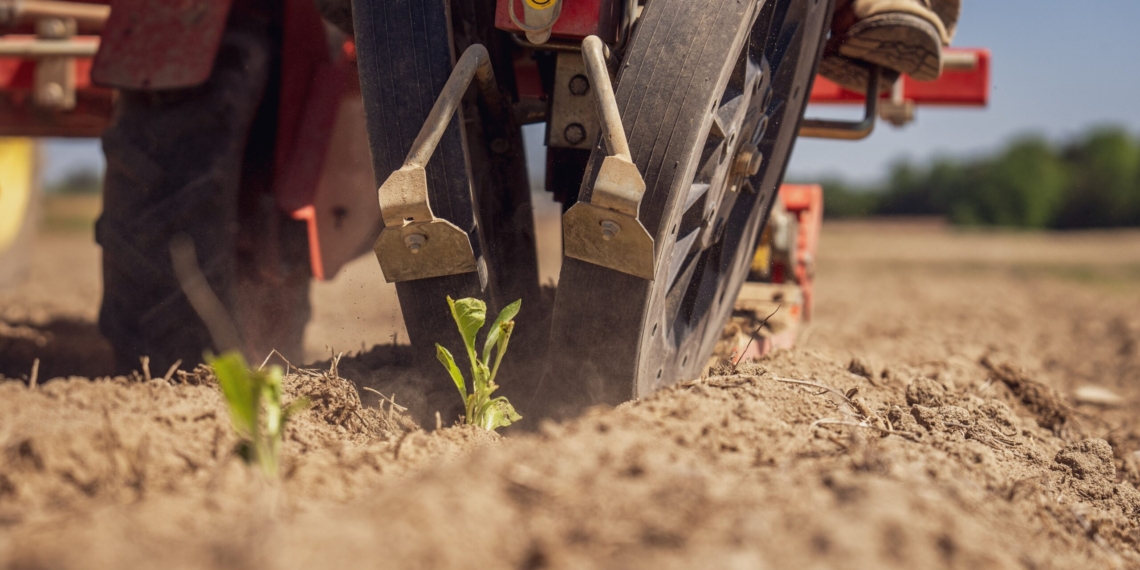
Technology has become an integral part of modern farming, but adopting agritech is about far more than purchasing the latest equipment. The most successful producers are those who use technology to solve practical problems, improve efficiency, and make better decisions based on reliable information.
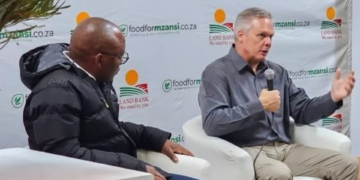
During a Potato SA Congress panel discussion on strategic technology adoption, industry leaders explored how farmers can cut through the hype and identify technologies that deliver meaningful value on the farm.
Technology starts with accessible information
Loffie Brandt, executive head of agribusiness at Absa, said farmers often associate technology with robots, artificial intelligence, and drones, but technology should be viewed more broadly.
“Technology is not about having the latest gadget. It is about making better decisions, reducing risk, improving efficiency and building a more resilient farming business for future generations.”
Loffie Brandt, executive head of agribusiness, Absa
According to Brandt, almost all agricultural data originates from some form of technology, whether it is a weather station, soil moisture probe, irrigation monitor, or even a mobile phone used to manage farm operations.
Related stories
- How farmers can use weather technology to adapt to climate risks
- Smart farming: 8 practical tips to adopt agritech today
- Faster farm technology rollout could boost SA farmer profits
- Better seed technology strengthens SA’s grain future
“Sometimes the most powerful technology is simply information arriving at the right person at the right time so that better decisions can be made,” he said.
South African farmers have long been innovators, driven by the need to adapt to variable rainfall, infrastructure constraints, changing markets, and increasing pressure on natural resources. Brandt emphasised that the value of technology should not be measured by how sophisticated it is, but by whether it solves a practical problem, creates value, and helps build a stronger, more sustainable farming business.
Mastering farming fundamentals before tech adoption
One of the strongest themes to emerge from the discussion was that technology cannot replace good farming fundamentals.
Coenrad Fraenkel, extension manager at Citrus Research International (CRI), said many producers invest in advanced systems before mastering basic production principles.
“If you want to run the Comrades Marathon, you buy a pair of running shoes before you buy a smartwatch.”
Coenrad Fraenkel, extension manager, CRI
Fraenkel explained that the citrus industry, despite having access to some of the most advanced irrigation systems in the world, discovered that many growers were still over-irrigating.
“We realised we needed to return to the basics and strengthen scientific principles before adding more technology. Technology should enhance decision-making, not replace sound management,” he said.
CRI has trained thousands of growers to improve foundational practices before introducing more sophisticated digital tools:
- Irrigation scheduling: Matching water application directly to soil profile needs.
- Nutrition management: Optimising fertiliser application based on targeted soil and leaf analysis.
- Data interpretation: Understanding baseline farm metrics before layering on complex analytics.
Unlocking gains through precision water management
With water becoming an increasingly scarce resource, irrigation technology is one area where farmers can unlock significant operational gains.
Bruno Perroni, Agtech sales lead for Europe, Africa, and the Middle East at Lindsay Corporation, said many farmers already have valuable technology installed on their farms but are not using its full capabilities.
“Most farmers use irrigation systems simply to apply water, but these systems can do much more. They can help answer important questions such as how much water to apply, where to apply it, and whether the system is performing efficiently,” he said.
Perroni believes the next step in irrigation technology will be combining machine diagnostics, weather information, soil moisture data, and remote sensing into simple, actionable recommendations.
Rather than overwhelming farmers with data, future systems will focus on providing practical guidance that supports daily decision-making through precision irrigation tools such as variable-rate irrigation (VRI), which adjusts water volumes across a field according to specific crop requirements.
Integrating siloed farm data into single platforms
A common challenge facing producers is managing information from multiple platforms and systems.
Werner Piek, Cropwise lead at Syngenta, said farmers often collect large volumes of information but struggle to turn that data into useful decisions.
“There is no value in having six or seven separate systems that do not communicate with one another. Farmers need platforms that bring operational, financial and agronomic information together in one place.”
Werner Piek, cropwise lead, Syngenta
Integrated systems can combine data from machinery, irrigation, chemical applications, stock management, soil maps and historical records, allowing farmers and advisers to make more informed decisions.
As farms become increasingly complex commercial entities, digital platforms also help different stakeholders, including managers, financial officers, and technical advisers, access real-time data from a central location.
Moving aerial drones from novelty to necessity
Drone specialist Okkie Vermeulen said the biggest misconception about drones is that farmers still see them as experimental technology.
“The value of drones is not the drone itself, but the timely and accurate information they provide,” he explained.
Drones deliver direct operational value across key production areas:
- Crop health monitoring: Identifying plant stress and pest outbreaks via multispectral imaging.
- Precision application: Spot-spraying crop protection products to cut input costs.
- Yield estimation: Improving harvest planning with accurate plant-count analytics.
- Early problem detection: Locating irrigation leaks or nutrient deficiencies before crop damage spreads.
The drone industry has grown rapidly in South Africa, with thousands of hectares already being serviced alongside an expanding network of accredited suppliers, workshops, and trained technicians supporting the hardware.
Sharing farm data to mitigate risk and unlock capital
Technology is also transforming relationships between farmers, financiers, and produce buyers.
Karidas Tshintsholo, CEO and co-founder of Khula!, said better information sharing can unlock funding opportunities, especially for emerging producers.
“When funders have access to reliable information about what is happening on a farm, it reduces uncertainty and helps them make better lending decisions.”
Karidas Tshintsholo, CEO & co-founder, Khula!
Sharing key data points improves a farmer’s risk profile and opens access to capital:
- Satellite imagery: Verifying crop growth and canopy development remotely.
- Soil moisture metrics: Proving proactive risk management during dry spells.
- Production logs: Demonstrating operational tracking and historic yield performance.
The same principles apply to commercial buyers, who rely on real-time production data to plan supply chains and respond proactively to yield fluctuations.
Practical innovation over trend-chasing
Experts at the congress agreed that there is no single technology that suits every farm. The best investment depends on a farm’s scale, enterprise mix, internal skills capacity, and specific field challenges.
As Loffie Brandt concluded during the session: “The future of agriculture will not be built by technology alone. It will be built by people who are willing to embrace innovation while remaining grounded in the practical realities of farming.”
For South African farmers, agritech is not about chasing the newest tools. It is about choosing technologies that improve efficiency, reduce risk, and support better decisions one practical step at a time.
READ NEXT: ASF outbreak contained, but pig farmers urged to stay vigilant