
You can never second guess or be lazy when it comes to eating healthy in a global pandemic, home gardener and entrepreneur Zola James (37) believes. Now more than ever, you need those immune boosting, “gifts from the soil,” says the proud owner of eMarikeni veggie market in the Eastern Cape.

Armed with no more than R500, James and her sister Sandisiwe built the thriving fresh produce market hub selling freshly picked and home processed goods including packaged vegetables, fresh juices, health breads and assorted baked goods, honey and jams. The goods either come from James’ own garden and kitchen or are sourced from local farms.
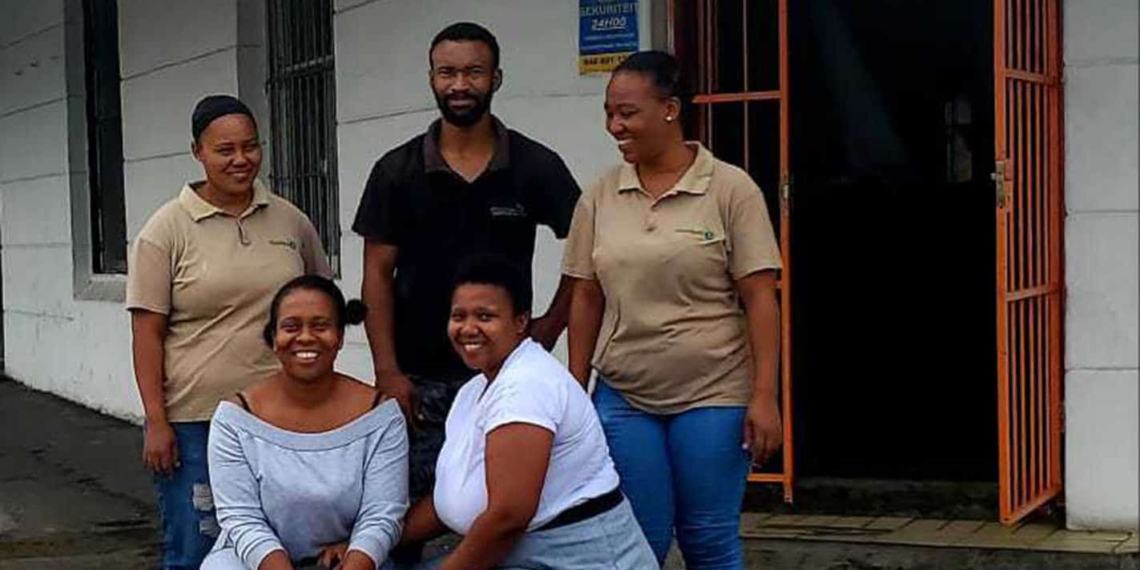
With the help of Sandisiwe’s marketing knowledge and three eager community members, theirs is a veggie market that has made a home on one of the busiest streets in Cradock in the Eastern Cape.
“The day we moved into the shop, we had R500. We bought cleaning material for R200, and R300 electricity and we started cleaning and scrubbing the place. We went to the nearby shops, asked one for premix for muffins, and another shop owner for flour. Then we started baking and chopping.
“We put a big table of goods people could buy in the middle of the shop, and they haven’t stop coming since,” she says.
ALSO READ: Wanna side-hustle as a food entrepreneur? Start here
Food is healing, food is a livelihood
eMarikeni’s didn’t become an actual shop overnight, though. Its story is really the story of James’ entire career that first lead her away from her home town to get education and experience, and later back to her roots to become an entrepreneur.
In 2001 James moved to Port Elizabeth where she completed her Bachelor of Commerce in business management at the Nelson Mandela Metropolitan University.
After graduating, she interned in the finance department of the Inxuba Yethemba Municipality and was permanently hired as a small enterprise development officer.
‘My father taught me how to plant and harvest some vegetables, we always had our own vegetable garden at home.’
Later the municipality supported her postgraduate studies in financial management at the University of the Witwatersrand’s Business School. In 2017 she moved to the private sector and to Cape Town to work for a business specialising in tendering businesses. She was retrenched six months later.

That same year James returned to Cradock, finding purpose in her family’s home garden and started eMarikeni in 2018.
Through uncertainty, food had been her comfort. She later registered a catering company cooking meals for government departments in the Karoo town too. “That also helped me to sustain, and when the shop opened I already had some kitchen equipment.”
Along with women in her community James would pick fresh vegetables planted in her garden and small leased plots. They’d wash and peel them and sell them to customers in Cradock. “We started in my kitchen, there were a lot of ladies who used to chop with us,” she says.
She admits she caught the gardening bug from her father, Clifford. He is still an avid gardener and used to sell his produce at his own market.
“My knowledge of agriculture is informal and only based off what he taught me. He used to have a small vegetable shop years ago when I was still a baby.
“We still have a vegetable garden to this day, my father taught me how to plant and harvest some vegetables. We always had our own vegetable garden at home and hardly went to the shop to buy produce,” she explains.
Over time farmers in Cradock and surrounding areas have even offered small plots of land where she is allowed to grow her own vegetables for retail in her veggie market.
‘Wake up and work like it is your first-day over and over.’
“I did not have a lot of land. This store belongs to the community, farmers around here would call and say, ‘Listen Zola I have spinach and space, please come harvest for yourself.’ Another would say, ‘Come, I have got beets.’ This is something that is actually being owned by everyone,” she says.
Despite interruptions caused by the national lockdown, James managed to stay afloat selling produce online.
“I developed a website where people could just order online, and I would go and deliver to their homes. That time you could go to the house, maybe drop them off at the gate and then you leave, so it was convenient.”
ALSO READ: ‘Young people, let the egos go,’ says street entrepreneur
Moving from her kitchen to her own shop
Business has picked up, and together with her sister and three full-time employees, James has managed to open a veggie market selling fresh produce and freshly baked goods.
“In this process of looking for a place where I can rent in town, I met with this lady who had a location but now with the place she also has baking equipment.
“My sister and I came up with this concept of selling vegetables, health breads, fresh pressed juices and health lunches. We also source from local agribusiness and stocked honey, fruit preserves and jams and eggs from small-scale farmers in the area. Since September up until now the business has grown.
“We have one lady doing all the chopping, one lady who presses the juices and a gentleman who bakes, I cook the lunches, and my sister takes care of the front of the shop,” James explains.
The key to running a thriving veggie market is simple. “Wake up and work like it is your first-day over and over.”
Despite the uncertainty of business, always keep your chin up, she says. “You will go to bed and you haven’t made money, don’t feel down, those bad days are preparation for something bigger, every day has its own lessons. The harder you work the more doors open.”
ALSO READ: Kitchen experiment opens the door for sweet potato yoghurt entrepreneur