Wednesday, May 20, 2026
SUBSCRIBE
21 GLOBAL MEDIA AWARDS
Food For Mzansi
  • News
  • Changemakers
  • Lifestyle
  • Farmer’s Inside Track
  • Food for Thought
No Result
View All Result
  • News
  • Changemakers
  • Lifestyle
  • Farmer’s Inside Track
  • Food for Thought
No Result
View All Result
Food For Mzansi
No Result
View All Result
in Farmer's Inside Track

Carbon credits: How to measure, monetise, and manage your risk

Discover how farmers can participate in carbon credit programmes. Matthew Kensett of UPL Africa breaks down the journey from soil sampling to financial returns

by Patricia Tembo
13th January 2026
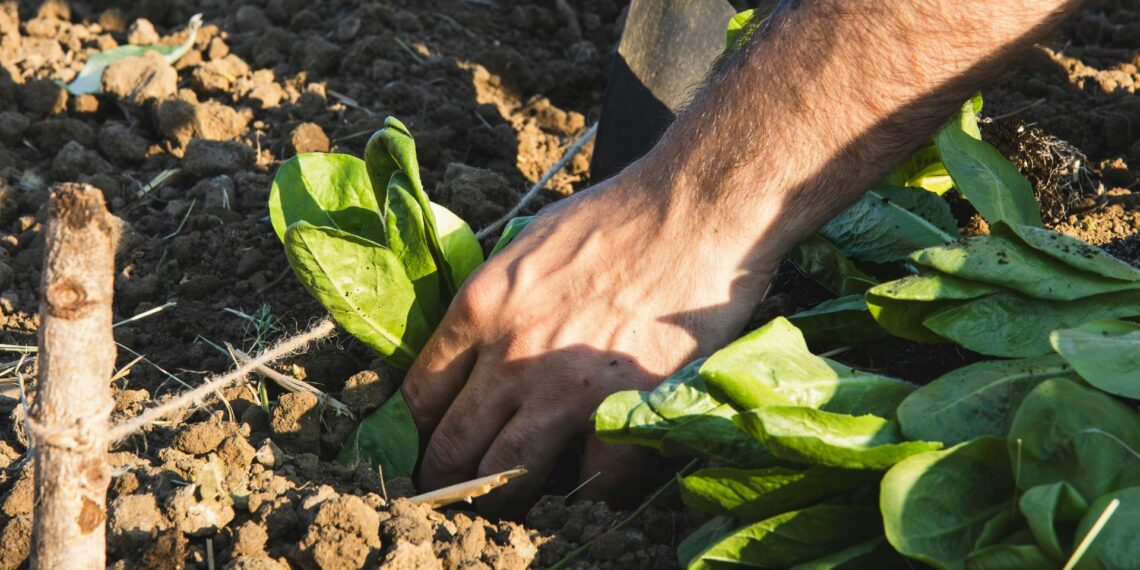
Carbon credits can support climate-smart agriculture, but only through credible soil carbon measurement, long-term commitment and practical support that enables farmers to monetise soil health sustainably. Photo: Pexels

Carbon credits can support climate-smart agriculture, but only through credible soil carbon measurement, long-term commitment and practical support that enables farmers to monetise soil health sustainably. Photo: Pexels

Share on FacebookShare on TwitterShare on WhatsApp

Achieving climate-smart agriculture through carbon credits requires more than just changing farm practices; it demands a commitment to verifiable results. In a previous article, we explained what carbon credits are and how they are generated. In this article, we examine how different cropping and livestock systems can practically participate in carbon credit programmes and what this means for farm-level returns and resilience.

For farmers looking to participate in this market, the key is understanding the mechanics: how the carbon stored in the soil is measured, the long, often complex timeline for financial returns, and the mechanisms in place to protect against environmental risk. 

Matthew Kensett, specialised agri-solutions and intelligence lead at UPL Africa, outlines the technical steps and financial realities of monetising soil health.

How is the carbon measured?

Soil carbon measurement is a cornerstone of agricultural carbon credits. “The most reliable tool to measure your carbon is your physical soil sample,” Kensett says.

Physical sampling, conducted every three to five years, may be complemented by modelling and remote sensing technologies.

FARMER POLL

📢 Which bank is powering your farming journey?

Tell us which bank you use so we can better advocate for the specialised financial tools and accessible capital needed to help South African farmers overcome growth barriers and thrive!

All submissions are kept strictly confidential. 

“The measurement and modelling approach combined is the most economically viable,” he says.

While newer technologies such as soil sensors and imaging systems are emerging, Kensett stresses that physical sampling remains the industry standard for credibility.


Related stories
  • Carbon credits 101: A guide to regenerative farming & income
  • Farmers unlock carbon credit income with new UPL programme
  • Seed technology: How innovation drives higher yields & success
  • How to cut costs and boost income with agroecology

Why carbon credits matter?

For a carbon credit to be legitimate, it must represent real change.

Kensett explains that for a carbon credit to be credible, it must represent an activity that would not have occurred without the incentive of carbon finance. This principle is known as equally critical.

“The carbon we store in soils needs to be permanently stored there,” he says.

Kensett frames credits as a transition tool. “A carbon credit is the incentive for a farmer to change their practice.”

Revenue from selling credits helps offset the costs of adopting regenerative practices. “That income can help supplement the purchase of cover crops or any costs they might incur to change their practices.”

When do farmers see financial returns?

Carbon finance is not immediate and requires patience. Typically, farmers only begin to see financial benefits after three to five years, as the process requires independent audits, verification and formal issuance of credits by VERA before they can be sold.

“That audit process can take anywhere from a year to two years. It’s an incredibly rigorous process,” Kensett says.

Once issued, carbon credits are sold to buyers in voluntary carbon markets, generating revenue that is shared among project stakeholders. The full process of receiving this revenue can take up to five years.

“It is my hope that that time frame will get shorter for all,” he notes.

Carbon credits are not a quick fix, but they represent a growing opportunity for farmers willing to invest in soil health, data transparency and long-term sustainability. As markets mature and verification systems improve, carbon finance could become an increasingly important pillar supporting resilient, regenerative farming systems across South Africa.

Kensett says while carbon credit programmes are still relatively new, early pilots have already demonstrated that the system can work for committed farmers.

He explains that UPL deliberately chose a cautious, evidence-based approach before rolling out its Smart Climate Ag programme at scale. “We saw real improvements in the amount of carbon [our farmers] were able to sequester in soils. In some cases, farmers were able to optimise their fertiliser applications and reduce the costs associated with that by 50%.”

While credits from the pilot have already been issued, Kensett stresses that price negotiations with buyers are ongoing.

“That process takes a bit longer because buyers are also making sure that they are purchasing reputable credits and that they can trust the credits we’ve generated.”

Making the process simple for farmers

A key principle of the approach is to remove complexity from the farmer’s side. Farmers do not need to understand the technical details of carbon credits; instead, they are supported to focus on what they do best, farming and adopting improved practices.

Kensett explains that in their case, UPL provides technical guidance, combining chemical and biological solutions to ensure yields are protected while environmental outcomes improve.

“That’s quite important to us, to give farmers advice on what really works to maintain yields and improve the environmental outcomes,” he says.

Integrated cropping and livestock systems offer some of the strongest potential for carbon credits, combining row crops and well-managed grazing to build soil carbon, improve resilience and unlock long-term sustainability benefits for farmers. Photo: Pexels

Which farming systems can benefit most?

Certain systems currently offer higher potential for carbon credit generation. “At this stage, the highest potential is row cropping systems like your maize and soybeans.”

Livestock systems also offer significant potential, especially when managed effectively, as grasslands and pastures can store substantial amounts of organic carbon in the soil. The greatest opportunities, however, are found in integrated farming systems.

“The best potential is a farmer who can integrate livestock into their row cropping system,” Kensett says.

What happens if things go wrong?

According to Kensett, carbon credit programmes are designed to account for environmental uncertainties, such as events that could result in the loss of stored carbon, known as carbon reversals. To manage this risk, standards incorporate buffer mechanisms, where a portion of carbon credits is set aside in a buffer account.

Kensett likens this to insurance: “You can think of this as insuring against non-permanence risk.”

This ensures buyers receive credible credits, even in the event of unforeseen circumstances.

READ NEXT: Level up your agribusiness for a successful new year

Sign-up to Farmer's Inside Track for the best farming tips, news and advice to thrive!

Patricia Tembo

Patricia Tembo is motivated by her passion for sustainable agriculture. Registered with the South African Council for Natural Scientific Professions (SACNASP), she uses her academic background in agriculture to provide credibility and technical depth to her journalism. When not in immersed in the world of agriculture, she is engaged in outdoor activities and her creative pursuits.

Tags: carbon creditsClimate-smart agricultureFuture-focused farmerRegenerative agricultureTeach me
Deputy director-general Dipepeneneng Serage delivers the keynote address at the International Day of Plant Health commemoration in Mbombela, Mpumalanga. Photo: Supplied/Food For Mzansi
News

SA marks Plant Health Day with warning over food security

by Ivor Price
17th May 2026

The department of agriculture used International Day of Plant Health to highlight how plant biosecurity is critical to protecting food...

Read moreDetails
Bill Blackie, chief executive of business and commercial banking at Standard Bank Group, and Michael Lilje, CEO and founder of Orizon Agriculture, announce a new partnership aimed at enabling South African farmers to turn regenerative farming practices into verified carbon credits and additional income opportunities. Photo: Supplied/Standard Bank

Standard Bank, Orizon launch first bank-backed carbon crop programme

16th May 2026
Agriculture minister John Steenhuisen. Design: Food For Mzansi

Steenhuisen boosts SA’s FMD fight with 2 million more vaccines

16th May 2026
Freshly harvested tomatoes on display at a local market, highlighting ongoing discussions around tomato prices and supply dynamics in South Africa’s fresh produce value chain. Photo: Supplied/Food For Mzansi

Tomato price debate: Joburg Market, RSA Group weigh in

16th May 2026
Deputy minister Nokuzola Capa delivers the 2026 budget vote, outlining billions in support for black farmer development, training and inclusive agricultural growth. Photo: Supplied/Food For Mzansi

Agriculture gets billions: 10 key budget takeaways

15th May 2026

Tomato price debate: Joburg Market, RSA Group weigh in

Dairy giant expands with Ladismith Cheese Company deal

Agriculture gets billions: 10 key budget takeaways

Farminist founder blends farming skills with smart business

Engen keeps tractors and farming dreams moving at Nampo

Join Food For Mzansi's WhatsApp channel for the latest updates!

JOIN NOW!
Next Post
Young farmers rise! Agri-learners triumph in grade 12 finals

Young farmers rise! Agri-learners triumph in grade 12 finals

THE NEW FACE OF SOUTH AFRICAN AGRICULTURE

With 21 global awards in the first six years of its existence, Food For Mzansi is much more than an agriculture publication. It is a movement, unashamedly saluting the unsung heroes of South African agriculture. We believe in the power of agriculture to promote nation building and social cohesion by telling stories that are often overlooked by broader society.

KZN’s agri gateway grows: Dube AgriZone 2 opens new doors

Infrastructure crisis deepens strain on storm-battered fruit farmers

Why SA should embrace landrace seeds during global uncertainty

Dairy giant expands with Ladismith Cheese Company deal

Development finance key to growing future commercial farmers

‘Cayenne Chilli Lady’ brings the heat with 8.5ha farming success

  • Awards & Global Impact
  • Our Story
  • Contact Us
  • Cookie Policy
  • Privacy Policy
  • Copyright

Contact us
Office: +27 21 879 1824
News: info@foodformzansi.co.za
Advertising: sales@foodformzansi.co.za

Contact us
Office: +27 21 879 1824
News: info@foodformzansi.co.za
Advertising: sales@foodformzansi.co.za

  • Awards & Global Impact
  • Our Story
  • Contact Us
  • Cookie Policy
  • Privacy Policy
  • Copyright
No Result
View All Result
  • News
  • Changemakers
  • Lifestyle
  • Farmer’s Inside Track
  • Food for Thought

Copyright © 2024 Food for Mzansi

This website uses cookies. By continuing to use this website you are giving consent to cookies being used. Visit our Privacy and Cookie Policy.