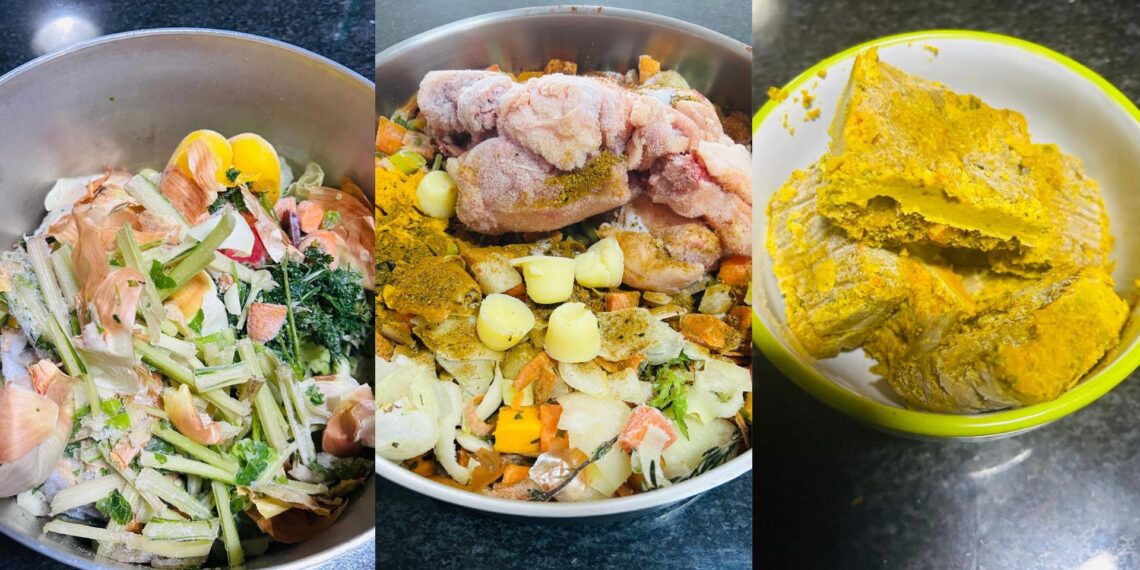
Cooking the perfect, tastiest dish sometimes just needs a little extra flavour. Most of the time, it comes from adding beef, chicken or vegetable stock. Many home cooks choose to make their own stock cubes because it lets them control the salt and use blends that suit their taste.
These flavours come from meat bones, vegetables or a mix of both, often made from leftovers. It is the perfect way to reduce food waste. The cubes store well in the refrigerator and can be used later in soups, stews and other savoury meals.
Cape Town-based chef Chulu Mavuso says she learned that flavour starts long before a dish reaches the plate. It begins with how we treat what we already have.
“I save every flavourful scrap,” she says. This includes onion and carrot ends, herb stems, leftover bones, cooked vegetables, and even tomato tops.
The taste starts in prep
She adds that stock needs time to develop its richness. “You don’t need hours, even 45 minutes to an hour is enough. A gentle simmer pulls out flavour without clouding the liquid.”
Before adding water, she roasts the bones or sautés aromatics like onion, garlic, and ginger. Sometimes she adds whole spices such as peppercorns, cloves, or coriander seeds.
“These small steps turn simple leftovers into restaurant-level stock,” she explains.

Once the stock is strained, she reduces it until it’s bold and concentrated, then pours it into ice trays to freeze. “Suddenly I have homemade stock cubes; clean, sustainable, and full of pure flavour.”
Related stories
- Meet the cook taking Mzansi’s food to the East
- Save the environment: Food waste adds to land degradation
- How to effectively manage food waste on farms
Making the right ingredient count
Tshwane-based private chef Thole Mathe says that before making stock cubes, you should avoid cruciferous vegetables such as broccoli, cauliflower, Brussels sprouts, and cabbage, as they can make the stock taste bitter and sulfurous.
With meat and poultry, he explains that the key flavour is hidden in the carcasses.
“The leftover carcass from a roast chicken, turkey, or duck is the ultimate prize. It’s packed with gelatin and flavour.”
Thole Mathe
Bones from chops, steak, or ribs also add depth, while shells from shrimp, lobster, and crab make an incredible base for seafood stock.
Mathe adds that herb stems provide more flavour than leaves. Making stock with fish is similar to using leftovers; the main difference is starting with seafood ingredients.
His top tip is to use a silicone ice cube tray for easy removal. You can store the cubes in a sealed freezer bag for up to six months. “Every time you make your favourite dish, just grab a few cubes, no time wasted,” he says.
Repurposing discarded pieces
If you cook at home, you already know how quickly kitchen waste piles up, says food technologist and entrepreneur Oneziwe Jackson from Cape Town. She says this includes vegetable peels, bones, and meat trimmings.
That leftover gravy from your favourite curry, the one you mop up with a slice of bread, often ends up in the bin or down the sink on days you do not feel like bread, she says.
“It feels small, but those small moments across millions of households are exactly why Mzansi wastes an estimated 10 million tonnes of food every year,” Jackson says.

She explains that most vegetable nutrition is in the skin. Potatoes, butternuts, pumpkin, and beetroot are high in fibre and minerals.
Onion skins contain quercetin, a powerful antioxidant. Tomato and carrot peels are rich in carotenoids, which support eye and skin health.
Jackson adds that herb stalks hold as much flavour as the leaves. Bones, vegetable offcuts, herb stems, and overripe tomatoes are not wasted. “This is how I repurpose my peels and make stock cubes,” Jackson says.
She saves everything from onion peels, tomato tops and overripe tomatoes, carrot peels, pumpkin and squash skins, beetroot peels, herb stalks, celery ends, and pepper cores.
Jackson explains her process:
- Everything is thrown into a pot, and the vegetables are fried in tallow or butter first to add more flavour and nutrients.
- The mixture is then left to simmer until it is soft and the liquid has reduced.
- A hand blender is used to create a smooth pulp, and if it is still watery, it is simmered again until thick.
- The paste is then layered in a tray or spooned into ice cube trays.
- Once frozen, the cubes are wrapped in foil or placed in a labelled freezer bag.
She adds, “I use the cubes in almost everything. Add them to stews, curries, soups, melt into gravies, add to rice for extra flavour, or drop into hot water for instant vegetable broth, perfect for winter.”
Jackson says festive leftovers like roasted vegetables, gravy, bones, and herbs should not be thrown away. “Add them to a freezer bag and blend them into cubes later.”
READ NEXT: Just grow with Onie: How a balcony garden became a business