Wednesday, October 21, 2026
SUBSCRIBE
22 GLOBAL MEDIA AWARDS
Food For Mzansi
  • News
  • Changemakers
  • Lifestyle
  • Farmer’s Inside Track
  • Food for Thought
No Result
View All Result
  • News
  • Changemakers
  • Lifestyle
  • Farmer’s Inside Track
  • Food for Thought
No Result
View All Result
Food For Mzansi
No Result
View All Result
in News

Agriculture lifts, but not enough to buoy a weak economy

by Sinesipho Tom
9th September 2020
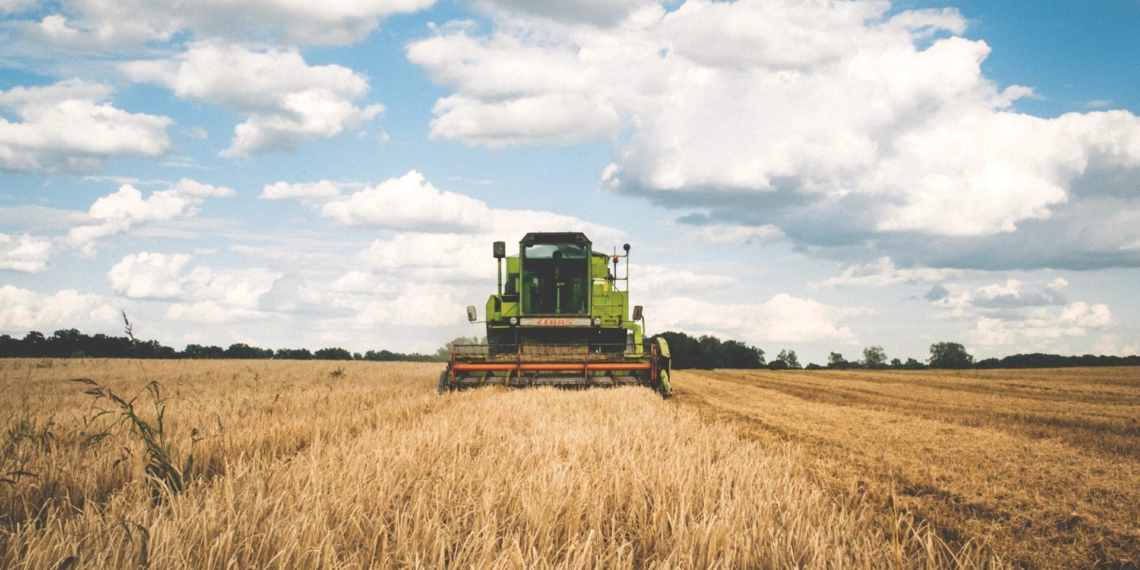
South Africa harvested its second-largest grains harvest on record this season.

South Africa harvested its second-largest grains harvest on record this season.

Share on FacebookShare on TwitterShare on WhatsApp

Agriculture is the shining light in an economic sky that is otherwise very dark over South Africa, managing growth of 15.1% in the second quarter of 2020. It is the only sector to grow amid the covid-19 lockdown damage that crushed the overall economy down by 16.4% quarter-on-quarter. 

According to GDP figures released by Stats SA on Tuesday (8 September), the economic contraction adds up to a shocking 51%, if viewed on a seasonally adjusted, annualised basis. 

Experts say that agriculture’s shining performance was supported by the sector’s status as an essential service that could mostly continue operating despite the lockdown. This enabled several industries in the sector to capitalise on a recovery from the effects of severe drought and other external factors. 

The South African economy was already in a recession before the lockdown was implemented by the government, says Christo van der Rheede, deputy executive director of Agri SA, in a press statement. 

Christo van der Rheede, the deputy executive director at Agri SA. Photo: Supplied

Van der Rheede emphasises that the contraction in GDP in the second quarter of 2020 was not due to the outbreak of the covid-19 virus itself, but rather due to the lockdown regulations that were enforced by government.  

“The lockdown regulations are among the strictest regulations in the world bringing many other industries to their knees,” he said. 

Chief executive officer of Agbiz, Dr John Purchase, says that the sector managed to shine so brightly since it was classified as an essential service.  

Most importantly, however, it is due to the fact that this is a recovery year in agricultural output across all subsectors (field crops, horticulture and livestock) following prolonged periods of drought, and a surge in exports (supported by the weak exchange rate).  

According to Purchase, from a field crops output perspective, South Africa harvested its second-largest grains harvest on record. Within this category, maize, sunflower seed and soybeans produced in the current season (2019/20 production year) are up 38%, 16% and 8% year–on–year respectively. The crops for these three grains are estimated at 15.5 million tonnes, 785 910 tonnes and 1.3 million tonnes respectively.

Dr John Purchase, Agbiz CEO
Dr John Purchase, the CEO of Agbiz. Photo: Supplied

Moreover, South Africa’s sugar cane production is set to increase by 1% year–on–year to 19.4 million tonnes. In the case of horticulture, South Africa has generally had a good fruit harvest this year, with the citrus industry recently noting a 13% year–on–year increase in available supplies for export markets in 2020.  

There is also a broad recovery in the production of deciduous fruit with apple and pear production up by 5% year–on–year and 1% year–on–year respectively in 2020.  

The livestock industry also saw a general recovery, although this particular subsector was not as robust as others. Slaughtering activity softened when the country went into strict lockdown at the end of March. With that said, the livestock sector activity will probably recover in the third quarter, depending on the widespread opening of restaurants and the ability of consumers to afford animal products, says Purchase.  

He noted that, “unfortunately, however, this did very little to change the overall GDP picture of South Africa, as primary agriculture is a small share of the economy.” 

Adversity has not stopped Maluleke from reaching for the stars.
Ikageng Maluleke, an agricultural economist with Grain SA. Photo: Supplied

Ikageng Maluleke, agricultural economist at Grain SA said the growth the agricultural sector was expected.  

“It is no surprise that there is growth in the agricultural sector despite the grim picture in the overall economy. Agriculture was classified as an essential industry during the lockdown period and thus most value chains remained operational except for tobacco and wine.” 

“The growth in the industry can mainly be attributed to an increase in maize exports, with about 89% of yellow maize exported as a percentage of exportable maize for the season, with white maize at 20%. Stats SA also reported great demand internationally for citrus fruits and pecan nuts. Exports were also boosted by the weakening rand, which has depreciated by about 25% year on year against the dollar,” she says.  
Sinesipho Tom

Sinesipho Tom is an audience engagement journalist at Food for Mzansi. Before joining the team, she worked in financial and business news at Media24. She has an appetite for news reporting and has written articles for Business Insider, Fin24 and Parent 24. If you could describe Sinesipho in a sentence you would say that she is a small-town girl with big, big dreams.

Tags: AgbizAgri SAChristo van der RheedeDr John PurchaseeconomyGrain SAgross domestic product (GDP)Ikageng MalulekeMaize
News

Stop the rot: Four steps to slash post-harvest losses

by Abeeb Omotoso Abiodun Omotayo Adeyemi Aremu and Olaniyi Fawole
18th October 2026

Did you know nearly a third of all food produced globally never makes it to the table? Poor roads, lack...

Read moreDetails
A standing ovation for agriculture’s incredible talent! The Agri’s Got Talent 2026 top three celebrate their achievements: winner Honey Katoo of Endulini Fruit in Patensie, alongside runner-up Clareece Vlotman of Wolfpack in Wolseley and finalist Lwandile Nantsi of Laastedrift in Ceres. Photo: Supplied/Food For Mzansi

Patensie claims Agri’s Got Talent crown for second year running

17th October 2026
The panellists at FNB Business’s “Farming together” discussion at the Royal Show explored how market access, mentorship, financial discipline and strong commercial relationships can help farmers build sustainable businesses. Featured from the left are Bertram July (FNB’s distribution sales lead), commercial farmer Shakes Shabalala; Sandy Gumede (co-founder of Zulu Girl Wines), and Janis Robson (FNB’s head of development and SME business development). Photo: Food For Mzansi

FNB puts relationships at the heart of commercial farming

17th October 2026
Agri Skills Transfer students gain hands-on experience at the institution’s Cullinan Farm Training Centre, where agricultural theory meets the realities of commercial production. Photo: Supplied/Food For Mzansi

Build your future in agriculture with Agri Skills Transfer

17th October 2026
Durbanville Hills tastes sweet success at Michelangelo Awards

Promising early conditions predicted for 2027 SA wine harvest

17th October 2026

Mpumalanga agripreneur bottles family wisdom one chilli at a time

Reality check: What SA agri interns really experience on the farm

Becoming bankable: How to get your farm ready for finance

Laastedrift Agri leads with BigBucks Gala success

Stronger rural policing needed to protect lives and livelihoods

Join Food For Mzansi's WhatsApp channel for the latest updates!

JOIN NOW!
Next Post
Dr Riana Jacobs-Venter mycologist and senior researcher at the Agricultural Research Council.

AgriSETA Learner Connect: Meet a mycologist

THE NEW FACE OF SOUTH AFRICAN AGRICULTURE

With 21 global awards in the first six years of its existence, Food For Mzansi is much more than an agriculture publication. It is a movement, unashamedly saluting the unsung heroes of South African agriculture. We believe in the power of agriculture to promote nation building and social cohesion by telling stories that are often overlooked by broader society.

Potatoes and tomatoes plunge while avocado prices soar

Becoming bankable: How to get your farm ready for finance

Fixing SA’s agricultural visa system to protect seasonal harvests

SA and Namibia reevaluate livestock trade after FMD outbreak

Agda conference to tackle finance, market access and agri growth

Reluctant farmer scales EC cabbage enterprise to supply Spar

  • Awards & Global Impact
  • Our Story
  • Contact Us
  • Cookie Policy
  • Privacy Policy
  • Copyright

Contact us
Office: +27 21 879 1824
News: info@foodformzansi.co.za
Advertising: sales@foodformzansi.co.za

Contact us
Office: +27 21 879 1824
News: info@foodformzansi.co.za
Advertising: sales@foodformzansi.co.za

  • Awards & Global Impact
  • Our Story
  • Contact Us
  • Cookie Policy
  • Privacy Policy
  • Copyright

Chat Options

About this assistant

This feature generates automated answers summarised from Food For Mzansi articles. By using it, you are interacting with an AI system (provided by Google), not a human. AI can make mistakes. Please refer to the source articles for verification and citation purposes.

Our staff do not check or moderate Lerato’s answers in advance, but may review some later. Our journalists continue to write and edit all the articles Lerato uses as sources.

To estimate unique and returning web users, we store a random browser ID in this browser. WhatsApp users are counted by phone number. The same person using both channels may be counted twice.

I'm Lerato, your AI assistant!
No Result
View All Result
  • News
  • Changemakers
  • Lifestyle
  • Farmer’s Inside Track
  • Food for Thought

Copyright © 2026 Food for Mzansi