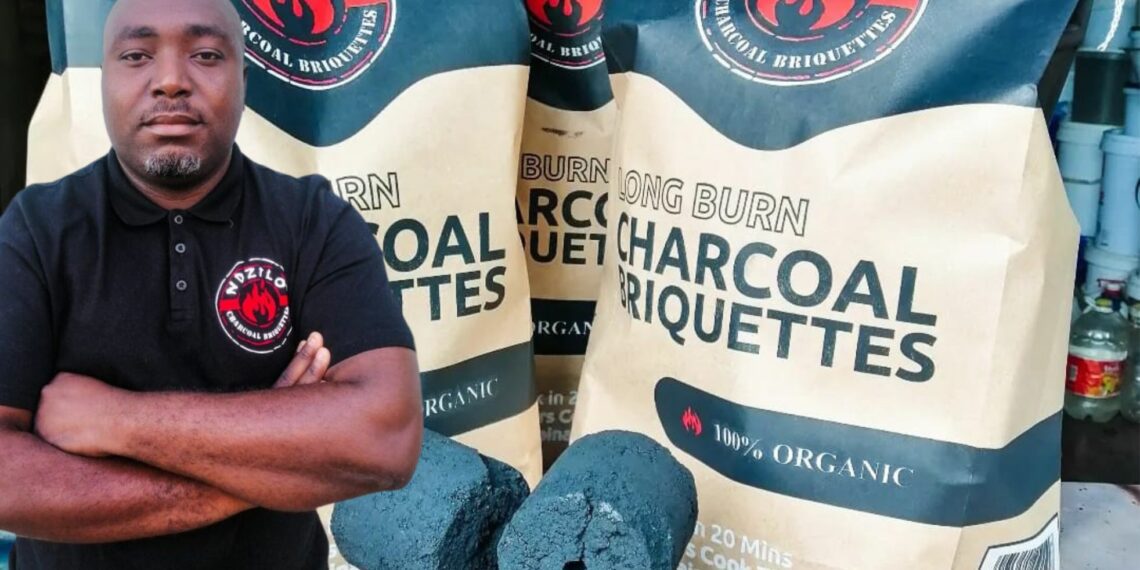
Years ago, Given Ngwamba’s garage in Ka-maqhekeza, Mpumalanga was transformed into an impromptu innovation hub, filled with homemade machines that would ultimately bring his groundbreaking idea to fruition. He wanted to create coal using agricultural waste such as groundnuts, sugarcane, macadamia shells, coconut, and waste from mango leaves and banana trees.
The idea came after Ngwamba found himself at a crossroads in 2019 after a failed business venture left him seeking a new beginning.
“We built our own machines and experimented with different materials. It wasn’t easy, but we were driven by the potential impact.
“We’ve gone from a handful of friends tinkering in a garage to a growing team; employment opportunities in our community are incredibly rewarding,” he says.
Turning waste into wealth
The name of Ngwamba’s business is Nzilo Charcoal, which means “hope” in the local dialect. He sells his environmentally-friendly briquettes to local retailers like Vleis Paleis Nelspruit and Naas SuperSpar for R37 per bag who add their markup. Those who buy directly from Ngwamba pay R50 per bag.
At the core of Nzilo Charcoal lies the principle of agricultural sustainability by repurposing waste into valuable resources for producing cleaner-burning charcoal.
In a meticulous process, Nzilo Charcoal begins by gathering agricultural waste such as sugarcane husks, corn stalks, and woodchips from nearby farms. “This waste becomes the fuel for our eco-friendly briquettes,” Ngwamba explains.
Related stories
- Agripreneur: Tayyib turns waste into fertiliser wealth
- Agripreneur: Maphosa’s smart tags keep livestock safe and sound
- AgriPreneur: Plant magician uses science to help farmers
These raw materials undergo a transformative journey starting with sun-drying, an eco-friendly technique that harnesses the power of natural sunlight.
Once thoroughly dried, the material is then subjected to carbonisation within specially designed kilns, where it undergoes a metamorphosis into charcoal.
The final stage of this artisanal process involves Nzilo Charcoal’s handcrafted machines that compress the carbonised material into dense briquettes.
This careful sun-drying process over several days not only ensures the purity of the end product but also guarantees clean-burning charcoal, Ngwamba says. “Our briquettes burn cleaner, releasing fewer harmful emissions.”


Ngwamba’s vision for a greener tomorrow
The road to success was not paved with ease. Limited access to funding and machinery presented a constant hurdle. The three Covid years added an additional layer of challenge.
However, Ngwamba stayed strong and focused. He used the time to improve his methods, driven by a strong desire to find a lasting solution for his community.
With the business doing well, he hopes to replicate his briquette concept elsewhere. “Our affordable pricing makes sustainable grilling accessible to everyone.
“We’re a testament to the power of innovation and collaboration. We started small, but our impact is growing, and we invite others to join us on this journey towards a greener tomorrow,” explains Ngwamba.
Advice to aspiring entrepreneurs
Ngwamba’s message to aspiring entrepreneurs is to be passionate, work hard, and be innovative as these are the cornerstones of success.
He encourages them to:
- Find their niche: Identify areas within the charcoal industry where they can offer eco-friendly solutions.
- Embrace resourcefulness: Look for creative ways to utilise waste materials or optimise existing processes.
- Be persistent: Building a successful business takes time and perseverance. Don’t be discouraged by setbacks.
READ NEXT: Sustainable agriculture a passion for green warrior Majaha
Get Stories of Change: Inspirational stories from the people that feed Mzansi.