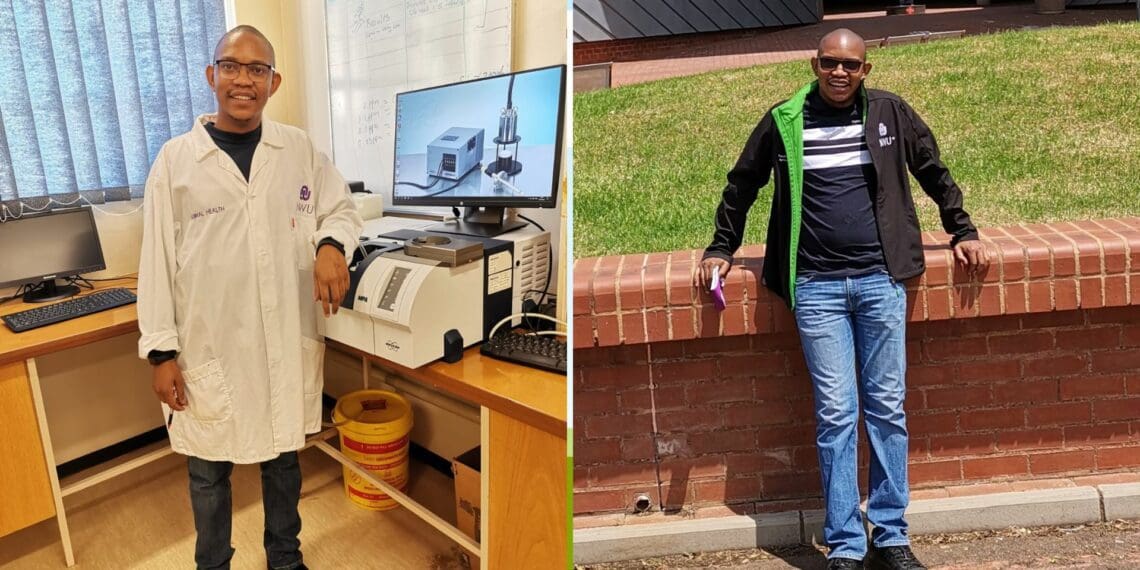
As the son of household farmers, Professor Kenny Mnisi has never been a stranger to agriculture. However, it took a trip to the Kruger National Park at the age of six for his love for animals to catch fire. Today, as an animal scientist, Mnisi wants to teach farmers the importance of animal health and improve animal production systems.
The 30-year-old Mnisi, who is originally from Masibekela in Mpumalanga, says farming is in his blood. Both of his parents are household farmers and he grew up watching them farm with livestock.
But during his trip to the Kruger Park, a new world opened up for him. For the first time, he had an opportunity to see the animals in person that he’d only seen on TV before.
Finding his passion at an early age, Mnisi hopes to encourage young people to follow a career in animal science.
Building a sustainable operation
Mnisi holds a PhD in animal sciences from North West University. His wish is to teach farmers, especially in far flung areas, the importance of animal health and how best to trade with their livestock.
“They say if you have eaten today, you must thank the farmer. This means, that in the absence of farming, issues of hunger, malnutrition and food insecurity will take over.

“So, it is very important for livestock farmers to understand the basic principles that underpins animal production, to ensure that they build sustainable and profitable agro-businesses that will continue to contribute high-quality products to the food supply chain,” he says.
According to Mnisi, the latest statistics showed that about 9.9% of the world population suffers from malnutrition .
“We need to train and produce farmers who will ensure that, even the most disadvantaged countries, have adequate access to affordable animal products,” he adds.
Research pays off
The animal scientist was recently granted a Y2 rating by the National Research Foundation. He explains what it means to him.
“Obtaining a Y2 rating is just the first step in climbing the ladder. I believe that with the right resources, facilities, and support base, I will be able to sit with other animal science scholars at the top of the pyramid one day.
“For now, it is encouraging that my efforts, sacrifices, hard work and long hours in the animal science laboratories are slowly getting recognised and rewarded.”
His research focuses on providing nutrition solutions to the animal agricultural industry, especially for resource-poor farmers who battle with high feed costs.
“The use of locally available, easily accessible and naturally growing plants with both nutritional and medicinal properties, can be a long-term strategy to promote eco-friendly, sustainable and profitable animal agro-enterprises.”
Mnisi has published over 40 high-quality research papers, which is almost double what he had submitted at the time of his rating. He also serves as a co-editor of the South African Journal of Animal Science.
Soldiering on
Speaking on what keeps him going, Mnisi, despite the many challenges he has faced, says keeping his head up was the best motivation he ever decided on.
“Over the years I have learnt to make lemonade from lemons. Further, I would like to say that people, especially in academia, need to realise that age is just a number and make means to equally accommodate and support everyone.
“I started lecturing when I was 23 years old, so most of the time I had to prove myself on what I can do. Being the underdog, I always had to put in more work, so I believe that is what made me who I am today.”
Mnisi lifts the veil on what could be expected from him in the near future regarding animal health.
“I am already part of many ongoing projects whose main aim is to improve animal production systems using non-conventional feedstuffs, local phytogenic plant products, and other natural additives.
“This is very important, given that most animal farming businesses are currently collapsing because of high feeding costs, which constitute more than 70% of the production costs.
“Thus, building profitable and sustainable animal businesses require the use of inexpensive, locally available, and easily accessible feed ingredients whose utility will enhance animal performance and health, while promoting environmental stewardship,” he explains.
Helping the youth
Mnisi is passionate about motivating young people in agriculture. He has successfully supervised over 20 BSc honors students and 13 postgraduate students, eight of whom graduated cum laude in their master’s degree studies. He is currently supervising seven PhD and six MSc students in animal sciences.
Motivating young people who want to become animal scientists, Mnisi urged them to have a passion for farming and agriculture.
“My message to them is that they should not listen to any negative voices but must always strive for excellence.
“Self-determination, hard work, and discipline are the main ingredients to success, so that’s what they need. The field of animal science is very big for everyone to succeed, so they should always strive to leave a mark,” he said.
ALSO READ: Farming professor gears youth for digital opportunities
Get Stories of Change: Inspirational stories from the people that feed Mzansi.