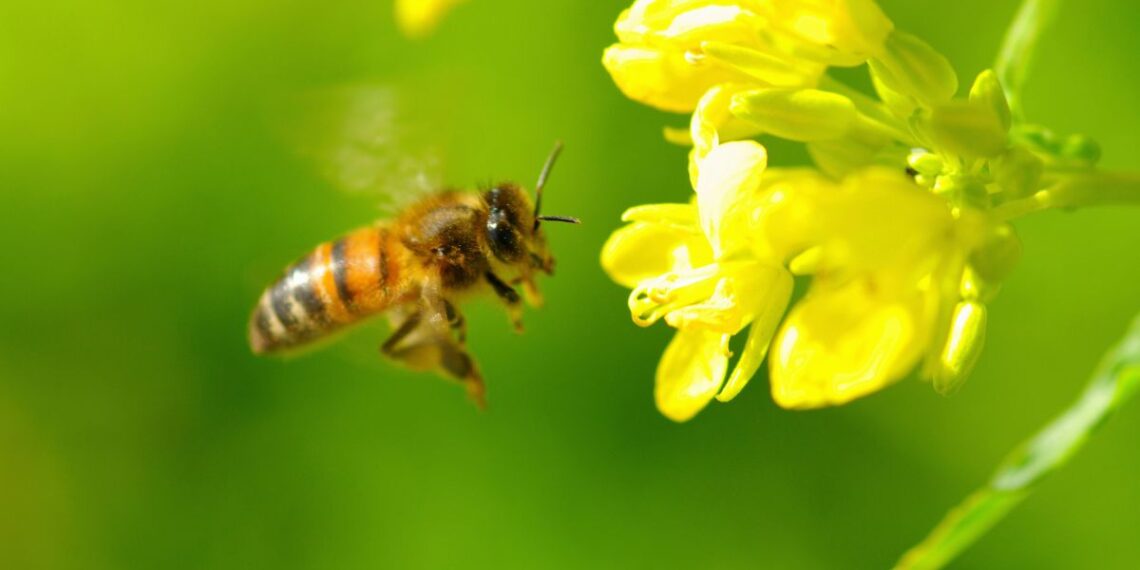
The apple trees are in blossom, whispering their pink-white promises to the bees. But the bees need no promises – they already know where they can satisfy their pollen and nectar needs as they emerge purposefully from hives throughout the orchards.
The hives may seem scattered across the landscape, but their placement is meticulously planned. Beekeepers bring the hives mainly from the Overberg region to the Elgin and Grabouw areas of the Western Cape to pollinate pear and apple blossoms each year from September to October.
This region provides over 80% of South Africa’s apples and pears, while the Langkloof Valley in the Eastern Cape contributes around 20%. Over half of the annual apple and pear harvest is exported.
The beekeepers know precisely how many hives are needed for optimal pollination. Each hive houses approximately 30 000 Cape honeybees (Apis mellifera capensis), a species unique to South Africa.
Danie Vorster, founder and head of the Overberg Honey Company, along with his wife Nadia, speaks with pride about the role bees have played in their business.
“Cape honeybees – or just honeybees as we call them – have given my family everything we have,” he says.
The couple has been in the business for 14 years, and their operation has grown significantly, managing roughly 120 million honeybees that primarily serve the fruit pollination industry. Honey production, however, is a secondary income stream for the company.

Vorster offers a fascinating insight into the scale of honey production: to make just one jar of honey, honeybees must visit around two million flowers. Each bee, over the course of its 45-day life, produces just one drop of honey.
Honeybees are not only prolific but also vital indigenous pollinators, essential for agricultural sustainability.
“In South Africa, over 50 agricultural crops, worth more than R10.3 billion annually to our economy, rely on honeybees for pollination,” says Shelly Fuller, who is leading a project funded by Nedbank and the World Wide Fund for Nature (WWF) Nedbank Green Trust.
The initiative aims to conserve the Cape honeybee in the Western Cape’s Cape Floral Kingdom through sustainable hive management and the restoration of indigenous forage.
The range of crops that depend on honeybee pollination is wide: apples, pears, lucerne, sunflowers, macadamias, and stone fruits like peaches, apricots, nectarines, and plums.
“Caring for honeybees is crucial for their survival – and ours,” Fuller says. “This uniquely South African species is starting to receive the recognition it deserves.”
However, a major challenge lies in the shortage of natural forage for honeybees.
Fuller explains that the area’s current agricultural footprint leaves insufficient forage for the honeybees, especially during the fruit blossom period.
This gap in natural resources has given rise to an industry of portable hives managed by beekeepers to meet the demands of fruit farmers. Pollination, known as an ecosystem service, is vital for ensuring successful fruit set, and without it, farms would see a reduced yield.
Collaborative efforts aim to secure year-round forage
The WWF Nedbank Green Trust project collaborates closely with farmers and beekeepers in the fynbos and fruit-growing areas of Elgin, Grabouw, and Langkloof to address this issue. The longer-term goal is to establish regional indigenous replanting projects to provide honeybees with sustainable forage outside the bloom season.
Danie Vorster highlights that weather plays a significant role in hive management. “Honeybees work best when it’s warm. In cold weather, about 60% of the bees need to remain inside the hive,” he explains.
Since fruit pollination occurs mostly in cooler months, Vorster ensures that they maintain enough hives to meet the demand in orchards.
In partnership with the South African Bee Industry Organisation (SABIO) and the Western Cape Bee Industry Association, the WWF project team is quantifying the economic value of honeybee pollination services.
They also focus on raising awareness about how crucial these tiny pollinators are for food, life, and job security.
The project includes assessments by conservation bodies like the South African National Biodiversity Institute (SANBI) and Living Lands to gauge how much indigenous forage is needed to support Cape honeybee populations throughout the year.

The Langkloof region, known for both its fruit production and biodiversity, is at the forefront of these efforts. It’s home to intensive agriculture, nestled between fynbos-rich mountains.
“We are working with Living Lands in Langkloof to assess this area, which offers the most natural system for agriculture in harmony with nature,” says Fuller. Beekeepers manage the hives on-site, and there is good natural forage, providing honeybees with resources outside of the pollination season.
Honeybees forage within a 1 to 3 km radius, and expanding this radius by increasing indigenous forage in Elgin and Grabouw is a key goal for the project. This effort also involves removing invasive alien vegetation, which many fruit and wine farmers in the area support. Over 60 fruit and wine farmers, dubbed Conservation Champions, are committed to sustainability practices, including honeybee conservation.
Sustainable practices protect honeybees
One such leader is the Paul Cluver Family Wines Estate, a 2 400-hectare farm that has been at the forefront of sustainable farming. With 1 000 hectares dedicated to fynbos wilderness, they have planted over 800 endemic trees as part of their landscape rehabilitation efforts.
“Biodiversity and climate change are now core concerns for us,” says Paul Cluver Senior. “Regenerative farming and landscape conservation are vital to ensuring the survival of species like the honeybee.”
In addition to restoring indigenous vegetation, some farmers are planting cover crops, such as grasses and legumes, to improve soil health and provide more forage for honeybees. This practice has been shown to enhance pollination, benefiting fruit yields. Farmers also avoid spraying pesticides during the crucial pollination period, further protecting the health of both honeybees and the environment.
While fynbos and other native plants are the primary forage for honeybees, the invasive eucalyptus trees also play an important role during the late summer months.
Although these trees are water-intensive and pose other environmental risks, they provide vital forage for honeybees when other flowers are scarce. The challenge now lies in balancing the removal of eucalyptus with ensuring that honeybees have access to year-round forage.
Through initiatives like these, beekeepers, farmers, and conservationists are working together to secure a future where honeybees continue to thrive, ensuring a steady supply of food, jobs, and economic stability.
As the project team builds up indigenous nurseries and restores vital habitats, they are not only safeguarding honeybee populations but also enhancing the resilience of the entire ecosystem.
The business of bees, it turns out, is not just about honey – it’s about securing a sustainable future for agriculture, biodiversity, and the livelihoods of millions of South Africans.
READ NEXT: Spekboom’s health and climate perks are unstoppable
Sign up for Mzansi Today: Your daily take on the news and happenings from the agriculture value chain.