When it comes to egg production, farmers have to get everything right, from choosing the right breed to feed and the environment, all to make sure what reaches your home is fresh, safe, and nourishing.
Managing a successful egg enterprise takes care and knowledge. One wrong step can affect quality and safety, and for farmers, it can mean losses and stress.
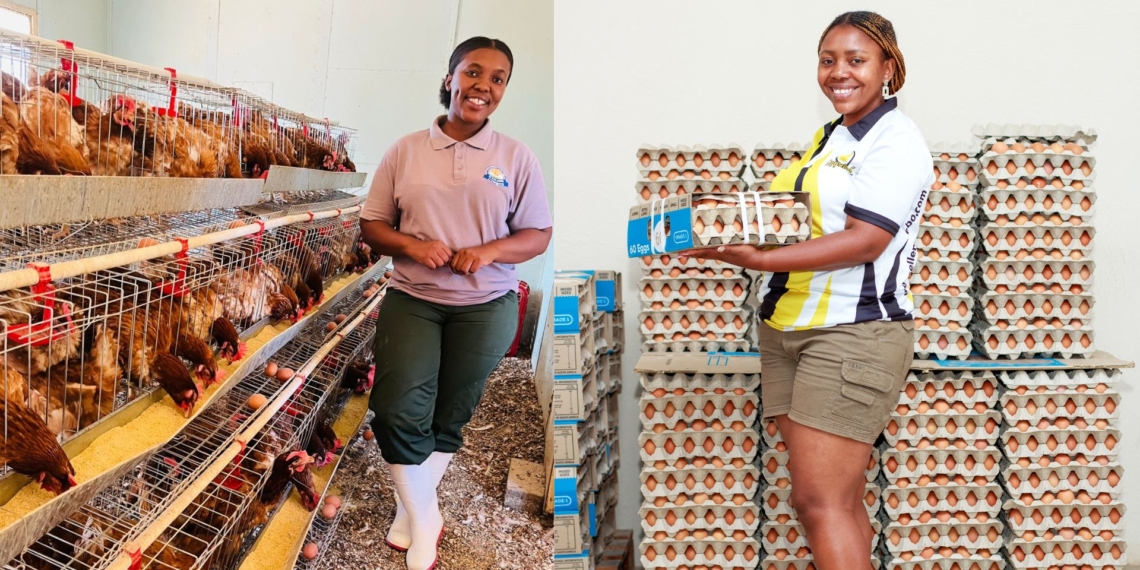
In Kwaggafontein, Mpumalanga, Lebogang Mashigo, founder and managing director of Eggsellent By Lebo, treats her Lohmann Browns like her most prized possession.
“They are great layers, highly resilient, and consistent in their production cycles,” she explains.
Mashigo says her key layer feed is a commercial mash sourced from reputable suppliers with proven performance. She also works with a technical advisor who assists with feed formulation, flock management, and monitoring overall production efficiency.
“We maintain strict biosecurity protocols and detailed record-keeping.”
Lebogang Mashigo
She also ensures a stable water supply, a reliable purification system, fully climate-controlled housing, and automated feeding and egg collection systems that are closely monitored.
To mitigate power risks, Mashigo relies on three energy sources: Eskom, solar, and a standalone generator as backup.

Meanwhile, Nqobile Khumalo, founder and director of GC Blue Lagoon Poultry Farming in the Northern Cape, says Lohmann Browns are ideal for both backyard and small-scale commercial operations due to their ease of management and robust performance.
“They sustain a high laying rate throughout the year, including peak and off-peak production periods,” she explains.
Khumalo feeds her flock with ITAU layer feed, which provides balanced nutrition for optimal egg quality, uniform shell colour, and consistent egg size. She ensures proper litter management with dry sawdust, maintains adequate ventilation, and strictly enforces hygiene protocols.

Biosecurity is essential. She says she wears boots when entering the chicken house, disinfects everything every two weeks, and allows entry only to those who follow proper hygiene steps. “This keeps my chickens safe from disease and contamination.”
Climate variability also poses challenges. “In the Northern Cape, heat waves often cause heat stress, which reduces production and impacts egg quality,” she explains.
Related stories
- Limpopo farmer finds peace, purpose in the harvest
- Mastering poultry feed: Tips to maximise efficiency
- Solar success: Poultry farmer turns setback into comeback
- Hustle pays: Lebogang’s R350 hatches 30 000-egg farm
Mzansi’s egg standards
In South Africa, there are three commercial egg-layer breeds: Hyline, Lohmann, and Amberlink. Each breed has different production advantages, says Dr Abongile Balarane, CEO of the South African Poultry Association’s (SAPA) egg organisation.
“We as SAPA can therefore not necessarily say which of the three breeds is the best; only farmers can attest to their performance based on their experience.”
Dr Abongile Balarane
He adds, “What we can confirm is that all three breeds provide us with the healthiest and most nutritious eggs for 365 days.”
According to Balarane, the industry norm is that these breeds start laying eggs at around 18 weeks, with production and egg size gradually increasing as the hens mature.
However, he notes that record-keeping and flock management are common mistakes among new smallholder farmers. Lack of proper biosecurity is often observed in this group. “As an industry, we are investing more in biosecurity training,” he adds.

Storage conditions play an important role. “We recommend eggs to be stored under ambient room temperatures.”
He explains that the market is very competitive, and each producer’s marketing strategy will determine success. Supply and demand ultimately dictate trade prices.
“In our opinion, free-range doesn’t mean the best quality. It defines a particular production system.”
He notes that free-range eggs generally command a premium in the market, but very few stores sell them, and only to a select group of consumers. About 95% of eggs in South Africa are produced under caged systems.
Egg safety starts with good biosecurity
The most important thing farmers must focus on is keeping everything clean and controlled for food safety and disease management on the farm, says Chumani Jezile, an agricultural and food safety consultant in Gqeberha, Eastern Cape.
“Eggs come from a living animal, so if hygiene is poor, contamination can happen very easily,” he explains.
Dirty environments increase the risk of bacterial infections such as salmonella. Clean water and good-quality feed are also key, because what the bird eats affects egg safety, Jezile says.
“Eggs must have strong, uncracked shells and be free from visible dirt, faeces, or stains. Cracked or dirty eggs should never be sold for human consumption.”

Frequent collection during the day is crucial to prevent eggs from sitting too long in dirty conditions.
“Storage is where many farmers go wrong. Eggs should be kept in a cool, dry place, away from heat and direct sunlight.”
Proper containers must be clean, strong, and free from smells or tastes that could transfer to the eggs.
Jezile notes that traceability and marking are also essential. Every pack must show the grade, size, packer information, and a best-before date. For unpasteurised eggs, this date must not be more than 40 days from laying. One of the biggest mistakes small-scale farmers make is ignoring grading and sorting.
READ NEXT: Poultry industry on edge as winter bird flu threat looms