Without a conducive business environment and rural economic empowerment, boosting agricultural investment will remain a pipe dream for Africa, some experts believe.
While the landscape continues to improve, Africa’s agricultural sector is in serious need of investment to drive food and job security across the continent.
Meanwhile, in South Africa, confidence in the agricultural sector is deteriorating. According to the Agbiz/IDC Agribusiness Confidence Index (ACI), confidence in the sector dropped by seven points to 53 in the third quarter following a two-point decline in Q2, 2022.
Higher input costs, friction in some export markets, persistent animal disease challenges, rising interest rates, intensified geopolitical risks which disrupted supply chains, and ongoing weaknesses in municipal service delivery and network industries are some of the key factors behind this confidence drop.
Conducive environment
One of the key ways in which the sector could boost agri investment is by ensuring a favourable environment to do business in.
This is according to Norman Celliers, chief executive officer of AFGRI. Celliers is of the view that African governments must come on board and play their respective parts in creating a conducive environment for doing business.

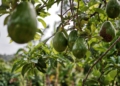
“I sometimes tell people to put themselves in the shoes of a big company wanting to invest in an avocado project for a period of 15 years in a country where the is no port infrastructure, no cold storages, where ships drop on a regular basis, and where country-to-country agreements on exports and imports are not in place. If you think about, you will realise that public- private partnerships are crucially important,” Celliers says.
As it stands, investment in the agricultural sector is already a risky endeavour. A lack of proper engagement between governments and investors, and dilapidated infrastructure is making matters worse, believes Celliers.
With droughts, floods, ineffective ports, and disease outbreaks, agriculture will a remain a tough sector. “This shows that over time, we need each other both in competitive private landscapes and public participation through state-owned entities,” he adds.
“The agriculture [sector] in Africa is the most important sector on this continent. It is a long-term [sector] and requires capital. For every cent spent on the primary agriculture, the output is greater than any [other sector].”
Public entities involved in the agriculture value chain need to remove obstacles in order for private sector players to play a meaningful role, Celliers states.
Don’t forget rural communities
Also important to assure agricultural investment is rural economic empowerment, believes deputy chairperson of the Eastern Cape development cooperation, Simphiwe Somdyala.
The Eastern Cape development cooperation finances and implements development projects across the province.
“We finance a lot of rural agriculture projects, but also as an investor, we see daily what food insecurity looks like. Importantly for us, when we talk about food security, we talk about affordability, availability, quality and safety as well as sustainability, so for us these are key areas that we look at when we fund,” Somdyala explains.
Investments should focus on rural communities since agriculture is the lifeblood of many rural communities across the continent, and therefore critical that beneficiaries are trained on the whole value chain.
However, the role of government and private sector in this should not be underestimated. “Without partnerships between government and the private sector, how will we share knowledge with ordinary people on the ground? How do we ensure that technologies [and] the research that is being done [reaches] rural communities?”
Somdyala says it is through partnerships that doors for rural communities could open, especially when it comes to market access and new technology trends.
“Generally African rural communities have got the land but what is lacking is the know-how of utilising that land for better advancement,” he adds.
ALSO READ: South Africa’s rural story needs to change
Sign up for Mzansi Today: Your daily take on the news and happenings from the agriculture value chain.