On the first anniversary of Wandile Sihlobo’s “A Country of Two Agricultures,” Ivor Price reflects on South Africa’s agricultural progress and ongoing challenges. He highlights the crucial work of RMIS, Kagiso Trust, and AGDA in advancing systemic change and supporting marginalised farmers, underscoring their vital roles in reshaping the nation’s agricultural landscape.
One year ago, Wandile Sihlobo’s A Country of Two Agricultures emerged, not merely as a book, but as a piercing reflection of a nation still divided by invisible lines drawn across its farmlands. In the soil of South Africa, two stories are told – one of abundance, the other of struggle. This duality persists, reminding us that despite the strides of democracy, the land has not yet become a true home for all its people.
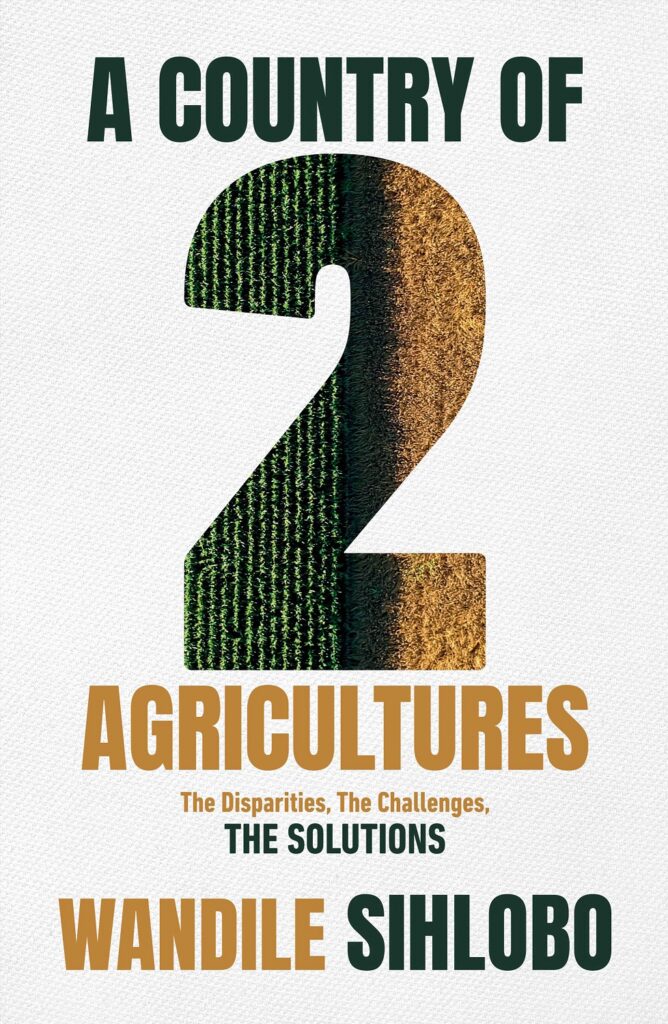
The anniversary of Sihlobo’s work is not just a marker of time, but a call to assess the path we’ve walked since its release.
How far have we come in closing the gap between the farming efforts of our black brothers and sisters, who toil with little more than hope, and the well-resourced, commercial farming sector long dominated by the white minority? This divide, nearly three decades after democracy’s dawn, remains a scar etched deep into our landscape.
Sihlobo’s book reminds us that this scar is a legacy of dispossession, where black farmers were systematically pushed to the margins, deprived of land, and robbed of livestock.
The land itself holds these memories, bearing witness to the injustices that have shaped our present. Yet, he challenges us to look forward. The question is not merely what has happened, but what will we do now? How do we heal this divided land?
Enter John Steenhuisen, the new agriculture minister. With the weight of history on his shoulders and the hopes of a nation in his hands, he steps into a landscape fraught with both peril and possibility. His charge is not just to manage the land but to heal it, to bridge the chasm between these two agricultures. It is a task that demands more than policy; it demands vision, courage, and an unwavering commitment to justice.
Since his appointment, Steenhuisen has made promising strides in the agricultural sector, particularly through his extensive travels to engage with various stakeholders, predominantly from the commercial farming fraternity.
His efforts to build bridges and reassure this vital part of South Africa’s economy have been commendable. By meeting with these key players, he has shown a genuine commitment to understanding and addressing their concerns, a move that has instilled a renewed sense of hope within the sector.
However, as much as his work with commercial farmers is vital, it is only part of the broader picture.
My hope is that the minister will extend this same level of commitment to uncovering the other side of agriculture that Sihlobo so powerfully illuminates – the agriculture of those who have long been excluded from the narrative of prosperity. The road ahead requires him to also walk in the footsteps of the new-era farmer, to stand in the fields where hope is often the most abundant, if not the only, resource.
There have been some missteps along the way, such as the controversial appointment of Roman Cabanac, a known alt-right podcaster, as chief of staff. This decision has sparked concern and detracted from the otherwise positive trajectory of Steenhuisen’s tenure.
Despite this, his overall impact has been viewed positively, indicating a potential shift towards a more inclusive and balanced approach to agriculture in South Africa.
Crafting a new story for agriculture
The work of organisations like the Agricultural Development Agency (Agda), Red Meat Industry Services (RMIS), and Kagiso Trust offers a blueprint for this journey. These initiatives are not just about farming – they are about rewriting the very story of our land.
The Blouberg Agri-Services Potato Hub, led by Agda, stands as a bold experiment, a coalition of unlikely partners sowing seeds of hope in the sun-baked belly of Limpopo. With a staggering R140 million pledged, this project is more than an agricultural endeavour; it is a social contract, a promise that even the most neglected regions can flourish when given the chance.
RMIS’s work in the red meat value chain further exemplifies what can be achieved when we commit to inclusive growth.
Their Land Development Support Programme goes beyond mere land allocation, offering black farmers the tools and knowledge needed to cultivate the land and restore dignity. This initiative is a direct response to the legacy of land dispossession and wealth hoarding, aiming to rectify centuries of inequality through economic empowerment and opportunity.
Kagiso Trust, too, is a beacon in this landscape. Their partnership with SPAR and the creation of the Tyala Impact Fund shine light into the darkest corners of our agricultural sector.
By empowering small-scale farmers and slashing costs, they have turned the tide for those who have long been left behind. Their work in Mopani, Limpopo, is a testament to what can be achieved when we invest not just in the land, but in the people who work it.
These projects are not just refurbishing a broken system; they are crafting a new story from the rubble of the old. They are acts of defiance against a history of exploitation, declarations that those who have been silenced will not remain so.
As Steenhuisen continues his journey as agriculture minister, may he carry these stories with him. May he not only protect the successes of the commercial sector but also champion the cause of those who are still waiting for their share of the harvest. For it is in the balance between these two agricultures that the true future of South Africa lies.
So as we mark the one-year anniversary of A Country of Two Agricultures, let us look not just at where we have been, but at where we are going. Let us walk this road with the knowledge that the journey is long, but the destination – a country where all can share in the harvest – is worth every step.
- Ivor Price is the co-founder and editor-in-chief of Food For Mzansi, South Africa’s largest agriculture news publication.
READ NEXT: Steenhuisen vows not to turn his back on new-era farmers