Yield alone no longer guarantees agricultural success. In a market defined by a severe cost squeeze, Nedbank’s Desry Lesele shares critical insights on margin management, avoiding credit pitfalls, and leveraging digital procurement tools.
Behind every successful summer harvest lies a careful balance of input costs, market risk, and strategic planning that determines a farm’s ultimate survival.
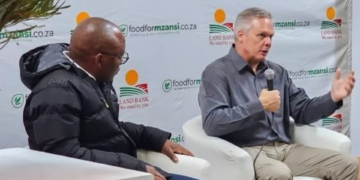
Sitting down with Food For Mzansi, Desry Lesele, senior manager for agriculture client value proposition at Nedbank, breaks down the practical realities of margin management. He outlines why financial discipline has shifted from an administrative preference to a hard commercial requirement for modern growers.
Lesele says the farming sector is operating in a highly pressured market environment. Two consecutive strong production seasons have left grain supplies abundant and commodity prices soft, while input costs remain well above historical levels.
He explains, “What we are seeing is a season defined by a cost squeeze, where margin management is becoming just as important as production management.”
Related stories
- Nedbank backs regenerative agriculture in new podcast series
- Nedbank champions a new generation of SA farmers
- Regenerative farming: Healthy soil, healthy food, healthy profits
- African Greeneurs & Nedbank: Growing Africa’s future farmers
What makes a strong funding application
A common approach in traditional agriculture is to celebrate overall tonnage per hectare as the primary measure of success. However, current market conditions prove that two farmers can achieve nearly identical yields but realise completely different financial outcomes based on choices made before planting.
The strategy relies heavily on proactive margin management to protect a farm’s bottom line without hindering actual field productivity.
Lesele emphasises that evaluating a funding application goes far beyond reviewing typical financial balances and historical production charts.
“I remember chatting to a grain farmer recently who said to me, ‘Des, I can manage hard work, I can manage long hours, but uncertainty is what’s hardest to budget for.’ What we can control is how well we prepare for it.”
At its core, this approach targets budget stress-testing, clear break-even analysis, and comprehensive risk evaluation. The strongest funding applications are rarely the most optimistic ones, but rather those that demonstrate a clear, calculated grasp of both operational opportunities and market risks.
Pitfalls to avoid in production credit applications
A critical pitfall in this process is confusing paper profitability with actual cash flow. While profitability tells you whether a business is creating value on paper, cash flow determines if the farm can survive long enough to actually realise that value.
A farming business can look highly successful on balance sheets, but if its cash is tied up when inputs need to be bought, the operation faces severe strain. Having insufficient working capital during critical stages of the production cycle creates massive pressure.
That’s why Lesele encourages farmers not only to ask, “Will this crop be profitable?” but also:
- When will my largest cash outflows occur?
- How much working capital will I need?
- What happens if harvest is delayed?
- What happens if prices are lower than expected?
- What happens if yields come in below budget?
Those are the questions that really test the resilience of a business and ensure the funding model remains structurally sound.
Digital tools bring price transparency
Managing these cash flows effectively requires making smart procurement choices before the season even begins. Utilising digital marketplaces brings much-needed price transparency to input procurement before the season kicks off. These platforms allow farmers to cross-reference prices, evaluate alternative suppliers, and strictly manage production costs.
This disciplined approach to procurement is why Nedbank partnered with the online agricultural marketplace PrysWys. The collaboration gives grain producers deeper visibility into input costs so they can buy more efficiently.
“The objective is to give farmers greater visibility into input pricing and help them make more informed procurement decisions. But the broader lesson goes beyond any one platform. The real opportunity is using technology to improve decision quality.”
Preparation is the ultimate defence
Lesele’s final message to grain producers preparing for the upcoming summer season is to focus entirely on building a resilient business rather than just chasing a single harvest.
He points to advice from a veteran producer that perfectly captures this mindset: “I stopped trying to predict every season and started focusing on building a business that could survive most seasons.”
Ultimately, agriculture rewards thorough preparation over certainty. The farmers who navigate this cost squeeze successfully will be those who manage risk early and build businesses structured to endure for seasons to come.
To explore how Nedbank can partner with your agricultural business and support your seasonal production planning, contact business@nedbank.co.za or reach out directly to your regional Nedbank business manager.
READ NEXT: Rooibos project turns classrooms into space labs