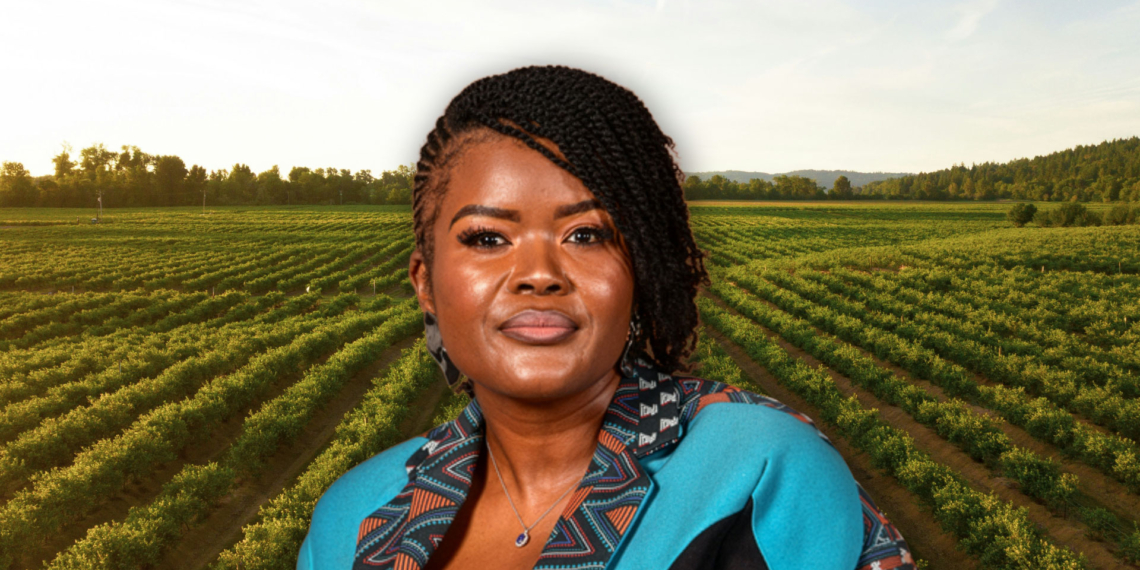
Parliament’s Portfolio Committee on Agriculture has recently elected Dr Nobuhle Nkabane as its new acting chairperson.
The position became vacant after former chairperson Dina Pule left the role, opening a new chapter for the parliamentary team.
Nkabane’s arrival comes at a critical juncture for South Africa’s farming community, as the committee prepares to tackle pressing hurdles on the ground ranging from biosecurity threats such as foot-and-mouth disease (FMD) to cross-departmental coordination, water security, and targeted support for farmers across the spectrum.
Food For Mzansi engaged Nkabane on her vision for the portfolio, parliamentary oversight mechanisms, and what farmers can expect under her leadership.
Lisakanya Venna: How will the committee foster cross-departmental accountability and improve governance across the portfolio under your leadership?
Dr Nobuhle Nkabane: As acting chairperson of the Portfolio Committee on Agriculture, I am committed to paying attention to governance matters in the agriculture portfolio in so far as addressing and dealing with previous audit findings, the filling of critical vacancies within the department of agriculture as well as for some of the entities.
On the biosecurity front, the Portfolio Committee on Agriculture will continue to impress upon the department of agriculture (together with provincial departments) to develop and implement a comprehensive and coordinated veterinary strategy as well as the implementation of the livestock identification and traceability system (LITS).
Most importantly, the focus on farmer support will be prioritised so that financial and technical support programmes to various farmer categories are streamlined and effectively monitored for policy impact.
How will you strengthen oversight to ensure issues such as biosecurity, food security, and rural infrastructure are tackled before they become emergencies?
The Money Bills Amendment Procedure and Related Matters Act provides the framework of the budget cycle that the parliament of the RSA follows. It remains a statutory requirement for government departments and entities to table strategic and annual plans that will guide the execution of the respective mandates and policies.
Related stories
- Portfolio committee probes failures in struggling state projects
- SA and Italy sign major pact to unlock new agricultural pathways
- New NAMC board set to drive agricultural transformation
- Medicinal plants conference highlights healing & profit potential
This allows for the Portfolio Committee on Agriculture to have several engagements with the department of agriculture and any relevant Chapter 9 institutions (such as the auditor-general of South Africa) on the proposed annual performance plans (APP), wherein the strategic outcomes are analysed for alignment with broader government policy priorities prior to the approval.
Post-approval, we receive regular briefings and track quarterly expenditure against set APP targets. Moving forward, the committee has identified key focus areas to tighten oversight:
- Quarterly reporting on issues identified (and weekly in some instances)
- Tracking of PC resolutions and recommendations (as well as the responses thereof from the department of agriculture)
- Monitoring and evaluation of the conditional grant funding disbursed to provinces
- Improve alignment and coordination between various departments and provincial departments of agriculture (especially on issues of farmer support and development)
- Results focus on the feedback on action plans that address challenges raised by farmers during oversight visits.
As you take on the FMD crisis as a primary committee priority, what concrete progress can you point to in boosting diagnostic testing and vaccination on the ground?
Through the proactive intervention by the Portfolio Committee on Agriculture, the ARC has since procured and installed equipment to further increase capacity for serology and molecular diagnostic testing. Further green shoots that can be pointed to are the progress made in so far as increasing diagnostic capacity that has led to the recruitment of animal health technicians (AHTs) and the secondment of veterinary technologists from the KwaZulu-Natal and Eastern Cape Provinces.
We have also welcomed the decision of the department of agriculture to employ 400 assistant agricultural practitioners (AAPs) on an internship basis to strengthen the vaccination process, biosecurity compliance at auctions and vaccination in areas along the border fence with neighbouring countries.
Another significant measure on progress made on the FMD outbreak will definitely focus on achieving the 80% national herd coverage for FMD vaccination.
How can parliament strengthen practical collaboration across these areas to help growers?
It is a matter of fact that the agricultural sector is complex, multifaceted and intersects with several other departments… The Portfolio Committee on Agriculture engaged with the federal minister of agriculture, food and regional identity of Germany, Mr Alois Rainer, together with his delegation. Through this engagement, there was a joint declaration on the intent on agricultural development aimed at enhancing collaboration in the control of foot-and-mouth disease and promoting safe trade in animal products.
In terms of access to water, the Portfolio Committee on Agriculture held a joint briefing with the Portfolio Committee on Forestry, Fisheries and Environment to address the dredging of the uMfolozi and uMsunduzi flats and the opening of the St Lucia estuary mouth.
On matters of science and education, the Portfolio Committee on Agriculture has received briefings from the South African Human Sciences Research Council (HSRC) and the Council for Science and Innovation’s Technology Innovation Agency (CSIR, TIA) on some of the research projects that seek to advance livestock improvement, food security, and disease management.
Furthermore, we have deliberated with the South African Veterinary Council (SAVC) on the question of establishing a second veterinary faculty in South Africa.
As you take on this role, what direct message do you have for SA’s agricultural sector?
It is important for the entirety of the stakeholders in the agricultural sector to understand that the agricultural sector can only thrive in an environment that fosters good governance and good stewardship over public finances.
READ NEXT: SA pork prices plunge amid local market surplus