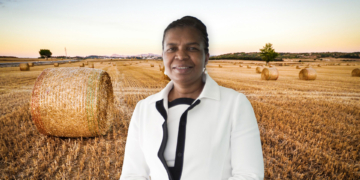
The department of social development has indicated that most farmworkers in the Cape Winelands region need social welfare intervention. This was revealed during a visit by deputy minister Ganief Hendricks. Fairtrade Africa (FTA) and the Commission for Gender Equality have concluded a roadshow in the area to find solutions.
The roadshow was aimed at creating awareness around gender committees and gender mainstreaming in the agricultural space in collaboration with FTA’s Donuts programme as part of its South Africa project 2022 – 2025.
The Donuts programme is guided by Fairtrade, which promotes justice and fairness through the exercise of rights and freedoms, empowerment through the strengthening of the assets and capabilities of marginalised farmers and workers, and the development of resilient agro-based trade systems and societies as a means to achieve sustainable livelihoods.
Improving labour relations
In a document outlining the challenges faced by farmworkers, especially in the wine industry, the two entities highlighted the critical importance of a decent work agenda and the prevention and elimination of harassment in the workplace.
“The more people in decent jobs, the stronger and more inclusive the economic growth will be, and the more resources will be available to them. Having a decent job allows individuals and families to spend their money in the local economy.
“By developing policies through social dialogues, people and communities can cope with climate change impacts while facilitating the transition towards a more sustainable economy, not to mention that dignity, hope, and a sense of social justice that are derived from a decent job contribute to building and maintaining social harmony,” the report stated.
According to the document, the South African wine industry currently produces 4.0% of the world’s wine. “It is under the aspect of labour relations and the South African wine industry that the presentation and discussions will be focused on improved labour relations.
“On the other hand, it is the employee’s responsibility to perform his or her duties diligently, to follow the lawful instructions of their employers, and to contribute to a harmonious working environment,” the report stated.
Related stories
- Aunty Bettie’s lifelong mission to fight for women farmworkers
- 240 farmworkers honoured, empowered at Robertson Lenteskou
Hendricks said farmworkers contribute significantly to South Africa’s economy but often face precarious conditions.
“We reaffirm the government’s commitment to protecting human rights and ensuring access to essential services, from education to sustainable livelihoods.
“We pledge government support to tackle illegal evictions, poor working conditions, and systemic inequalities faced by farmworkers and dwellers in the Cape Winelands district,” he said.
Hendricks explained that while the Extension of Security of Tenure Act (Act No. 2 of 2018) protects the rights of persons living and working on farms against illegal evictions, there has been exploitation of rights by some employers.
“An investigation by the South African Human Rights Commission uncovered widespread mistreatment of migrant and seasonal workers in farming areas across the country.
“In particular, the report spotlights the vulnerability of women working and living on farms as they regularly face an increased risk of gender-based violence in the workplace,” he said.
READ NEXT: Agri-Edu Symposium: Bridging the gap in agricultural education
Sign up for Mzansi Today: Your daily take on the news and happenings from the agriculture value chain