Parliament’s Portfolio Committee on Agriculture has concluded a high-stakes series of oversight visits across Gauteng, the North West, and the Eastern Cape, uncovering a stark divide in South African farming.
While the sector has seen historic growth over three decades, the reality on the ground remains a tale of two extremes: thriving commercial enterprises and state-funded projects struggling to break the cycle of debt and dysfunction.
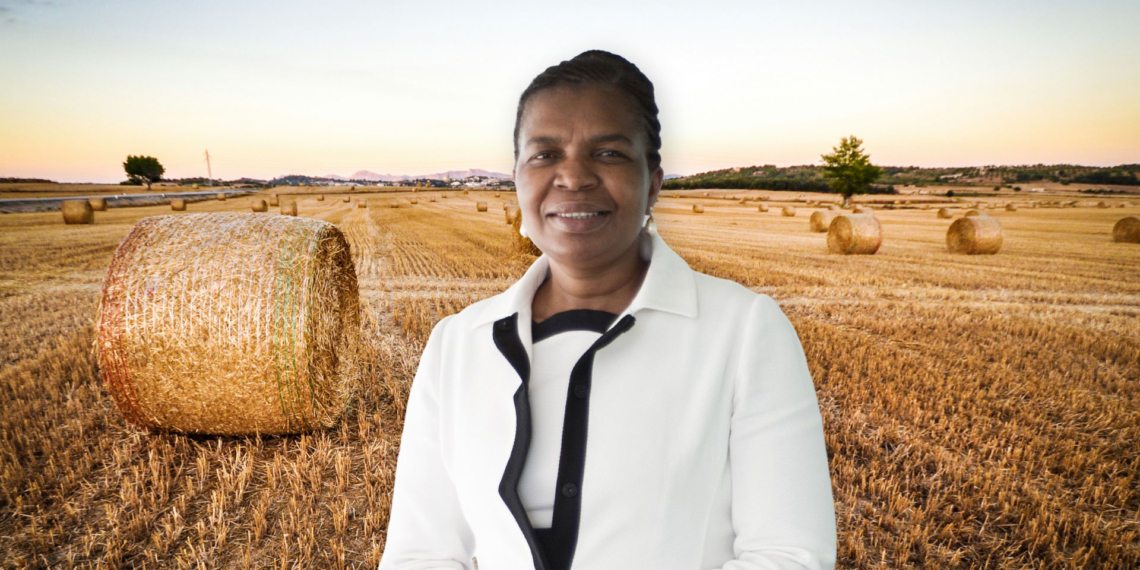
Following these critical inspections, Food For Mzansi caught up with Dina Pule, chairperson of the Portfolio Committee on Agriculture, to discuss the unfiltered state of the sector and how the seventh parliament intends to turn constitutional oversight into tangible progress for the country’s farmers.
Lisakanya Venna: What is the state of agriculture based on the committee’s oversight visits?
Dina Pule: There is overwhelming evidence that demonstrates that the agricultural sector has grown tremendously over the last 30 years. This has been recorded for the livestock, horticulture, and field crops. The growth has not only been recorded at the level of commercial enterprises, but there has also been some growth at the level of small-scale and subsistence farming.
The Portfolio Committee on Agriculture has noted over the various oversight visits that the results of public investment and support have had mixed outcomes.
Related stories
- Failing farms: Collapsed state projects trap EC farmers in debt
- Farmer-turned-MEC vows to strengthen NC agriculture
- Young Limpopo scientist unlocks peperboom’s healing power
- Middle East conflict: SA farmers brace for impact on agri exports
There are cases of farmers who were supported and have now established highly successful farming operations, such as Christopher Melamu, who owns Lamus Holdings. The farm is a registered Bonsmara stud breeding enterprise that started off by leasing a 1 957-hectare government farm through the Proactive Land Acquisition Strategy (PLAS) in 2007, which has now been handed over to him for full ownership.
What are the common issues you’ve observed during your oversight visits, and what contributes to the farms’ ineffectiveness?
Whilst the implementation of some of the programmes of the department of agriculture is not without challenges, the identified weaknesses need to be addressed so that there can be a meaningful impact on projects funded.
The blended finance scheme has been reported to have lengthy turnaround times and delays in loan approvals and disbursements of funds to recipients by the Land Bank, which was constantly cited by farmers. And it negatively affected the farmers’ production cycles, yields and ability to service their loans.
One of the more recent oversight visits to the Eastern Cape province revealed that while some efforts have been made to bolster farmer development and support, much more could still be done to achieve viable commercial status of projects supported. These included the need to develop infrastructure such as roads, pack-houses, and access to electricity.
Has there been any implementation of your recommendations when it comes to halted or poorly managed projects?
Procedurally, the Portfolio Committee on Agriculture is required by the rules of the national assembly to report to the house on its oversight activities. It is only once the oversight reports of the committee are processed through the house that the resolutions and recommendations of the Portfolio Committee on Agriculture are further processed to the relevant executive for further consideration.
So far, there have been responses to the issues raised by the Portfolio Committee on Agriculture in the form of further reports, action plans, and feedback on progress made since the visits. Whilst some issues require policy intervention and /or review of legislation, which can be attended to over the medium to long term.
What consequences do companies or individuals face if they’re non-compliant with the committee’s recommendations?
In line with the various pieces of legislation and regulations on financial management of public finances, the Portfolio Committee on Agriculture ensures that resources meant for agricultural projects are utilised effectively and efficiently.
In instances where it can be established that the utilisation of resources has not been efficient, it is the duty of the Portfolio Committee on Agriculture to insist that the executive authority of the department corrects that and institute the necessary disciplinary proceedings internally.
What is the committee doing to ensure that the oversight visits lead to tangible improvements in the agricultural sector, and how do you measure the impact of these efforts?
Going forward, the Portfolio Committee on Agriculture has identified the following areas in order to improve its own oversight:
- Quarterly reporting on issues identified (and weekly in some instances).
- Tracking of PC resolutions and recommendations.
- Monitoring and evaluation of the conditional grant funding disbursed to provinces.
- Improve alignment and coordination between various departments and provincial departments of agriculture.
- Results focus: feedback on action plans that address the visited farmers’ challenges.
The agricultural sector can only thrive in an environment that fosters good governance and good stewardship over public finances.
READ NEXT: Women farmers step forward to shape SA’s food future