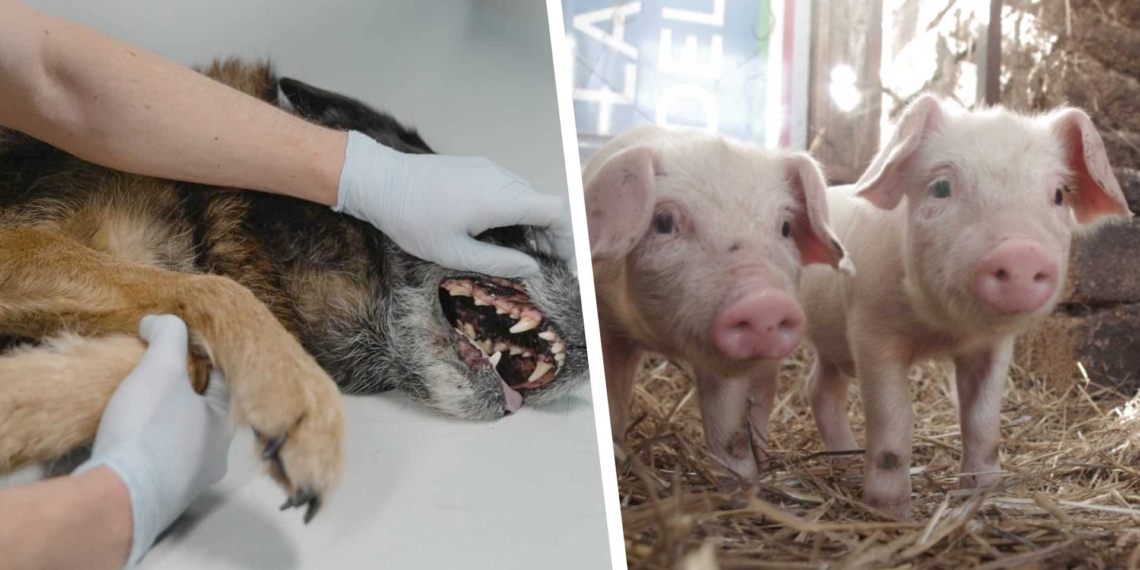
Commercial breeders are on red alert and adhering to the highest possible biosecurity measures following outbreaks of active African swine fever (ASF) on smallholder farms in six areas around Cape Town. At the same time, Cape Town reported two positive cases of rabies in dogs for the first time ever.
The rapid outbreak of animal diseases in Cape Town has veterinarians very concerned about owners’ biosecurity measures.

Klapmuts and Fisantekraal are under quarantine for small-scale farmers following recent ASF outbreaks in both areas. The outbreaks are still active and small-scale pig breeders watch in horror as more animals die by the day.
Dr Gary Buhrmann, state veterinarian in the province tells Food For Mzansi that six areas around the Cape Town metro are currently experiencing outbreaks: Mfuleni, Strand, Makhaza, Klapmuts, Fisantekraal and Wallacedene.
“There may also be in Mbekweni but [this] is not yet confirmed,” Buhrmann says.
Pigs are not being culled
While data on the exact numbers of pigs dead are not yet available, authorities have not culled any animals, says Buhrmann. They don’t intend to start culling, either.
“It is against the national department of agriculture’s policy as one cannot control the disease through culling. There is, unfortunately, also no compensation available for farmers.”
Farmers are currently burying their pigs on site with lime provided by the Western Cape veterinarian services.
No commercial farms have infections as most of them have very strict biosecurity measures in place. Buhrmann warns that the risk remains very high, however. Some of the commercial farms are within 2km from an outbreak area.
Efforts by the state veterinarian services to help stop the spread of the disease have proved to be difficult. According to Buhrmann they provide detailed information and training in biosecurity. Farmers also received disinfectant to assist in reducing the spread of ASF.
“We have placed all the ASF outbreak areas under quarantine but it unfortunately does not seem to stop the famers from moving infected pigs and, sadly, spreading the disease to other areas.”
Cape Town’s first rabies outbreak
In the meantime, Cape Town has also reported cases of rabies. The department of agriculture’s veterinary services in the province confirmed that they had received laboratory results on Friday, 20 August confirming the disease in two dogs in Khayelitsha.
This follows a recent rabies outbreak in Gauteng.
While investigations are currently under way to determine the source of the outbreak, Buhrmann explains that they are very concerned. This is the first case of rabies in Cape Town, he says.
“The disease is a zoonosis (a disease that can be transmitted from animals to humans) and is extremely dangerous to people if they should get bitten by a rabid dog.”
ALSO READ: Vaccine roll-out in Gauteng after rabies outbreak
Pet owners to be on the lookout
Western Cape minister of agriculture Dr Ivan Meyer confirmed in a media statement that officials are vaccinating pets in Khayelitsha and affected areas this week.

“Our animal health technicians began vaccinating dogs and cats in the area yesterday. We are working closely with the welfare organisations and medical doctors to check on contacts and any people who may have been bitten and need treatment,” Meyer said.
The department is advising those who suspect that they have had contact with a rabid animal, to get preventative treatment as soon as possible.
“Wash any bite or scratch wound thoroughly with soap and water, and then go to your doctor or clinic to get rabies vaccinations immediately. The sooner you receive treatment, the better you will be protected against rabies,” Meyer said.
Dr Gininda Msiza, veterinary service head explains that rabies is a viral disease affecting animals and people.
“It is transmitted by saliva or other body fluids. A dog or person can be infected by being bitten, scratched or licked by a rabid animal. However, rabies is very easy to prevent by vaccinating dogs and cats.”
ALSO READ: African swine fever tips for small-scale pig farmers
Sign up for Mzansi Today: Your daily take on the news and happenings from the agriculture value chain.