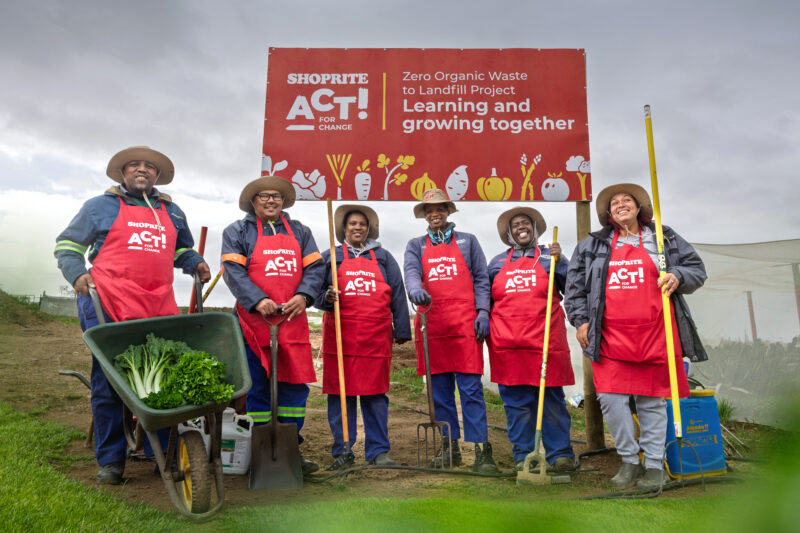
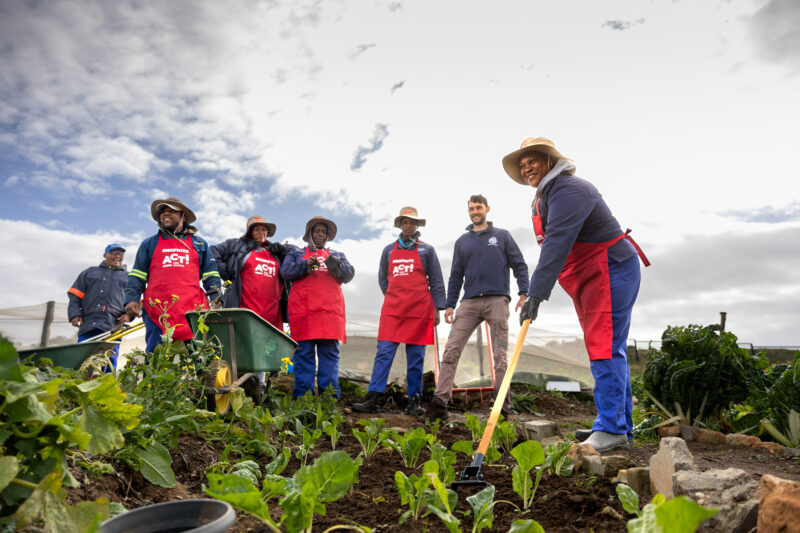
The Shoprite Group recently established its 300th community food garden outside Bredasdorp in the Western Cape. The Zero Organic Waste to Landfill Project runs with the local municipality and the Zero Waste Association of South Africa.
In 2021, the site focused solely on waste diversion. Today, they collect organic food waste from 800 homes to make compost and grow fresh vegetables.
Regenerative farming is trending everywhere, and Mzansi farmers, stakeholders, and supporters are heading in the right direction.
Food For Mzansi spoke to Sanjeev Raghubir, chief sustainability officer at the Shoprite Group, to find out how this project works and why local food systems matter.
The Shoprite Group just hit a milestone with its 300th community food garden. Can these gardens truly help improve South Africa’s food security?
Sanjeev Raghubir: Yes, they play an important role by increasing access to fresh, nutritious produce, especially in underserved areas. The South African Food Security Index 2025, which we commissioned, highlighted how vital diverse diets are. Community gardens improve that diversity by offering immediate access to a variety of fresh vegetables.
Over the past decade, our programme has grown to 300 gardens across the country. We don’t just clear land; we provide 18 months of hands-on agricultural training, irrigation systems, water-harvesting infrastructure, and ongoing mentorship. Beyond producing food, these gardens create local economic opportunities, build practical skills, and strengthen long-term community resilience.
Related stories
- Small-scale food gardens win big in Shoprite’s Act For Change
- Shoprite launches R1-million food garden competition
- Growing more than food: Ngxanga shapes future farmers
- Betty Nkoana’s gardens bring hope to struggling families
The Bredasdorp project uses a circular economy model. How exactly are projects like this turning food waste into fresh produce?
Circular economy projects change the way communities view waste by treating it as a valuable resource rather than something to throw away. Bredasdorp is a practical example of this in action. Food waste from roughly 800 households is collected, sorted, and composted on-site.
This produces nutrient-rich compost that goes straight back into the soil to grow vegetables, creating a closed-loop system just metres away from where the waste was dropped off. By keeping organic waste out of landfills, we reduce greenhouse gas emissions, improve soil health, and support sustainable local food production. It shows what happens when municipalities, community organisations, and the private sector work together.
Can regenerative agriculture really strengthen community resilience in a changing climate?
It absolutely can. Regenerative practices help communities handle climate-related challenges by improving soil health, increasing water retention, and enhancing biodiversity. Healthy soils absorb and hold moisture much better, which helps crops withstand periods of drought and extreme weather.
In Bredasdorp, the garden uses the compost made from local organic waste to naturally enrich the soil. This reduces the need for synthetic inputs and protects the long-term productivity of the land.
Why is local food production becoming so important as food prices continue to rise?
Rising food prices put immense pressure on household budgets, making it harder to afford nutritious food. Local food production helps ease this pressure by cutting out the high costs of transporting produce over long distances.
It makes fresh vegetables accessible right within the community. In the Bredasdorp project, vegetables are grown and sold close to where people live, meaning the food travels only a short distance from soil to table.
Does this mean community gardens are the future answer to our food supply challenges?
Local food production cannot replace large-scale agriculture, but it complements it beautifully. It improves immediate access to fresh produce, strengthens local food systems, and helps communities become less vulnerable to supply shocks.
Because of this, community food gardens are becoming an increasingly valuable part of broader efforts to improve food security and community resilience across South Africa.
READ NEXT: Shoprite grows food security with 300th community garden