Tuesday, March 3, 2026
SUBSCRIBE
21 GLOBAL MEDIA AWARDS
Food For Mzansi
  • News
  • Changemakers
  • Lifestyle
  • Farmer’s Inside Track
  • Food for Thought
No Result
View All Result
  • News
  • Changemakers
  • Lifestyle
  • Farmer’s Inside Track
  • Food for Thought
No Result
View All Result
Food For Mzansi
No Result
View All Result
in Farmer's Inside Track

Castor bean farming could be SA’s next big opportunity

As global demand for organic castor oil rises, experts say South Africa has the ideal conditions to grow this resilient crop. Learn about planting guidelines, regulatory permits, and how small-scale producers can tap into this low-maintenance, high-yield market

by Patricia Tembo
3rd March 2026
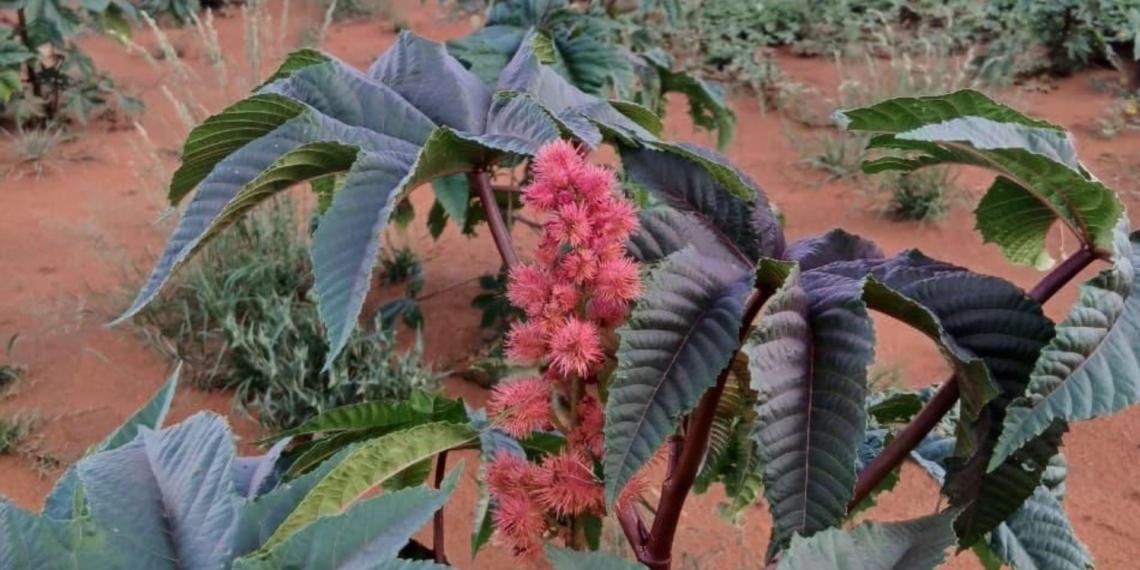
Agricultural economist and castor bean producer Lesedi Moseki outlines how South African farmers can tap into the growing demand for organic castor oil by navigating regulatory requirements, applying practical planting and irrigation guidelines, and leveraging the crop’s resilience to build a sustainable local industry. Photo: Lesedi Moseki

Agricultural economist and castor bean producer Lesedi Moseki outlines how South African farmers can tap into the growing demand for organic castor oil by navigating regulatory requirements, applying practical planting and irrigation guidelines, and leveraging the crop’s resilience to build a sustainable local industry. Photo: Lesedi Moseki

Share on FacebookShare on TwitterShare on WhatsApp

Castor bean farming is emerging as a promising opportunity for South African farmers seeking alternative crops that are resilient, low-maintenance, and economically viable. With rising global demand for organic castor oil and limited local production, North-West University notes that there is significant potential to develop a domestic castor oil industry.

Agricultural economist and castor bean producer Lesedi Moseki shares practical guidance for small-scale and new entrant farmers on establishing castor bean crops, navigating regulatory requirements, managing labour and irrigation, and exploring the economic opportunities the crop offers.

By understanding the crop’s growth requirements and market potential, farmers can diversify their income sources, contribute to rural development, and help build a sustainable local castor oil industry.

Why castor beans?

South Africa has historically relied heavily on imported castor oil, spending millions of rand annually while the market remains dominated by a small number of international suppliers. Global demand for organic castor oil is rising due to its recognised health benefits, pharmaceutical applications, and healing properties.


Related stories
  • South Africa eyes bumper grain and soybean crops
  • A guide to sustainable dry bean farming
  • Groundnut farming: Key tips for success
  • Mixed farming: Double the hustle, double the rewards

“Despite widespread household use of castor oil over generations, South Africa has yet to establish a fully commercialised castor bean farming sector,” Moseki notes, highlighting a significant gap in the local agricultural economy.

Understanding the regulatory landscape

One of the biggest challenges to expanding production is regulatory compliance. According to the Agricultural Research Council (ARC), Ricinus communis L. is classified as an invasive species under the Alien and Invasive Species Regulations of the National Environmental Management: Biodiversity Act. This means it may only be cultivated in strictly controlled, demarcated areas.

Additional controls under the Conservation of Agricultural Resources Act (CARA) require farmers to obtain permits from the department of agriculture. Environmental approvals involve risk assessments by accredited practitioners and verification by the department of forestry, fisheries and the environment before permits are issued.

“Closer coordination between government departments and farmers is needed to develop a clear framework that enables responsible cultivation while supporting industry growth,” Moseki says.

Quality standards and certification

The absence of a formal domestic industry has also led to quality concerns. Rising demand for organic castor oil has seen some distributors sell imported oil rebranded as organic without proper verification.

Industry proponents argue that “South Africa needs quality standards and certification systems to audit imported products and protect consumers.” Establishing a local industry body could safeguard both producers and buyers while formalising castor oil beans as a recognised commodity.
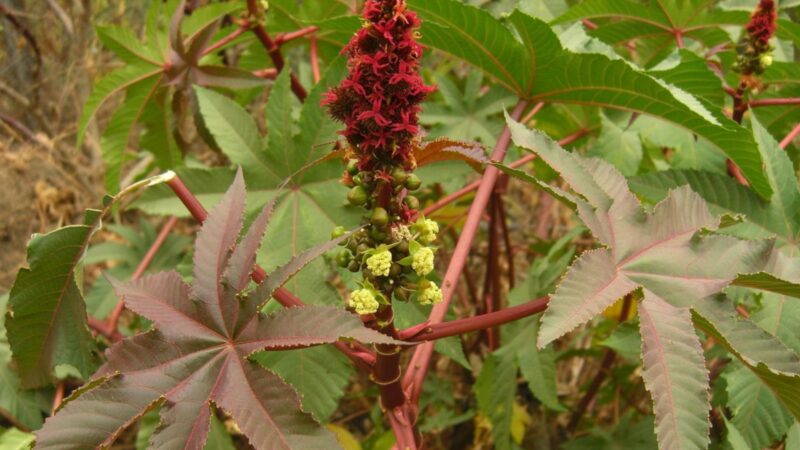
With relatively low input costs, castor bean farming presents an accessible diversification option for emerging farmers and rural cooperatives. Photo: Wikimedia Commons

Labour and workforce

Castor bean farming is labour-intensive but offers strong employment opportunities for rural communities. “The crop requires about two workers per hectare during harvesting and two workers per hectare for maintenance outside the harvest season,” explains Moseki.

He adds that planning for consistent labour, especially during early growth stages and at harvest, is key to ensuring a healthy crop and good yields.

Planting guidelines

  • Timing: Plant early in the rainy season or immediately after winter under irrigation.
  • Spacing: Aim for approximately 2 500 plants per hectare to optimise growth and yield.
  • Soil: While the crop prefers fertile soil, it tolerates less productive land.

Watering and care

  • Early growth: Frequent watering is essential during the first four months, particularly in very dry conditions, to establish strong, healthy plants.
  • Later stages: After the initial period, the hardy plants can withstand harsh climates with minimal irrigation, making castor beans a low-maintenance option once established.

Site selection and suitability

“The castor bean plant is resilient, adaptable, and well-suited to semi-arid conditions,” Moseki notes. This makes the crop ideal for drought-prone regions such as the Northern Cape and North West.

He explains that it can thrive on both fertile and marginal soils, offering an alternative crop where other crops may struggle. “With relatively low input costs, it is an accessible option for emerging farmers, rural communities, and cooperatives seeking additional income sources.”

As South Africa faces economic pressures, water scarcity, and the need for climate-resilient crops, castor bean farming has the potential to become a strategic agricultural sector. With coordinated policy support, research, and collaboration, the country could reduce imports, empower small-scale farmers, and develop a sustainable domestic castor oil industry.

READ NEXT: How to set up grazing camps and cut feed costs

Sign-up to Farmer's Inside Track for the best farming tips, news and advice to thrive!

Patricia Tembo

Patricia Tembo is motivated by her passion for sustainable agriculture. Registered with the South African Council for Natural Scientific Professions (SACNASP), she uses her academic background in agriculture to provide credibility and technical depth to her journalism. When not in immersed in the world of agriculture, she is engaged in outdoor activities and her creative pursuits.

Tags: castor beandrought-resistant cropsniche cropsTeach me

Related Posts

Agro-processing: Farmer’s guide to turning crops into cash

Agro-processing: Farmer’s guide to turning crops into cash

24th February 2026
Pomegranate pioneer: Debbie Theunissen’s rise in fruit farming

Pomegranate pioneer: Debbie Theunissen’s rise in fruit farming

18th February 2026

How to set up grazing camps and cut feed costs
Agricultural insurance: Common mistakes and how to avoid them

Purpose in pastures: Dale Hutton’s journey to dairy excellence

How to choose the right farm insurance to protect your business

Pneumonia in livestock: Spot the signs before it’s too late

Roots run deep: How Pholisa honours her family’s farm

Land reform stalls, CSI offers a path forward – Setou
Climate Change

Why the environment is the real boss of farming

by Ndeke Musee
1st March 2026

Farming that ignores the environment is farming without a future. South Africa’s food security depends on healthy soils, clean water,...

Read moreDetails
Ten tips to establish grazing pasture and boost profits

Invasive mesquite plants threaten NC’s soil and livelihoods

28th February 2026
Sinovuyo Senior Club grows food, love, and care in Khayelitsha

Sinovuyo Senior Club grows food, love, and care in Khayelitsha

27th February 2026
Land reform: How the private sector can bridge the funding gap

Land reform: How the private sector can bridge the funding gap

27th February 2026
Stock theft, fighting FMD high on NW and WC priority list

Stock theft, fighting FMD high on NW and WC priority list

27th February 2026

Targeted supplier development helps Noko Trust thrive

Canegrowers urge intervention amid Tongaat Hulett’s liquidation

Three years on: Is the master plan delivering for farmers?

Stock theft, fighting FMD high on NW and WC priority list

Farm clinics bring healthcare closer to Cape Winelands workers

Join Food For Mzansi's WhatsApp channel for the latest updates!

JOIN NOW!

THE NEW FACE OF SOUTH AFRICAN AGRICULTURE

With 21 global awards in the first six years of its existence, Food For Mzansi is much more than an agriculture publication. It is a movement, unashamedly saluting the unsung heroes of South African agriculture. We believe in the power of agriculture to promote nation building and social cohesion by telling stories that are often overlooked by broader society.

Castor bean farming could be SA’s next big opportunity

Farm clinics bring healthcare closer to Cape Winelands workers

Why SA is importing FMD vaccines from Argentina

Targeted supplier development helps Noko Trust thrive

Gqeberha agripreneur turns backyard into thriving medicinal hub

Three years on: Is the master plan delivering for farmers?

  • Awards & Global Impact
  • Our Story
  • Contact Us
  • Cookie Policy
  • Privacy Policy
  • Copyright

Contact us
Office: +27 21 879 1824
News: info@foodformzansi.co.za
Advertising: sales@foodformzansi.co.za

Contact us
Office: +27 21 879 1824
News: info@foodformzansi.co.za
Advertising: sales@foodformzansi.co.za

  • Awards & Global Impact
  • Our Story
  • Contact Us
  • Cookie Policy
  • Privacy Policy
  • Copyright
No Result
View All Result
  • News
  • Changemakers
  • Lifestyle
  • Farmer’s Inside Track
  • Food for Thought

Copyright © 2024 Food for Mzansi

This website uses cookies. By continuing to use this website you are giving consent to cookies being used. Visit our Privacy and Cookie Policy.