Wednesday, July 22, 2026
SUBSCRIBE
22 GLOBAL MEDIA AWARDS
Food For Mzansi
  • News
  • Changemakers
  • Lifestyle
  • Farmer’s Inside Track
  • Food for Thought
No Result
View All Result
  • News
  • Changemakers
  • Lifestyle
  • Farmer’s Inside Track
  • Food for Thought
No Result
View All Result
Food For Mzansi
No Result
View All Result
in News

Farmers warned about devastating citrus disease

by Noluthando Ngcakani
16th March 2021
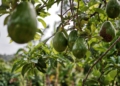
Citrus greening is spread by a disease-infected insect, and has already put the future of the world's citrus at risk. Photo: Supplied/Food For Mzansi

Citrus greening is spread by a disease-infected insect, and has already put the future of the world's citrus at risk. Photo: Supplied/Food For Mzansi

Share on FacebookShare on TwitterShare on WhatsApp

Citrus farmers of Mzansi have been warned to take note of the Asian citrus greening disease, which poses a serious threat to the global citrus industry.

Also known as Huanglongbing (HLB), it is caused by the bacteria pathogen, Candidatutus Liberibacter asiaticus, an insect vector-transmitted by the Asian citrus psyllid (ACP), Diaphorina citri.

The citrus killer may not be present in Mzansi as yet, but Asian citrus greening poses a serious threat to the citrus production in South Africa, the Southern African Development Community (SADC) and the African continent.

Signs and symptoms

Symptoms on leaves and citrus shoots include yellow shoots, asymmetric, mottled leaves, small upright chlorotic leaves, out of phase flushing and branch dieback.

Flower and fruit symptoms include unseasonal and heavy flowering on diseased branches, small, lopsided, bitter-tasting fruit with small, brown, aborted seeds and uneven colouring at maturity and excessive fruit drop.

Trees infected with Asian citrus greening disease produce fruits that are green, misshapen and bitter, unsuitable for sale as fresh fruit or for juice. Photo: Supplied/Food For Mzansi

In the African continent, this specific strain has already been detected in Ethiopia and Kenya and the insect vector has been detected in Kenya and Tanzania.

In a media statement, ministerial spokesperson Reggie Ngcobo warns, “The sooty mould growth resulting from excess honeydew production can also affect the plants’ ability to photosynthesise, which can affect overall plant health.

“It is the most devastating disease of citrus worldwide, causing serious yield losses to producers in countries where it currently occurs.”

Disease threatens food security

If the disease and its primary vector were to be detected, infected citrus trees will not produce edible fruit, decline in numbers, and die. This, Ngcobo, will be a point of, “Major concern for food security and the loss of market access due to a major loss in the production of required fruit volumes.”

Farmers, nurseries, international travellers, importers, researchers, and members have been called to strictly adhere to the country’s phytosanitary regulatory framework.

The department, in collaboration with the citrus industry, has established an HLB steering committee. They, in turn, developed an action plan to minimise the risks of introduction of HLB and ACP in South Africa.

ALSO READ: Didiza approves R134 million boost for citrus growers

The minister of agriculture, land reform and rural development, Thoko Didiza, will deliver the keynote address at the International Women’s Day webinar hosted by Corteva Agriscience and GIBS. Photo: GCIS/Flickr
The minister of agriculture, land reform and rural development, Thoko Didiza. Photo: GCIS/Flickr

In February, minister Thoko Didiza approved and published the relevant control measures in the Government Gazette in accordance with the provisions of the Agricultural Pests Act, 1983 (act number 36 of 1983).

Importers of plants and plant products must also follow all the proper import procedures in terms of the act to help minimise the introduction, establishment and spread of any potential harmful species in the country.

“This will minimise the introduction, establishment and spread of this disease in South Africa and the SADC region,” said the department of agriculture, land reform and rural development.

“The introduction of this disease in the SADC region will have devastating consequences for the citrus industry, which is already under immense pressure, dealing with other economically important pests and diseases, such as Citrus black spot, False codling moth and fruit flies.

Take precautionary measures now

It is imperative that all role players involved in the citrus industry observe all precautionary measures in terms of the relevant legislative prescripts to help minimise the risks of introduction of Asian citrus greening and its primary vector Asian citrus psyllid into South Africa.

Ngcobo said that these regulatory interventions were in place to ensure preparedness and response to any possible introduction, establishment and spread of this disease. Departmental officials have met with their counterparts in Kenya, to map a way forward on how to with HLB and ACP in Kenya and to minimise its introduction into Southern Africa.

A national survey to enhance the chances for early detection of the disease as well as the vector forms part of the strategic plan of the department of agriculture, land reform and rural development.

ALSO READ: Record harvest: Only Spain beats SA’s citrus exports
Noluthando Ngcakani

With roots in the Northern Cape, this Kimberley Diamond has had a passion for telling human interest stories since she could speak her first words. A foodie by heart, she began her journalistic career as an intern at the SABC where she discovered her love for telling agricultural, community and nature related stories. Not a stranger to a challenge Ngcakani will go above and beyond to tell your truth.

Climate Change

Climate change: SA’s food processors are feeling the heat

by Adrino Mazenda
19th July 2026

Climate change isn’t just a farming crisis; it’s hitting South Africa’s food factories hard. A new study in Gauteng reveals...

Read moreDetails
The Forest of Renewal at Rustlers Valley celebrates the intertwined legacies of Frik Grobbelaar, Anton Chaka and Riky Rick, inviting South Africans to restore the land while cultivating hope, belonging and community. Illustration: ChatGPT

Rustlers Valley offers a blueprint for South Africa’s renewal

18th July 2026
Grain SA appoints Mabuza to lead farmer development

Rising stars: 2026 PGP finalists redefining SA grain farming

18th July 2026
Rooibos heads to space in groundbreaking Mzansi experiment

Rooibos heads to space in groundbreaking Mzansi experiment

18th July 2026

Seriti Institute CEO wins prestigious Best Woman 2026 CSI award

17th July 2026

Rising stars: 2026 PGP finalists redefining SA grain farming

Rustlers Valley offers a blueprint for South Africa’s renewal

Minister details Land Bank’s success in boosting black farmers

Grain SA defends farmers against blame for rising food prices

Climate change: SA’s food processors are feeling the heat

Join Food For Mzansi's WhatsApp channel for the latest updates!

JOIN NOW!
Next Post

With R500, Zola James created thriving veggie market

THE NEW FACE OF SOUTH AFRICAN AGRICULTURE

With 21 global awards in the first six years of its existence, Food For Mzansi is much more than an agriculture publication. It is a movement, unashamedly saluting the unsung heroes of South African agriculture. We believe in the power of agriculture to promote nation building and social cohesion by telling stories that are often overlooked by broader society.

Tech and solar upgrades drive growth at Ceres Fruit Growers

Smart vineyard irrigation starts below the ground

Treat food processing as essential national infrastructure – Khoury

Farmers urged to embrace uncertainty and build resilience

SA poultry industry calls for urgent bird flu vaccine rollout

Mother’s legacy, neighbour’s grace: Venessa Simelane’s farm story

  • Awards & Global Impact
  • Our Story
  • Contact Us
  • Cookie Policy
  • Privacy Policy
  • Copyright

Contact us
Office: +27 21 879 1824
News: info@foodformzansi.co.za
Advertising: sales@foodformzansi.co.za

Contact us
Office: +27 21 879 1824
News: info@foodformzansi.co.za
Advertising: sales@foodformzansi.co.za

  • Awards & Global Impact
  • Our Story
  • Contact Us
  • Cookie Policy
  • Privacy Policy
  • Copyright

Chat Options

I'm Lerato, your AI assistant!
No Result
View All Result
  • News
  • Changemakers
  • Lifestyle
  • Farmer’s Inside Track
  • Food for Thought

Copyright © 2024 Food for Mzansi

This website uses cookies. By continuing to use this website you are giving consent to cookies being used. Visit our Privacy and Cookie Policy.