Thursday, October 22, 2026
SUBSCRIBE
22 GLOBAL MEDIA AWARDS
Food For Mzansi
  • News
  • Changemakers
  • Lifestyle
  • Farmer’s Inside Track
  • Food for Thought
No Result
View All Result
  • News
  • Changemakers
  • Lifestyle
  • Farmer’s Inside Track
  • Food for Thought
No Result
View All Result
Food For Mzansi
No Result
View All Result
in News

Citrus industry confirms no new greening disease threat in SA

The Citrus Growers’ Association clarifies that African Citrus Greening, present in South Africa since 1932, poses no new threat. Contrary to media reports, the disease is well-managed, and citrus exports remain unaffected

by Staff Reporter
7th October 2024
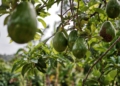
Contrary to media reports, the local citrus industry is not facing a new threat of African Citrus Greening. Photo: Supplied/Food For Mzansi

The citrus industry warns that if South Africa’s ports and transport networks aren’t urgently fixed, exports will suffer. Photo: Supplied/Food For Mzansi

Share on FacebookShare on TwitterShare on WhatsApp

The Citrus Growers’ Association of Southern Africa (CGA) has issued a statement to address misconceptions surrounding the local citrus industry, clarifying that the country is not under threat from a new greening disease.

Justin Chadwick, CEO of the CGA, noted that African Citrus Greening (ACG) is not a newly emerging threat but has been managed successfully in South Africa since its first detection in 1932. “Contrary to media reports, the local citrus industry is not facing a new disease threat,” he stated.

ACG, a well-known citrus disease, is under official control in South Africa, with strict measures in place to prevent the movement of propagation material from greening-affected areas to greening-free zones.

Importantly, Chadwick highlighted that ACG cannot be spread by fruit or seed, and there are no restrictions on the movement of citrus fruit within or outside the country. “Any suggestions that export citrus can spread this disease is incorrect,” he added.

No link between ACG and other citrus diseases

Chadwick clarified that recent media confusion stemmed from the conflation of ACG with Huanglongbing (HLB), also known as Asian Citrus Greening or Yellow Dragon, which has devastated citrus production in other regions but is not present in South Africa.

ACG, which was detected near Gqeberha in October 2023, remains under control through targeted measures involving the regulation of insect vectors and infected plant material.

“ACG and HLB are two entirely different diseases, caused by different bacteria and spread by different vectors,” Chadwick explained, reinforcing that ACG is not nearly as dangerous as HLB.

A bright future ahead

Despite recent reports, Chadwick expressed confidence in the industry’s future, stating that the South African citrus industry remains robust.

“African Citrus Greening is not a threat to the future of our citrus industry,” he said. “In fact, the future is looking bright.”

He acknowledged that while climate and economic challenges have affected export volumes, the sector is set to continue its impressive growth trajectory, driven by the dedication of local growers and rigorous phytosanitary standards.

Chadwick dismissed any attempts to link ACG to the current cases at the World Trade Organisation (WTO) involving Citrus Black Spot (CBS) and False Codling Moth (FCM), stating these are unrelated matters.

READ NEXT: Agriculture sees boost as confidence index climbs in 2024

Staff Reporter

Researched and written by our team of writers and editors.

News

CPAs urged to register for free governance support toolkits

by Staff Reporter
21st October 2026

With 82% of registered CPAs facing non-compliance issues, Vumelana Advisory Fund has introduced free support toolkits to improve land management...

Read moreDetails

Potatoes and tomatoes plunge while avocado prices soar

20th October 2026
Becoming bankable: How to get your farm ready for finance

Becoming bankable: How to get your farm ready for finance

20th October 2026

Fixing SA’s agricultural visa system to protect seasonal harvests

20th October 2026
‘Beware the dangers of illegal foot-and-mouth vaccines’

SA and Namibia reevaluate livestock trade after FMD outbreak

20th October 2026

CPAs urged to register for free governance support toolkits

Promising early conditions predicted for 2027 SA wine harvest

Build your future in agriculture with Agri Skills Transfer

Agda conference to tackle finance, market access and agri growth

Reluctant farmer scales EC cabbage enterprise to supply Spar

Join Food For Mzansi's WhatsApp channel for the latest updates!

JOIN NOW!
Next Post
Govt gives Land Bank money for blended finance

BFAP: Drought and demand drive up food prices

THE NEW FACE OF SOUTH AFRICAN AGRICULTURE

With 21 global awards in the first six years of its existence, Food For Mzansi is much more than an agriculture publication. It is a movement, unashamedly saluting the unsung heroes of South African agriculture. We believe in the power of agriculture to promote nation building and social cohesion by telling stories that are often overlooked by broader society.

Agda pushes for pathways to commercialise emerging farmers

Karoo sheep tallow finds new purpose in Mzansi beauty brand

Why simple farm records beat complex systems

Crowdfunding breathes new life into neglected Limpopo citrus farm

Mogogelo farmers receive packhouse and cold storage facilities

Godongwana unveils fuel relief and R10 billion El Niño buffer

  • Awards & Global Impact
  • Our Story
  • Contact Us
  • Cookie Policy
  • Privacy Policy
  • Copyright

Contact us
Office: +27 21 879 1824
News: info@foodformzansi.co.za
Advertising: sales@foodformzansi.co.za

Contact us
Office: +27 21 879 1824
News: info@foodformzansi.co.za
Advertising: sales@foodformzansi.co.za

  • Awards & Global Impact
  • Our Story
  • Contact Us
  • Cookie Policy
  • Privacy Policy
  • Copyright

Chat Options

About this assistant

This feature generates automated answers summarised from Food For Mzansi articles. By using it, you are interacting with an AI system (provided by Google), not a human. AI can make mistakes. Please refer to the source articles for verification and citation purposes.

Our staff do not check or moderate Lerato’s answers in advance, but may review some later. Our journalists continue to write and edit all the articles Lerato uses as sources.

To estimate unique and returning web users, we store a random browser ID in this browser. WhatsApp users are counted by phone number. The same person using both channels may be counted twice.

I'm Lerato, your AI assistant!
No Result
View All Result
  • News
  • Changemakers
  • Lifestyle
  • Farmer’s Inside Track
  • Food for Thought

Copyright © 2026 Food for Mzansi