Climate change is destroying crop yields and vital food trade links. Green Economy Journal reports that adapting agricultural practices to this new future is crucial.
The soaring temperatures, shifting precipitation patterns and extreme weather events caused by climate change severely impact our ability to produce food.
The frequency and intensity of climate disasters, such as heatwaves, floods, droughts and wildfires, are all increasing. These are destroying crop yields and disrupting vital food trade links, making food more scarce and costly. The impact of climate change on our agricultural system is detrimental to our food security, health and livelihoods.
Without rapid and bold climate action, agriculture will continue to suffer from the impacts of climate change. “Greenhouse gas emissions keep growing, global temperatures keep rising, and our planet is fast approaching tipping points that will make climate chaos irreversible”, said UN Chief Antonio Guterres at the COP27 climate summit in 2022.
Slashing emissions, both in agriculture and elsewhere, is vital to safeguard food systems for the future.
Greenhouse gas emissions and agriculture
Burning the fossil fuels coal, oil and gas is the leading driver of climate change. However, the agricultural sector is also a significant contributor to our heating planet. Practices such as land clearing, deforestation, excessive fertiliser use and livestock and waste emissions are all vast sources of greenhouse gas (GHG) emissions.
Furthermore, our food system is the cause of around 70 per cent of the biodiversity loss on land and uses up 50 per cent of freshwater resources.

Climate change and food security
South Africa’s agricultural system is particularly vulnerable to the impacts of climate change. Already a drought-stricken and water-scarce nation, temperatures are increasing at twice the global average rate in South Africa.
As a result, scientists have identified climate change-induced heatwaves and droughts as the biggest single risks to the country due to the risks of a collapse in the maize crop and cattle industry. As the latest IPCC report warns, “Maize-based systems, particularly in southern Africa, are among the most vulnerable to climate change… with yield losses for South Africa and Zimbabwe in excess of 30%.”
Climate change also degrades the land, with the loss of organic matter and nutrients impacting soil fertility and crop yields. The incidence of pests and diseases is also rising with climatic changes. According to the UN, 40 per cent of the world’s crops are already lost to pests. Climate change also increases the need for more specialised water and fertiliser requirements, while increasing saltwater intrusions caused by sea level rise can permanently flood and damage cropland.
Extreme weather events in South Africa
Heat and drought
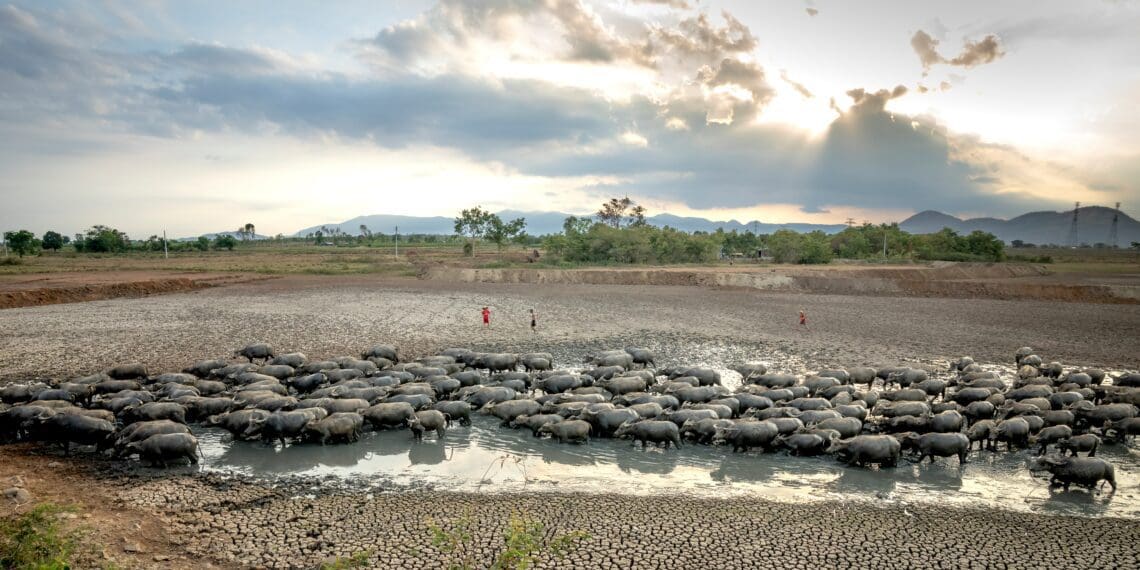
South Africa already suffers from some of the most extreme and protracted droughts in the world, which have impacted the country’s crop yields for decades. Moreover, almost 80 per cent of the country’s field crops are non-irrigated, meaning yields are entirely reliant on precipitation patterns, making agriculture more vulnerable to climatic changes.
For example, prolonged drought in the Northern Cape has severely impacted farming, placing a monumental burden on local farmers and their ability to produce food.
A 2022 study analysed the impacts of drought on food security in the Free State Province – a crucial area for commercial agricultural land. Over the past decade, drought has repeatedly impacted yields of maize and sorghum, with more than 30 per cent of yields lost in some years.
With rainfall projected to decrease in many parts of Africa, and the intensity and frequency of droughts already increasing, farmers living in affected regions face the challenge of securing enough water to keep their crops and livestock alive.
Flooding
The rising incidence of floods, storms and cyclones is also devastating for agriculture. They can lead to a loss of crops and livestock, damage infrastructure, contaminate water bodies and degrade the land.
In January 2022, South African farmers suffered “disastrous downpours” in regions previously stricken by drought. Several rainfalls damaged or destroyed six thousand hectares of crops, with 20 per cent of grain producers losing 60 per cent of their white maize plantings due to the water damage.
Further heavy rains in April 2022 caused deadly floods and landslides across KwaZulu-Natal and the Eastern Cape. The flooding washed away crops and soils and left agricultural fields water-logged. They also forced the closure of the Port of Durban, one of Africa’s biggest shipping hubs that handle around 60 per cent of South Africa’s shipments.
“This most recent disaster, which has befallen KwaZulu-Natal continues to demonstrate how fragile the agricultural sector is”, said Sandy La Marque, CEO of KwaZulu-Natal Agricultural Union (Kwanalu). This extreme weather event – where almost one year of rain fell in two days – was made twice as likely due to climate change, scientists have confirmed.

How farmers are adapting
Spiralling climate impacts of extreme and volatile weather pose a serious threat to South Africa’s agricultural system and rural livelihoods. Action to mitigate GHG emissions is essential to prevent the very worst impacts of climate change and protect food systems both now and in the future. However, adapting agricultural practices to this new future is equally crucial, and farmers are already making such changes.
For example, a 2020 study examined climate change adaptation behaviours on farmers in the Western Cape and found most farmers have already observed long-term regional climatic changes, such as changes in rainfall, higher temperatures and extreme weather events.
In response, most farmers have implemented adaptive strategies on their farms, found the study. Measures include adapting soil and crop management, such as changes in planting and harvesting time and crop rotations.
Focus on water resources
Adaptation measures should also focus on the management of South Africa’s water resources for agriculture, outline researchers from the University of Freestate. This can include increasing farm dam capacity and increasing the efficiency of water use. For example, the cultivation of high-value crops can be enhanced by using saved water to achieve optimal irrigation.
Efficiency techniques can include repairing leaks, changing irrigation times, planting crops with low water needs and monitoring water use. By equipping farmers with a collection of management and adaptation tools to overcome climatic changes, farmers’ well-being and livelihoods can be improved, they found.
This article first appeared in Green Economy Journal.
READ NEXT: Climate change: How to arrive at system change
Sign up for Mzansi Today: Your daily take on the news and happenings from the agriculture value chain.