Mary Maluleke, junior resource economist with ASSET Research, is back with another series on conservation agriculture. In the first of this three-part series, Maluleke gives context to a typical conversion journey while nudging farmers to ask important questions, and objectively analyses the long-term financial sustainability of their farms.
Farmers have been the backbone of ensuring sufficient food production and security in our nation. They are great custodians of between 70% and 80% of our land area that is under their management (Figure 1); while earning them less than 3% of national income per annum over the last two decades (Figure 2).
They have kept a resilient mind throughout the years despite low earnings, a growing population, and increased domestic food consumption levels that make it hard for them to keep up. In addition to this dilemma, the increased magnitude of impact associated with the growing global unrest, economic instability, and climate variations will prove a more difficult farming context for all.

With long-term forecasts for these challenges expected to worsen with time (continue to grow), farmers will need to work smarter and not necessarily harder.
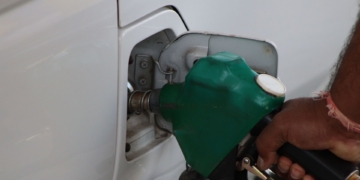
To date, farmers have been exposed to increased levels of economic volatility that have resulted in a depreciation of the rand value, high levels of inflation, and rising interest rates; all of which have led to rising costs of production due to rising prices of fuel, fertiliser, other agrochemicals, and overheads – over and above rising costs of living, and other additional costs like security and insurance.
These economic conditions, coupled with the growing impact of climate change – which has led to irregular weather conditions (erratic rainfall patterns, severe storms, floods, increased dry spells, and heat waves), wildfire threats, pest and disease outbreaks, crop failure, air and soil pollution and compromised soil productivity – require adequate mitigation strategies.
Strategies are urgently needed that can help farmers to avoid and reverse most of this combined impact, ease the production cost-burden and minimise the prevailing agricultural risk.

ALSO READ: Mzansi’s dairy industry takes climate action
Climate-smart agriculture
One such strategy is that of climate-smart agriculture, which includes a combination of several sustainable methods to resolve specific climate related challenges.
It is an effective approach with three main objectives: to increase farm productivity and profitability; adapt to climate change and build resilience to current and future impacts; and reduce greenhouse gas emissions.
By adopting climate-smart agricultural systems, farmers are expected to have best environmental and financial prospects for survival and success under current farming conditions. Or will they? Does climate-smart agriculture pay?
In this three-part series, we will investigate and answer this question by following a hypothetical journey of two farmers William and Vera. We will explore the questions, costs, and benefits associated with switching to climate-smart agriculture.
Taking a leap
William Mahlangu* is a grain farmer in the Mpumalanga Highveld region in South Africa. Recently, William has been exposed to some of the challenges affecting farmers today, and some stats on farm debt, failure, and closure. He has grown anxious about the long-term sustainability of his farm, seeing that he has experienced a continuous decline in his profit margins year-on-year.
William decided to conduct a financial analysis of his farming enterprise to understand what contributes to this decline. He found the continuous increase in total direct allocated variable costs (TDAVC) to be one of the prime causes.
The main drivers for this increased TDAVC were the major production inputs: fuel, fertiliser, herbicides, and pest control. These were increasing as a result of two main factors, 1) input price hikes (something William could not do anything about since he is a price taker), and 2) increased input volume required per ha which creates a dual impact of the price hike.
This was a problem for William as his soil, which has always been tilled, receiving high amounts of fertilisers, had become increasingly dependent on chemicals which is both costly and unsustainable. He needed a solution that will help him reduce the cost of inputs and overall TDAVC, and further increasing his profit margin.
ALSO READ: Climate change threatens East Africa’s livestock
Navigating difficult questions
William reached out to his all-time friend, Vera Manzini*, who owns a farm in the Maluti region of the Eastern Free State. He shared his financial analysis results that motivated him to seek alternatives and solutions to improve his farming system; and advised her to do a similar analysis on her farm.
Vera’s analysis turned out negative like William’s but at even greater magnitudes. So, she too agreed that she needed an alternative that would help reduce input costs and volume while reducing the TDAVC, restoring soil health, and increasing profits. However, she needed to know “how” that was achievable.
William suggested that they should first investigate what sound and scientific principles and practices are recommended to avoid and restore the problems highlighted by the analyses.
They both agreed that these principles should support good soil management practices helping them to retain moisture in the soil, and protect and restore nutrient-rich (fertile) topsoil from being washed away by erosion.
They consequently realised they needed to have soil health as the core goal that will help them to improve soil productivity, thereby unlocking various other positive benefits.
As you might have expected, it would have been difficult to build healthy soils under William and Vera’s current farming systems, which includes disruptive chemical and mechanical practices that degrade the soil.
So, they decided to reconsider and redesign their current conventional tillage (CT) farming system using the new principles and practices they identified.
The sound, scientific climate-smart agricultural principles, and practices they discovered and used to redesign their systems are well described, tested, adopted, and adapted under regenerative conservation agriculture (CA/RA).
In the second article of our three-part series, we will explore the financial analyses that compared the costs and benefits of the three farming systems used by farmers in these two summer rainfall regions of South Africa, namely conventional tillage (CT), no-tillage (NT) and a fully integrated crop-livestock (CA/RA) systems.
The analyses were based on a combination of real data and ecologically backed assumptions, such as those used by farmers William and Vera. The main aim of this analyses is to provide farmers with a long-term view and a satisfactory degree of assurance on whether it pays to convert to climate-smart agricultural systems.
- William Mahlangu and Vera Manzini are pseudonym names used to protect the identity of farmers.
Mary Maluleke is a junior resource economist with ASSET Research, currently involved with a conservation agriculture project led by Hendrik Smith. In 2019, she obtained a Master of Commerce degree in economics from Rhodes University.
ALSO READ: Save on production costs with conservation agriculture
Sign up for Mzansi Today: Your daily take on the news and happenings from the agriculture value chain.