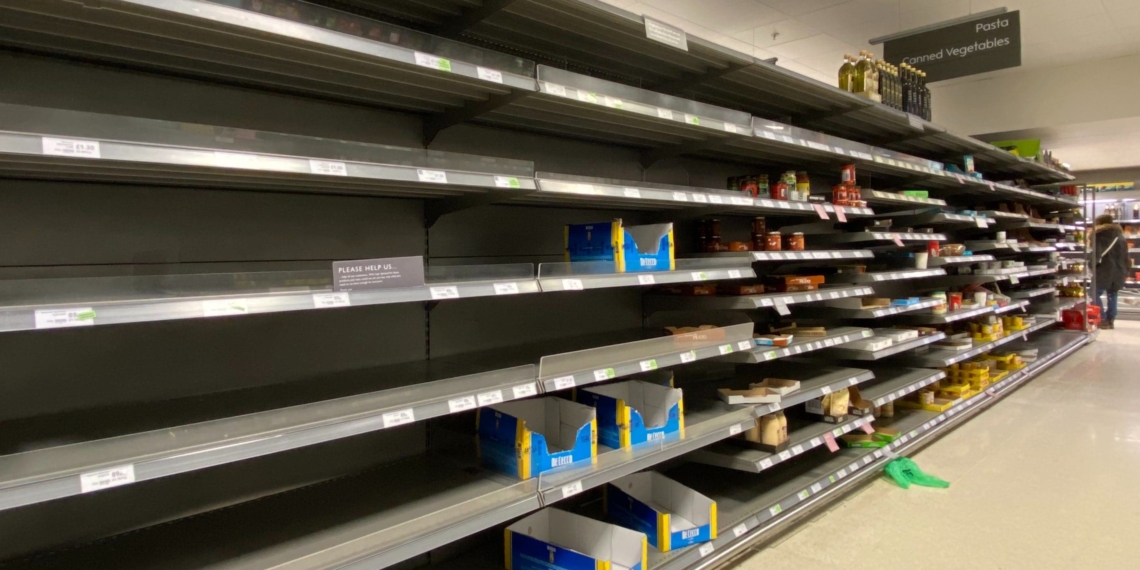
 While panic-buying of food in the wake of the national coronavirus disaster is an understandable reaction, this is completely unnecessary, say agricultural economists.
Rushing to the shops to bulk buy food is likely to push up food prices and have knock-on effects all the way to the farms, say economists like Lunathi Hlakanyane of the Stellenbosch University agricultural economics department.
“The infrastructure of South Africa’s supply chains remains virtually intact, showing no signs of major disruptions in its gradient following the outbreak. In other words, there is no evidence to suggest a looming food security emergency,” he says.

Most South Africans can’t afford to buy in bulk and should refrain from doing so, says Dr. Sifiso Ntombela, chief economist at the National Agricultural Marketing Council (NAMC). He adds that retailers and food distribution systems are functioning and ensuring an uninterrupted supply of food, so it’s not necessary for consumers to consider bulk buying of food.
“If consumers start panicking and conduct bulk-buying this could inflate food prices and interrupt availability of food. As a result, this could make food unnecessarily expensive in the short term,” Ntombela says.
According to Ntombela, access to imported foods could become an issue in the longer term, especially for products such as wheat and rice. This is due to travel and import restrictions recently imposed by the South African government as well as the effect of Covid-19 outbreaks in the countries where these commodities are produced.

“It is important that consumers remain calm. South Africa’s food supply system is able to continue providing essential food. In the short term, prices will likely increase, reacting to potential consumer buying panics.”
Wandile Sihlobo, chief economist of the Agricultural Business Chamber (Agbiz), says surges of bulk buying in the country should not come as a shock. This was the case for most countries affected by the coronavirus, he says in an article published on 10 March 2020.
He says widespread fear of the pandemic has significantly changed consumer behaviour and subsequently changed the demand patterns for products in supermarkets, like hand sanitizer, toilet paper and perishable goods.
When the first case was reported in early March, Mzansi had already shown signs of a spike in demand. If this spike extends to food, Sihlobo says it is unclear what effect it would have on agribusiness.
“If this extends to food and other essentials as is the case in other countries affected by the virus, the agribusinesses will fundamentally experience the shocks in the domestic market (possibly through spiking demand first and softening in the medium term). The implications of this on food price inflation are unclear in the near term,” says Sihlobo.

Hlakanyane says the Covid-19 crisis is indeed a cause for concern, but certainly not for panic. “At this phase of the pandemic, impulsive consumption behaviour such as panic-buying is unwarranted as the crisis has not had a significant impact on agricultural supply chains.”
“Admittedly, though, there has been a rather unexpected rise in demand for fresh and perishable products following the declaration of the pandemic as a national disaster, but this is not significantly different from seasonal demand spikes, such as those recorded over the festive season,” he says.
He says the danger of panic-buying in response to Covid-19 is in its potential to send damaging ripple effects through the agricultural supply chain that brings food from farms to consumers’ tables. This happens as previously unanticipated demand outstrips the available supply.
This can put enormous pressure on farmers, who are the primary links in this supply chain. Even in the most stable of circumstances, farmers have to contend with major volatility in demand. Panic-buying can make this volatility much worse.