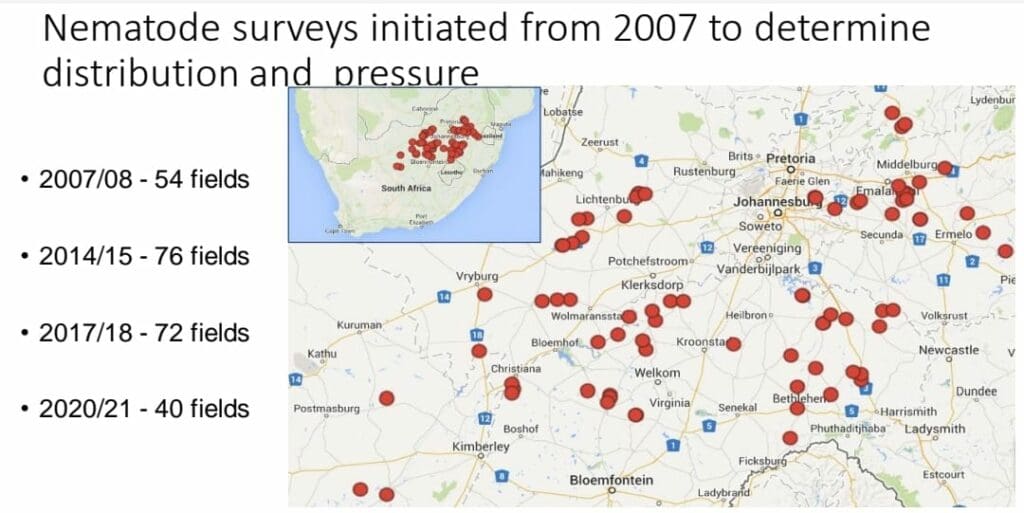
Have you ever heard of nematodes – the ones that live in the water film around soil particles in fields of farmers referred to as terrestrial nematodes? If your answer is yes, then you would know that these terrestrial, microscopic organisms with many cells, and unsegmented bodies pose a great threat to farmers in South Africa.
Nematodes are commonly referred to as “roundworms”. Since they are so little, you need a microscope to observe the plant-eating nematode species. Despite the life stages of some species seeming pear-shaped, females, ineffective juveniles and other life stages (males included) frequently have a long, slender appearance.
Professor Driekie Fourie, technical lead at Syngenta shares with us what exactly nematodes are and how high-risk the roundworms are for growers in South Africa. But that’s not all she also reiterates ways to mitigate or possibly prevent nematodes from penetrating healthy soil and causing major damage.
Good and bad nematodes
There are different groups of nematodes. Believe it or not, some are good and others not so much. The beneficial ones play an important role in nutrient cycling in soils and feed on other organisms. They include:
- Entomopathogenic nematodes are soft-bodied, non-segmented roundworms that are obligate or sometimes facultative parasites of insects.
- Bacterivores, fungivores, omnivores and predator nematodes – feed on bacteria, fungi, and other microorganisms in the soil such as mites, arthropods and others.
The ‘bad ones are referred to as the parasitic nematodes – “The biggest one is about 11 mm long but a few micrometres in diameter and it can be seen as a little thread in a counting dish when extracted in water and when an expert identifies it,” Fourie explains.
Fourie adds that they are aquatic organisms, their bodies are primarily transparent, and they reside in the water film around soil particles (as indicated above) in agricultural soils, natural veld and gardens.
What farmers cannot see can hurt their crop
While some nematodes are great bioindicators of soil health, the risk that their counterpart plant parasites pose is higher than what growers realise. Approximately 12%-15% of yield losses are attributed to parasitism of crops by plant-parasitic nematodes in South Africa, while up to 60% yield losses were recorded in highly infested maize fields.
According to Fourie, plant-parasitic nematodes attack, infect and parasitise most of the existing plants on earth. “The economically most important groups such as root-knot and lesion nematodes have a wide host range and therefore so difficult to control,” she says.
When farmers see spots of poor growing plants in their fields, that is usually the typical sign of nematode infection. Due to the small size of these organisms, they cannot move very far on their own, therefore causing damage in small patches.
“These damages usually enlarge over seasons this is due to the use of implements that spread the soil. Run-off water also plays a role in spreading nematodes, especially during heavy rainfall spells. Wind can also be a factor in spreading nematodes, especially in areas with very sandy soils,” she says.
Besides that, farmers need to look out for other signs such as:
- Yellowing of leaves
- Stunting of plants
- Wilting of plants
If any of these signs are shown a farmer has to remove the plant from the soil and look for the symptoms on the underground plant parts, explains Fourie.
Underground plant parts symptoms:
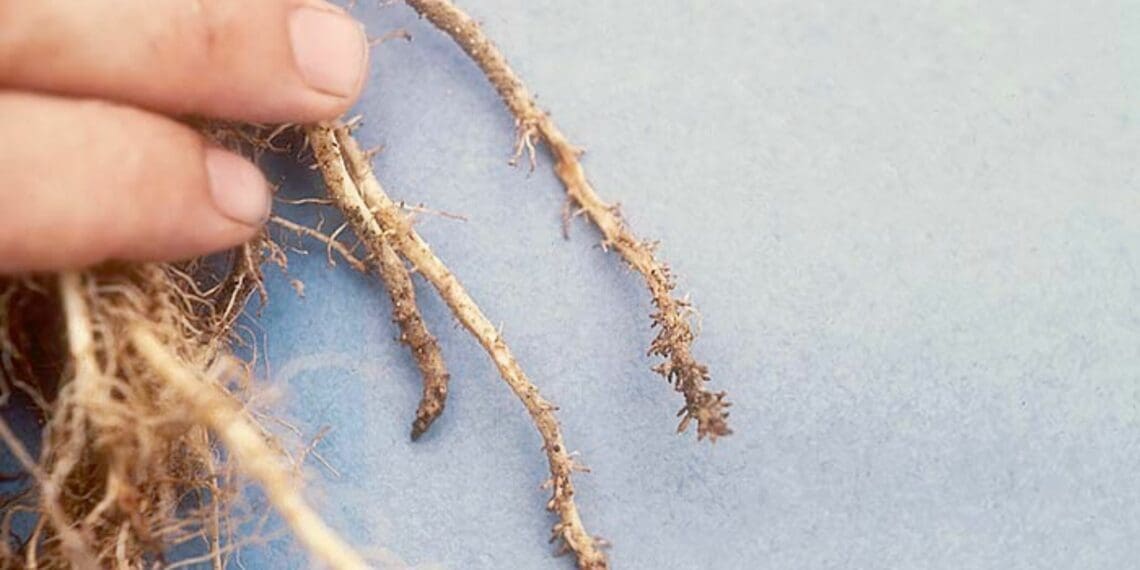
For example, the top one-rated nematode pest in the world is the root-knot nematode from the genus Meloidogyne) will have signs of the following underground
- Causes knots or galls on plant parts such as roots, tubers, rhizomes and others
While lesion nematodes cause the following:
- Darkened necrotic lesions on roots or other below-ground plant parts
- However, these lesions are difficult to identify because they can be caused by other diseases in plants.
Fourie mentions that at the end of the day, it truly takes the work of the microscope and a trained expert to tell a farmer if it is a nematode problem or not, an accredited nematology diagnostic lab with trained personnel can help with this.
Meanwhile, areal parts of plants can also harbour pathogenic nematodes (including roots, stems, leaves, flowers and seeds), although most species feed on roots or other below-ground plant parts). Aerial plant parts infected with nematodes for example include kernels of cereal crops, e.g., wheat and others, seeds of grasses, stems, and leaves of various crops.

How to prevent nematodes from spreading
There is hope at the end of the tunnel, according to Fourie farmers can prevent the spread of nematodes and it all has to do with actively putting in the work to do so.
“Farmers need to know the status of the nematode infection and the nematode pests occurring in the field that is crucial. They also have to know more about the beneficial nematodes too and experts at diagnostic labs also enable the identification of these types of nematodes
Farmers can prevent or try to limit the damage of nematodes:
- Management strategies such as chemical nematicides have been and still are the most popular and widely used approach
- Farmers have to know the status of their fields in terms of nematode presence and the variety of nematodes present
- Rotational crops are encouraged but poor host or non-host cultivars of rotation or cover crops are the best option to use – crop history is another important factor that comes into play here since most crops used in local rotations are highly susceptible to crops
- Using cover crops to aid in reducing the density of plant-parasitic nematodes but be conducive to the build-up of densities of beneficial nematodes
- Increasing carbon in soils using various strategies (compost, manures, cover crop residues)
According to Fourie, it is important that farmers attend farmer information days where nematodes and the impact thereof are discussed.
“There are experts at universities and other institutions such as the ARC where they can go to learn more about this topic. The internet also contains a wealth of information about plant-parasitic and beneficial nematodes and then there are also the industries such as Grain SA, Potatoes SA and others that have connections and are involved in funding nematode research projects. Farmers can also learn from them to put them in contact with nematode experts,” she says
READ NEXT: Financed farmers offer loan repayment tips
Sign up for Farmer’s Inside Track: Join our exclusive platform for new entrants into farming and agri-business, with newsletters and podcasts.