Sunday, September 6, 2026
SUBSCRIBE
22 GLOBAL MEDIA AWARDS
Food For Mzansi
  • News
  • Changemakers
  • Lifestyle
  • Farmer’s Inside Track
  • Food for Thought
No Result
View All Result
  • News
  • Changemakers
  • Lifestyle
  • Farmer’s Inside Track
  • Food for Thought
No Result
View All Result
Food For Mzansi
No Result
View All Result
in News

Dam safety crisis: Floods expose cracks in compliancy

Following the burst of three dams in Riverlands, Western Cape, the department of water and sanitation faces criticism for its low compliance with dam safety regulations. A growing inspection backlog and shortage of inspectors exacerbate the crisis

by Sandiso Phaliso
20th September 2024
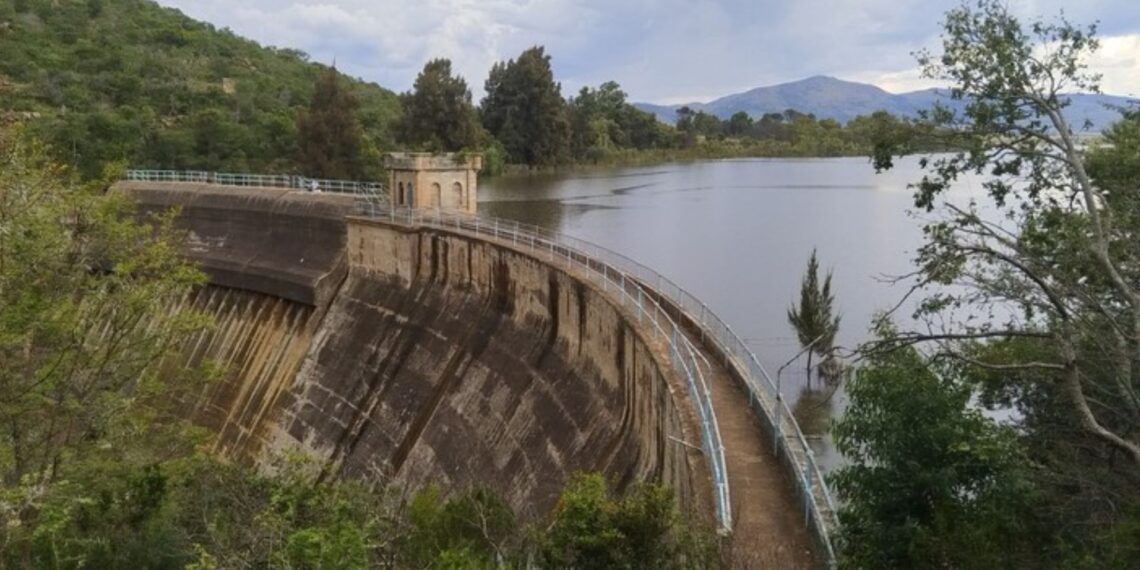
The Bonkolo Dam in Komani, Eastern Cape. The majority of South Africa’s dams are not inspected every five years, as mandated by national regulations. Photo: Mkhuseli Sizani/GroundUp

The Bonkolo Dam in Komani, Eastern Cape. The majority of South Africa’s dams are not inspected every five years, as mandated by national regulations. Photo: Mkhuseli Sizani/GroundUp

Share on FacebookShare on TwitterShare on WhatsApp

Following dam walls bursting and causing devastating flash floods in Riverlands, Western Cape, Parliament has heard the department of water and sanitation (DWS) has a severe shortage of dam inspectors.

In Riverlands, near the town of Malmesbury, the collapse of a series of three dams owned by the department on 7 August left 107 people homeless and destroyed the livelihoods of small-scale farmers in the rural settlement.

The settlement was again flooded on 17 August when a spillway created by engineers at the fourth and largest dam overflowed.

Earlier this month DWS minister Penny Majodina and her deputy told the Standing Committee on Public Accounts (Scopa) that the department faces a severe shortage of approved professional people to inspect dams. It currently only employs four inspectors permanently, and there are only 101 on the register of approved professional inspectors countrywide, most of whom (60%) are over 60 years of age.

Dam owners are not compliant

Dam owners must submit a safety report prepared by an approved inspector every five years. The law requires approved professionals to do the inspections, and only the minister may appoint them after consulting with the Engineering Council of South Africa.

Safety report compliance for dams is low, with an overall compliance rate by dam owners of only 33%. The department itself owns 286 dams and only 41% are compliant. Municipalities, with 217 dams, are the worst offenders – only 24% compliant. The agricultural sector has 1 481 dams and 26% compliance; water boards own 97 dams and have 46% compliance; mines and industry have 240 dams and 40% compliance. There are also unregistered dams.


Related stories

  • Rand Water woes: Gauteng water cuts threaten food security
  • Agri SA celebrates milestone for water governance in SA

In November 2022, the department had a safety evaluation backlog of 474 reports, dating back to April 2018. A plan to eradicate this backlog was initiated in February 2023. By then the backlog had risen to 518.

The appointment of a service provider to review and evaluate 42 reports for 2018/19 was carried out this year, at a cost of R917 000. The current backlog of 476 will cost over the next two to three years, commencing in November, an estimated R7.1 million at least.

Dr Sean Phillips, DWS director general, said an open tender process had been initiated to address an inspection backlog of hundreds of reports caused by a lack of qualified inspectors.

MP Nkosinathi Nxumalo (MK) wondered when the department had recognised the need for inspectors, given the length of time it takes to train an engineer – seven to eight years.

Addressing lack of dam specialists

MP Sipho Mahlangu (ANC) asked what the department was doing to address this skills shortage.

Majodina replied there were strategies to recruit and train more inspectors, with the department engaging with engineering institutions and universities to create a pipeline of young professionals, while also working to fast-track the qualification process.

The department says it is liaising with the engineering council to establish a special category of dam specialists, making it easier for engineers to apply to be approved professionals.

The department says currently internal engineers are conducting monthly and quarterly inspections of its dams. Where the engineers identify serious problems, the department then appoints an approved professional to carry out an assessment.

DWS spokesperson Mandla Mathebula said the department will advertise eight additional posts next month. “Most of the [approved professionals] that were employed by DWS retired from public service and others resigned to join the private sector,” he said.

This story was first published on Groundup.

READ NEXT: Aquaculture poised for growth with support to small-scale farmers

Sign up for Mzansi Today: Your daily take on the news and happenings from the agriculture value chain
Sandiso Phaliso

Tags: Commercialised farmerdamsDepartment of water and sanitationFuture-focused farmerInform mewater rights
The future of Mzansi's sugar industry hangs in the balance
News

Government hikes sugar import price, but industry warns of gap

by Staff Reporter
3rd September 2026

South Africa’s government has adjusted the sugar import reference price from $680 to $785 per tonne to curb surging imports....

Read moreDetails

Chicken is booming, but the real money is in the supply chain

2nd September 2026
How Tebogo beat post-harvest losses with smart agro-processing

How Tebogo beat post-harvest losses with smart agro-processing

2nd September 2026

Aucamp outlines strategy for biosecurity, trade, and infrastructure

2nd September 2026
Tobias Doyer, CEO of Grain SA. Photo: Supplied/Grain SA Facebook

Rising costs, climate risk push Swartland wheat farmers to the brink

2nd September 2026

Rising costs, climate risk push Swartland wheat farmers to the brink

Honoured roots: A father’s legacy, a daughter’s farming dream

Beyond finance: Making women-led farms bankable

How Tebogo beat post-harvest losses with smart agro-processing

Dragon fruit thrives in KZN valley despite tough national season

Join Food For Mzansi's WhatsApp channel for the latest updates!

JOIN NOW!
Next Post
Mobile units to bring vital livestock services to small-scale farmers

Mobile units to bring vital livestock services to small-scale farmers

THE NEW FACE OF SOUTH AFRICAN AGRICULTURE

With 21 global awards in the first six years of its existence, Food For Mzansi is much more than an agriculture publication. It is a movement, unashamedly saluting the unsung heroes of South African agriculture. We believe in the power of agriculture to promote nation building and social cohesion by telling stories that are often overlooked by broader society.

RSVP now: Emerging farmers’ programme at Nampo Cape

Community-led farms boost food security and incomes in Limpopo

Farmers rethink water use as shortages threaten food production

Honoured roots: A father’s legacy, a daughter’s farming dream

Gauteng farmers urged to harness massive urban market

Foot-and-mouth crisis hits SA dairy industry with R1-billion loss

  • Awards & Global Impact
  • Our Story
  • Contact Us
  • Cookie Policy
  • Privacy Policy
  • Copyright

Contact us
Office: +27 21 879 1824
News: info@foodformzansi.co.za
Advertising: sales@foodformzansi.co.za

Contact us
Office: +27 21 879 1824
News: info@foodformzansi.co.za
Advertising: sales@foodformzansi.co.za

  • Awards & Global Impact
  • Our Story
  • Contact Us
  • Cookie Policy
  • Privacy Policy
  • Copyright

Chat Options

I'm Lerato, your AI assistant!
No Result
View All Result
  • News
  • Changemakers
  • Lifestyle
  • Farmer’s Inside Track
  • Food for Thought

Copyright © 2024 Food for Mzansi

This website uses cookies. By continuing to use this website you are giving consent to cookies being used. Visit our Privacy and Cookie Policy.