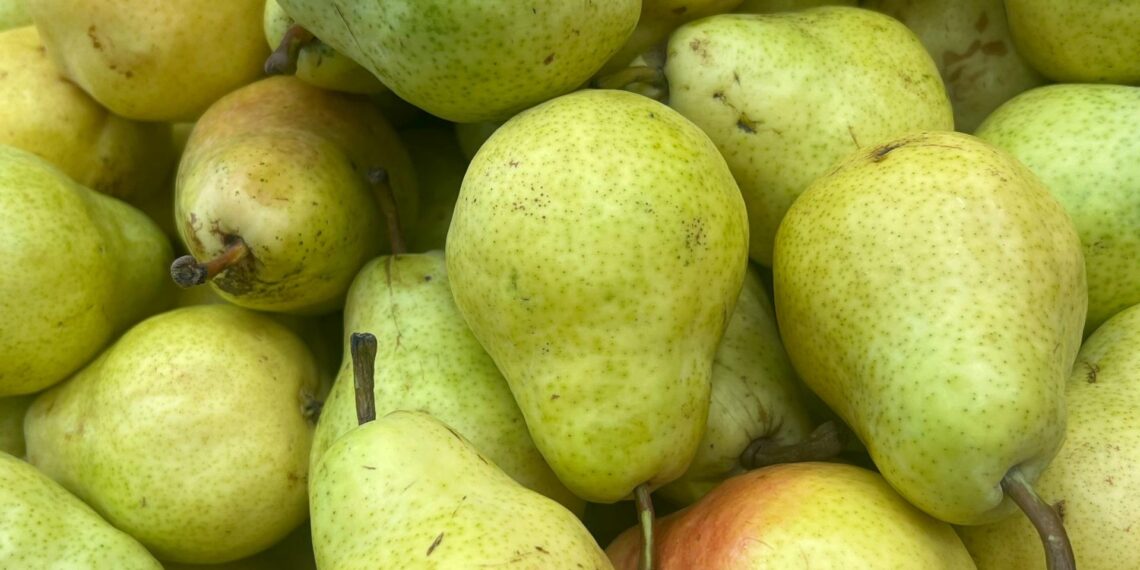
The first apples and pears are coming off the trees earlier than expected, setting the stage for a season shaped by both opportunity and uncertainty.
According to Tru-Cape, while early indications point to good-quality fruit, factors such as hail damage, exchange-rate volatility and logistics challenges will continue to influence outcomes as the season unfolds.
Roelf Pienaar, managing director at Tru-Cape Fruit, expressed their concern at the hail damage reported in the Langkloof and the Koue Bokkeveld in early February; however, the full extent of the impact on the apple and pear crop is still being assessed.
“While the crop is progressing well and quality indicators are encouraging, there are still a number of variables that will influence market performance and global demand,” he said.
Depending on the variety, the season is on average seven to ten days earlier than usual, according to Calla du Toit, procurement director at Tru-Cape Fruit Marketing. Harvesting of Rosemarie, a blush summer pear variety, began on 23 December, about two to three weeks earlier than the industry norm.
“It was only the second time in the past 25 years that I can remember we started harvesting before Christmas,” Du Toit added.
Related stories
- Tru-Cape partners with Harvard on premium apple strategy
- Apples on the braai: Fresh flavour meets fire
- Tru-Cape cherries target China amid bumper 2025 crop
- Honouring roots: Tru-Cape marks SA’s 363-year apple legacy
Impact of favourable weather conditions
Graeme Krige, technical advisor at Two-a-Day, said the region is expecting a good-volume crop with clean fruit that is largely free of pests and disease, and later varieties are likely to catch up as the season progresses, with ripening returning to a more typical pattern.
Warm and dry conditions during the growing season played a significant role in the earlier harvesting dates. Du Toit explained that, unlike a typical season that includes one or two cooler, wetter weeks to slow ripening, November and December were marked by consistently sunny conditions with no cooler periods to delay the process.
He believes these conditions had a positive effect on fruit quality. Despite a windy season, there have been fewer wind marks on the fruit than expected. However, Krige noted that warm temperatures in spring and early summer shortened the growing season, which affected fruit size.
While water availability is not currently a major concern in the Ceres and EGVV regions, producers will need to manage usage carefully. In the Langkloof, farmers were under severe pressure this season.
Global demand looks promising
The earlier start to the season allows Tru-Cape to capitalise on international markets and extend its marketing window. Demand for apples and pears remains strong, with a large portion of Rosemarie pears earmarked for the Middle East, alongside promising prospects in India, Russia and China. A later-than-usual arrival of New Zealand’s Royal Gala also creates openings in the Far East.
Du Toit is optimistic about new varieties entering the market and the growing volumes of summer pears. “There have been several upgrades at both the Two-a-Day and Ceres Fruit Growers packhouses, which better position us to fully utilise the opportunities we believe lie ahead,” he said.
READ NEXT: Tru-Cape partners with Harvard on premium apple strategy