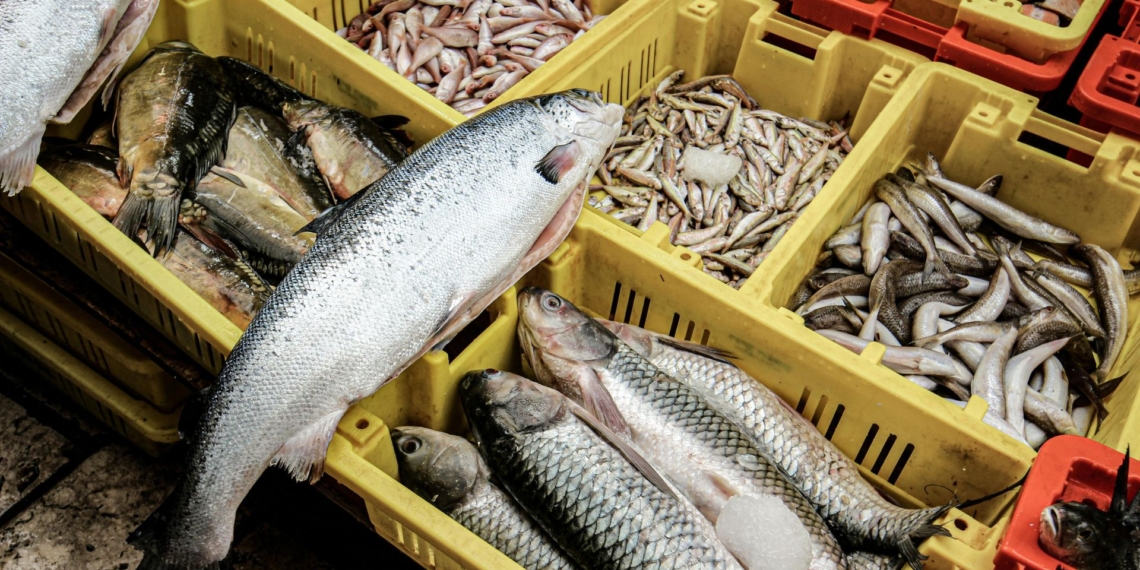
During Easter and other holidays, the demand for fish increases and consumers turn to their local seller, retailer or market at the jetty to buy their fish. But whether you prefer saltwater or freshwater fish, South Africa’s fishing sector is challenging.
Aquaculture is one of the growing farming methods in Mzansi, with a strong market, especially among seafood restaurants. But fish farming is sensitive work, it depends on tightly controlled conditions.
Water quality, temperature, oxygen, and feeding all need constant attention, and when something goes wrong, the impact is quick and costly. It also carries environmental risks, as poor management can pollute water and affect wild species.
With all these pressures, fresh fish is often expensive, and prices climb even higher during the Easter season.
Angelo Marman, a former aquaponic farmer and founder and co-director of Abitz Farming in Riverlands, Western Cape, said this time of the year is profitable for market fish. He added that for success in fish farming, freshwater fish is a good choice.
“In the local market, there is a lot of buying power, especially within the African community and the farming community,” he explained.
He noted that catering to other communities could be more challenging, as it requires selling certain types of fish. “People are more used to saltwater fish than freshwater fish. For example, during Easter, snoek and hake does well in the market.”
What consumers prefer
With fish, buying what is in season and planning ahead is key to getting affordable options and keeping them in the freezer, said Shihaam Domingo, fondly known as the Food Witch from Retreat, Cape Town.
“Since the beginning of March, I’ve had yellowtail, gilberg (Cape salmon), and last week the snoek was nice and abundant.”
By “abundant,” she meant she paid around R250 to R300 for a large, plump snoek. She also mentioned that in Kleinmond, Cape bream is more affordable and generally available throughout the year.
Domingo noted that if these fish were not available, perhaps because you did not buy ahead, you might end up with types that did not give that buttery-soft texture or delicate flavour when cooked.
Food technologist and farmer Oneziwe Jackson, based in Bellville, Cape Town, said that during the season, fish prices tend to rise because many people are buying in large quantities.
For her, affordable options in the market usually includes yellowtail and snoek because they have a firm, meaty texture, almost like chicken breast. This makes them easy to cook and enjoy, especially for beginners. They do not fall apart easily and have a nice, rich flavour without being too strong.
“Even though I am not new to seafood anymore, I still love them because they are simple, tasty, and very versatile,” Jackson said.
Related stories
- Luvo gets township communities hooked on aquaponics
- How to start fish farming in just 10 easy steps
- Gugulethu wins R250k for sustainable aquaponics farm
- Aquaponics basics: Get your system thriving
Growth in SA’s fishing industry
Meanwhile, Luvo Gugwana, an aquaponic farmer and CEO of Green Arch Innovations Farming Systems in Pietermaritzburg, KwaZulu-Natal, said that due to religious events and seasonal demand, the fish market at this time of year is profitable.
“The kilo of tilapia ranges from R40 to R55, depending on where you are buying it. That is quite an affordable price for fish.”
Gugwana added that tilapia is a good, affordable choice, while trout is also popular but could be more expensive.

Although South Africa does not consume a lot of fish, the industry’s exports to the global market have grown dramatically, said Thabile Nkunjana, a senior agricultural economist with the National Agricultural Marketing Council’s (NAMC) trade research unit.
He said that between 2021 and 2025, fish fillet exports increased from R2.1 billion to R3.8 billion, a rise of at least 80%.
“While fresh fish exports rose by 19% from R453 million to R538 million during the same time period, frozen fish exports rose by 35% from R2.1 billion to R2.9 billion.”
Fish prices are influenced by supply and demand dynamics in the market, he added, which means prices could rise, fall, or remain consistent with long-term trends depending on the timeframe.

“In South Africa, fish prices typically rise during the vacation or festive season, Easter holidays, when catch rates are lower, and when other meat varieties, like pork or poultry, drastically increase for a variety of reasons.”
He further noted that consumers prefer to buy more fish when pork and poultry become more costly, which in turn drives up fish prices.
Nkunjana noted that fish prices are also impacted by climate-related issues. For instance, capture rates in South African waters have historically been affected by La Niña weather conditions.
READ NEXT: War over fishing rights: When conservation turns deadly