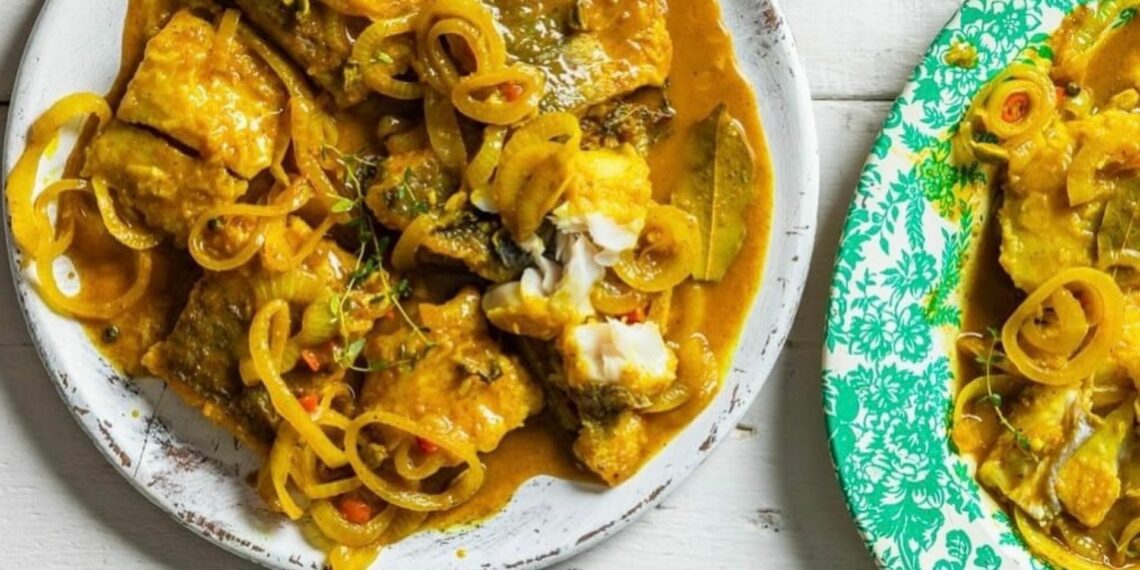
In almost every South African household, there is a special recipe for pickled fish that’s passed down through generations. The preparation and enjoyment of pickled fish during Easter celebrations hold deep sentimental value for many families in Mzansi.
While the traditional dish is mostly associated with Easter, a religious holiday for Christians, for many people, pickled fish has historical roots among the Cape Malay community.
Another possibility is that Easter typically falls during autumn in the Southern Hemisphere, and historically, this was a time when fish were abundant along the South African coast.
Jacqueline Goliath’s pickled fish recipe has been passed down for generations. For Goliath, the tradition of avoiding meat over Easter could have introduced the alternative, which is fish.
“The need to make the best fish dish could have made pickled fish a specialty because of the different ingredients and techniques used, e.g. special curry, spice length of pickling. The fish itself is a great source of proteins and omega-3 essential oils with spices that can be of healing and defence,” she says.
What makes her pickled fish stand out is the technique used to blend her spices.
“I still lean towards the Cape Malay feel to still respect that twist towards traditional cooking that the people of my community widely adopt,” she shares.

Pickled fish and health benefits
Dietitian Kulani Mtileni from Limpopo explains that pickled fish is a popular food, largely because pickling allows the meat to last longer than simple refrigeration or open-air storage.
According to him, pickling also gives fish a slightly salty and acidic bite, which can help cut through some stronger fish flavours. While there are almost endless pickled fish recipes out there, the general process is the same.
“First, brine the fish using diluted saltwater brine. Then, pickle the fish in a brine of salt, vinegar, and flavourful spices. Working with a basic recipe, you can test and tweak your brine until you get the exact flavours you want for your own special pickled fish recipe,” he explains.
Related stories
- Try these lekker fishy Cape Malay frikkadels
- Fish farming and aquaponics: Start your journey with expert tips
- Young farmer turns passion for fish into thriving business
- Sushi craze in Mzansi: Raw fish brings fresh flavours
As a dietitian, Mtileni highlights the health benefits of pickled fish, which include supporting heart health, acting as an anti-inflammatory, helping prevent age-related diseases, supporting foetal brain development support for essential body functions, and anaemia prevention.
In general, he underlines that fish is safe to eat, including for people who are pregnant or breastfeeding. Some types of fish have high levels of mercury, which can be dangerous in large quantities.
“It’s important to keep in mind that water pollution in certain areas can affect the quality of your fish. While store-bought fish is safe to eat, it’s always a good idea to check local advisories before eating locally caught fish, especially if you’re pregnant or breastfeeding.”
The Lazy Makoti’s pickled fish recipe
In line with her desire to promote the role of food in maintaining South African culture and heritage, Chef Mogau Seshoene, who founded The Lazy Makoti, shares a mouth-watering pickled fish recipe.
Ingredients
- 400g hake medallions
- ¼ cup of flour
- Salt and pepper to taste
- 2 large onions, sliced into onion rings
- 1 teaspoon garlic
- 1 teaspoon ginger
- 1 teaspoon peppercorns
- 1 tablespoon cardamon
- 1 red chilli
- 2 bay leaves
- 2 tablespoons sugar
- ¼ cup white vinegar
- 1 teaspoon curry powder
- 1 teaspoon turmeric
- 1 teaspoon cumin (optional)
- 1 teaspoon white pepper
- ¼ cup lemon juice
- Zest of 1 lemon
- 3 sprigs thyme
- ½ cup of water
Method
- In a large bowl combine flour, salt, and pepper. Coat both sides of each piece of fish and shake off any excess.
- Heat a tablespoon of oil and fry the fish for 2–3 mins on each side.
- Wipe the pan, clean, and heat the rest of the oil and fry the onion, ginger, garlic, and spices. Remove from pan and set aside.
- Place peppercorns, cardamom, chillies, bay leaves, sugar, and vinegar in the same pan and simmer over medium heat until sugar dissolves for about 10 minutes.
- Add lemon juice and zest, water, and thyme and simmer for another 10 minutes.
- Return the fish and onion mixture to the pan. Toss to coat and cook for 5 minutes.
- Leave to cool.
READ NEXT: Spekboom recipe: The ‘wonder plant’ your kitchen needs