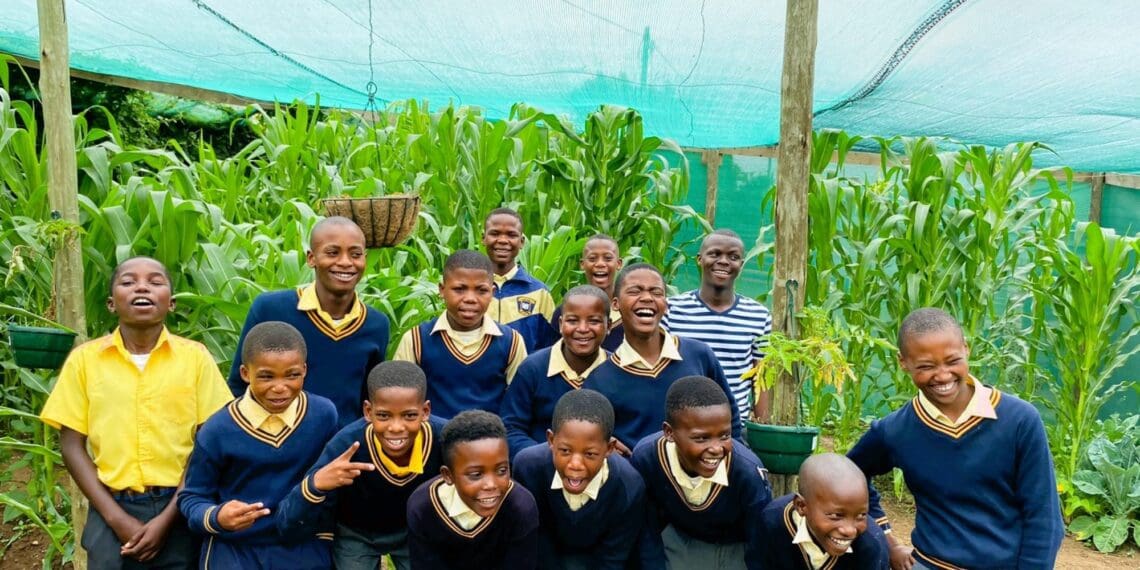
The Philippi Children’s Centre, a school in Cape Town, has successfully transformed its once-neglected yard into a thriving permaculture food garden thanks to EduPlant, South Africa’s longest-running school greening and gardening programme.
The initiative promotes sustainability, self-sufficiency, and community development by empowering learners with sustainable food-growing practices and knowledge.
Bharathi Tugh, EduPlant manager and education associate at Food & Trees for Africa (FTFA), explains that “growing food at the school level allows young children to learn by doing. And ‘doing’ builds agency, skills and choice.”
By providing learners with the tools, skills, and knowledge to lead healthier lives, the programme’s impact extends beyond the schools and communities where it operates. Maggie Petrus, the principal of the Philippi Children’s Centre, confirms that the garden has become a valuable learning tool for the learners, who can now connect the dots between the garden and their classroom learning.
According to Oxfam, childhood stunting in South Africa has risen to 26.5%, while hunger and malnutrition are linked to poor concentration and performance at school.
EduPlant’s ultimate goal is to promote food security, integrated learning, and self-sufficiency. Its efforts have helped address childhood stunting in South Africa, which is prevalent due to malnutrition and hunger.
The programme’s focus on permaculture, a sustainable way of growing food that mimics natural ecosystems, involves creating a diverse and self-sustaining ecosystem that can provide food year-round without the need for harmful chemicals or large amounts of water.
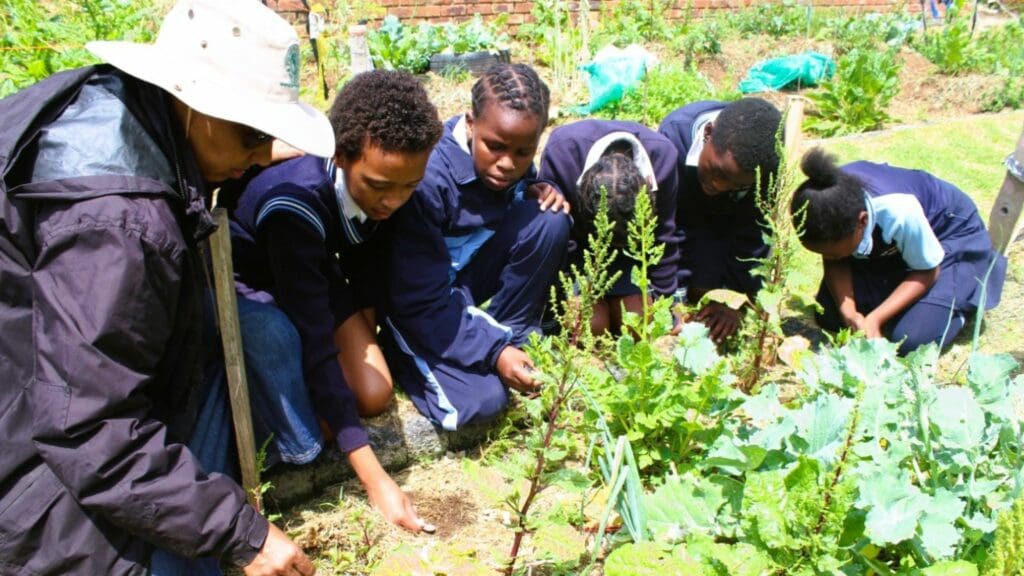
By teaching learners about permaculture principles and techniques through workshops and hands-on experience in their school gardens, they can take ownership of their gardens and experiment with different techniques and plants.
Community-linked clusters
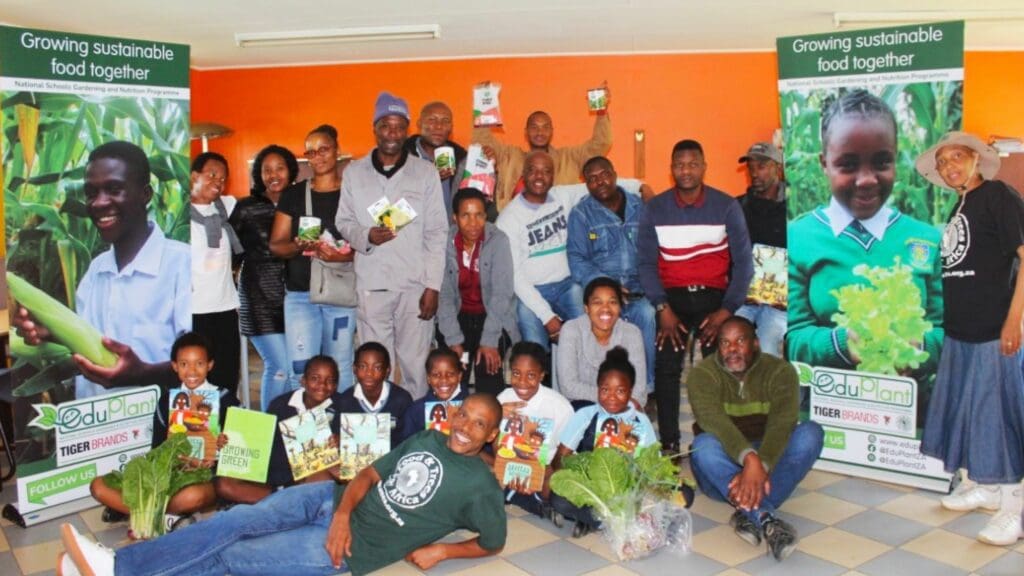
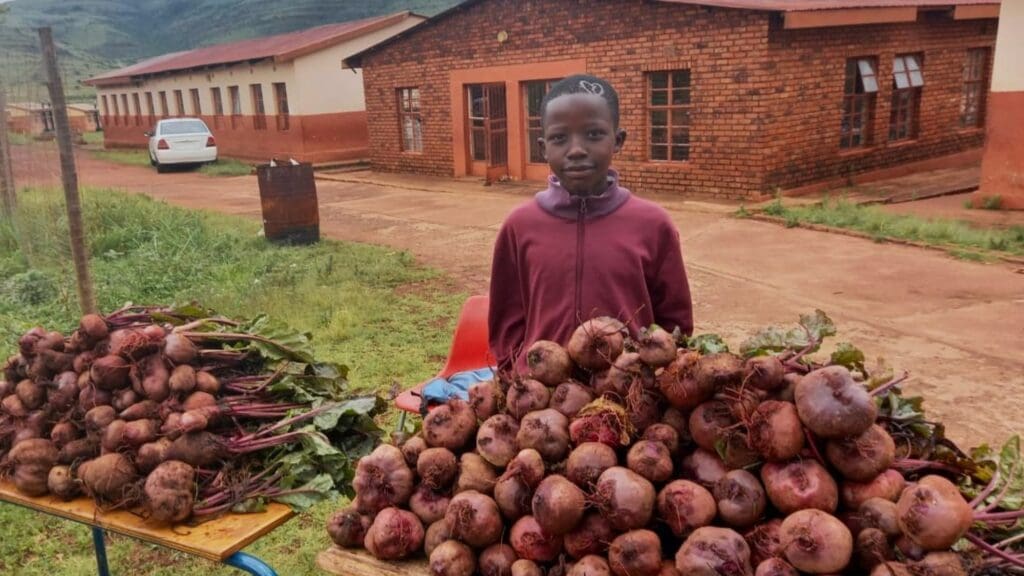
EduPlant has been creating fully-fledged, flourishing permaculture school food gardens in 300 schools nationwide, which operate in 30 community-linked clusters, enabling the benefits of the programme to extend to the surrounding households and communities as well.
Tugh emphasises the significance of the community-linked clusters, stating that “it provides opportunities for the learners to become teachers and to transfer their knowledge to the broader community”.
Nurturing and nourishing lives
The programme’s impact extends beyond the schools and communities where it operates. FTFA partners with organisations such as the World Food Programme (WFP) to help improve food security in other parts of the country.
The partnerships with WFP involve developing and supporting small-scale farmers to produce more food and enhance their livelihoods.
“Our relationship with Food & Trees for Africa through the EduPlant programme allows us to fulfil a fundamental purpose as a business, which is to nourish and nurture more lives every day in a sustainable manner,” says Lulu Khumalo, external affairs director at Tiger Brands.
EduPlant’s model of providing learners with a hands-on learning experience has proven successful in addressing food security, malnutrition, and hunger. It has also inspired some learners to pursue careers in agriculture and environmental fields.
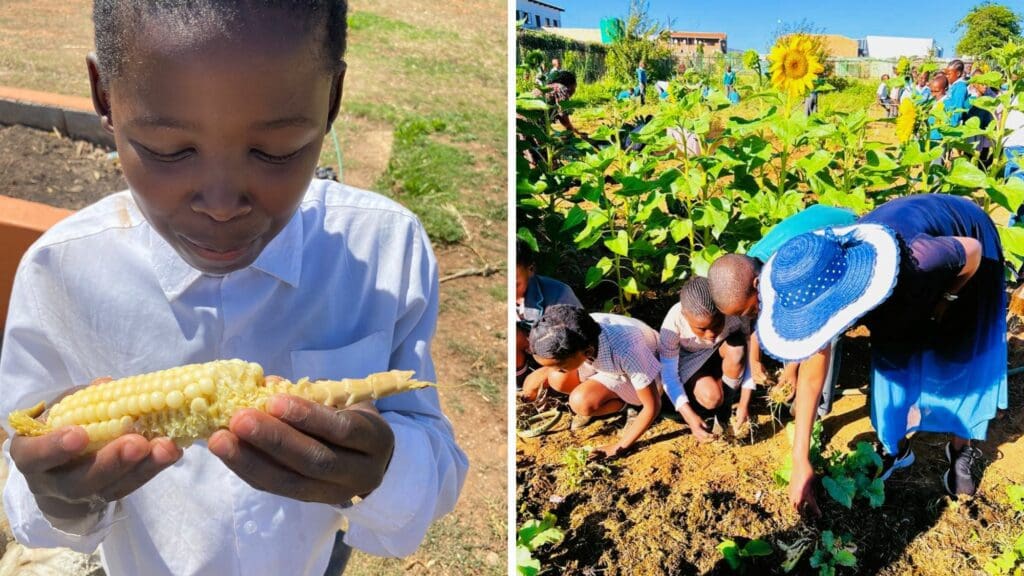
“Our garden is so beautiful that people from the community come here to take pictures,” says Petrus. “And when our learners go home, they tell their parents about the garden and what they’ve learned.”
Taking control
The EduPlant programme is not just about providing food for learners, but also about empowering them to take control of their health and environment, emphasises Robyn Hills, head of programmes at FTFA.
She stated that “school gardens demonstrate a healthier relationship to food and our food system. EduPlant builds tangible examples of how we can have greater power over how we grow our food and what we eat.”
EduPlant coordinator Nosiphelo Nikani adds, “Learner involvement, increased food production, and access to healthy, nutritious food is a fundamental outcome for us at EduPlant.”
READ NEXT: Byron takes agriculture to Atlantis community
Get Stories of Change: Inspirational stories from the people that feed Mzansi.