There are fewer tomatoes on Mzansi’s shelves due to a nationwide supply shortage. In some parts of the country, farmers are reporting rainfall and hail damage. Experts warn that consumers are also in for higher-priced tomatoes in the near future.
Jannie Potgieter, sales agent at the Johannesburg Fresh Produce Market, confirms that tomato volumes at the market are unusually low this year.
“We received 600 pallets lower in volumes compared to the original volume [of between] 1 200 to 1 300 pallets [last year]. It is just enough during January,” he pointed out.
However, according to Potgieter the demand for tomatoes is not high at the moment.
Dr Johnny van der Merwe, an agricultural economist at the North-West University, said tomato prices bounced back this week from R7.87 per kilogram to R9.01 per kilogram. This means more money in farmers’ pockets but unfortunately a costly expense for consumers.
“As expected, tomato prices bounced back increasing by 15% [after] tomato prices decreased by 15% last week,” Van der Merwe explained.
Expectations are that prices will remain on an upward trend in the short term, he added.
Meanwhile Potgieter said he anticipates the supply of tomatoes and sales to pick up again in February. “School will be starting, and everything will pick up by February,” he said.
The peak for the tomato industry is between June and July, and during this time supply is usually high.
‘Farmers, don’t be quick to plant more’
Byron Booysen, tomato farmer and founder of Booysen’s Tunnel Farm, told Food For Mzansi that farmers are usually tempted to plant more tomatoes when there is an undersupply in the market.

However, he warns that several factors should be taken into consideration before planting.
“We have to take into consideration for example climatic conditions, pest and disease risks, environmental risks and what season we are in. All of these things need to be taken into account before I decide to plant,” Booysen said.
He explained that when the volumes stay what they currently are, the demand could exceed available volumes. This means that prices would spike.
Booysen said a lot of farmers are likely to plant more tomatoes, and at some stage this will lead to an oversupply in the market again. Then the price will drop again.
“My logic will be to plant only few tomatoes to avoid the risk of selling my tomatoes for almost nothing. I’ll plant just enough so that I can still have a share in the high price for tomatoes.”
Booysen said the impact of load shedding on crops is also overwhelming.
This, he added, is especially the case with farmers who produce their crops hydroponically. According to him, the impact of load shedding could force tomato farmers who farm hydroponically, to switch back to traditional farming.
“Load shedding will affect a lot of tunnel farmers if they use a hydroponic pump system. That influences irrigation systems, reverting to the soil.”
Tomato farmers could switch
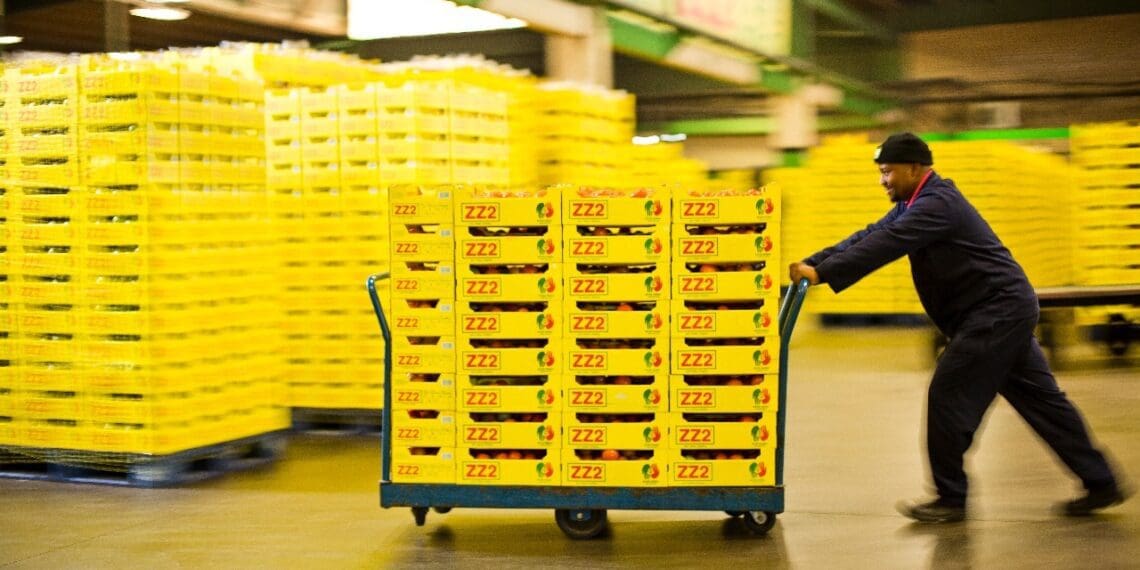
Clive Garrett, ZZ2 marketing executive, confirmed that tomato sales are currently stable despite low volumes.
“[Farmers] can’t start producing more than the economy can carry, these are manageable and accessible volumes during January,” explained Garrett.
He added that 1 200 to 1 400 pallets are manageable tomato volumes. Beyond that, when the market hits 2 000 in volume, there will be a concern depending on the time of the year and the demand, Garrett explained.
ALSO READ: Load shedding: Seeking solutions to save power
Sign up for Mzansi Today: Your daily take on the news and happenings from the agriculture value chain