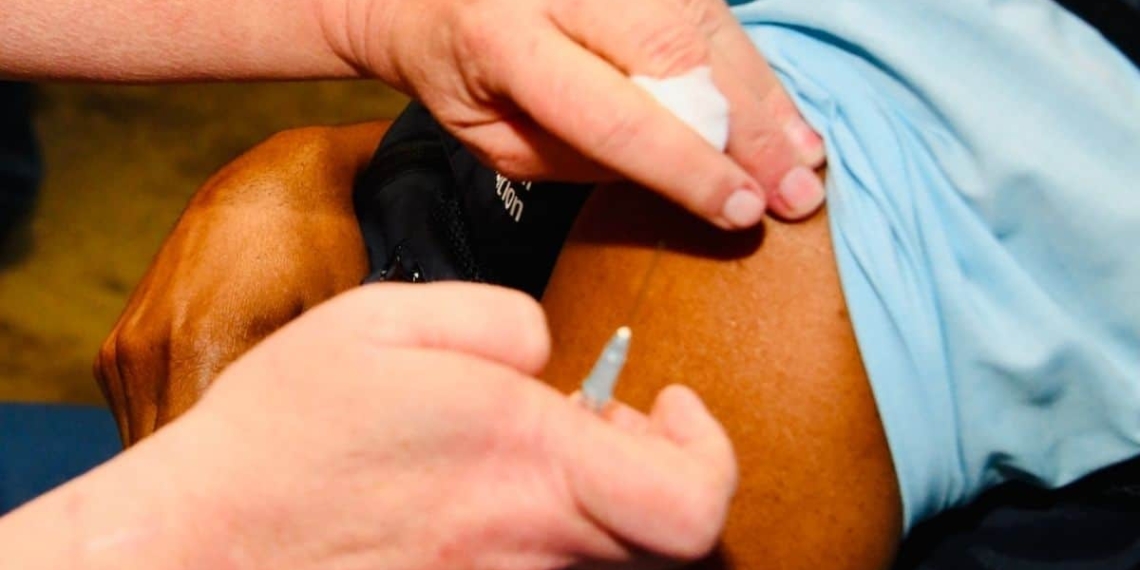

While the country is on high alert following a dramatic rise in Covid-19 infections, many South Africans are still not registered to receive the vaccine. Also, a new study found that one in every three South Africans are hesitant to take the Covid-19 vaccine.
Earlier, health Minister Dr Zweli Mkhize encouraged all South Africans over 60 to register themselves for the vaccination. However, misinformation seem to hamper the new phase of government’s vaccine roll-out efforts.

According to the latest report by the National Income Dynamics Study, 29% of people are still reluctant to take the vaccine.
They seem to be concerned about possible side effects of the vaccine. Researchers found that a large number of the surveyed people also did not believe that the vaccine worked.
Food For Mzansi checked in with award-winning health journalist, Mia Malan. She is the founder and editor-in-chief of the Bhekisisa Centre of Health Journalism.
ALSO READ: Farmers vow to help workers with vaccine registration
Nicole Ludolph: There is a lot of misinformation about the vaccines. One of the aspects contributing to people’s reluctance is the speed at which it was created. What is the one thing people should understand about this?
Mia Malan: It’s important for people to know that vaccines could be developed fast, in a large part because of work on coronavirus vaccines that had previously been done for the SARS and MERS outbreaks (both SARS and MERS are coronaviruses), so a great deal of the work that normally takes years, had already been done.
Also, the amount of money that was invested into finding a Covid-19 vaccine was immense. For instance, the US government invested 50 times more in the development of a Covid-19 vaccine than [they have] for an HIV vaccine over decades. There has also been an extraordinary level of cooperation among funders, researchers and governments that we’ve never seen before.
How concerned should people be about developing blood clots should they take the vaccine?
In short, the risk of a blood clot from a Covid-19 vaccine is about eight to ten times lower than the risk for a blood clot when you actually have Covid-19.
For the Johnson & Johnson jab, the risk is about one out of a million for the general adult population, and seven out of a million for women between 18 and 48.
That’s a very small risk. But that doesn’t mean we shouldn’t take this risk seriously.
It’s important that we screen people well for the risk before vaccinations and also monitor them well after vaccinations, particularly in the case of women below 50.
That’s why SAHPRA, our regulator, required the Sisonke researchers to implement better screening and monitoring methods after the trial restarted following a two-week pause to investigate the safety of the J&J vaccine.
What is your opinion on a recent declaration that vaccinated Americans no longer need to wear masks?
I have no particular opinion, other than that the CDC considers its guidelines very carefully, and that experts say the mask wearing could likely differ for different seasons, depending on the environment a particular season creates for infection. The emergence of new variants, and how resistant they are to vaccines, will also influence such guidelines.
For more information on the fight against Covid-19 and the vaccination process, click here for more answers to your blood clot questions.