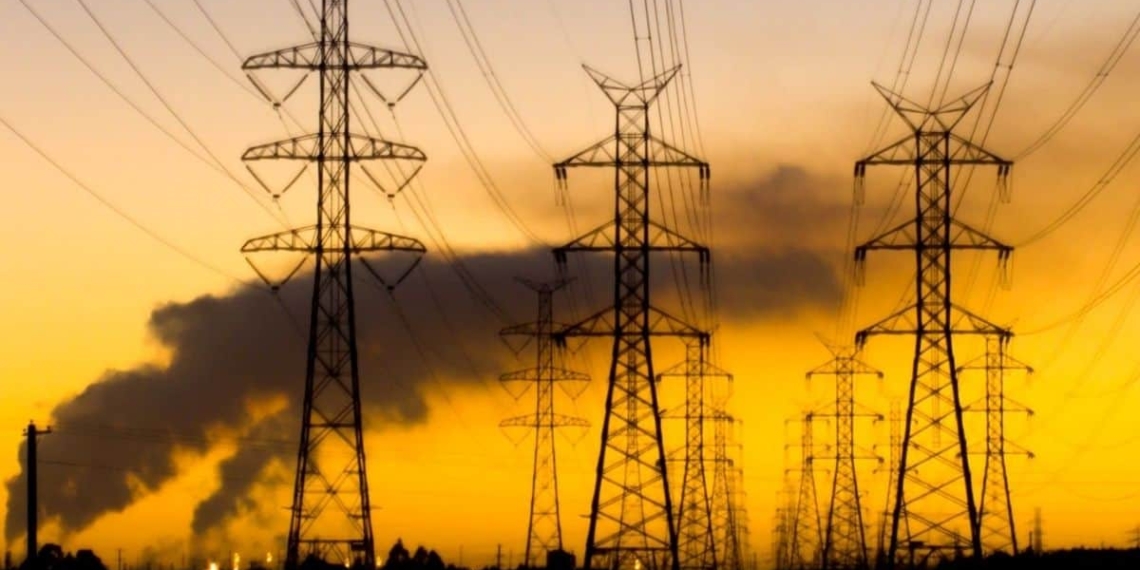
Farmers are by far Eskom’s “most raped” customer, and they should do everything within their power to get off the grid. Energy expert and mining consultant Ted Blom made strong statements against the power utility in a recent Farm Spaces podcast and subsequent interview with Food For Mzansi.
“[Farmers] are charged the highest rate per kilowatt hour and seasonal farmers pay peak demand charges over 12 months, meaning they are penalised for 11 months of the year.”

He added that farmers who have paid for lines are also charged maintenance fees. Yet, in some parts of the Eastern Cape farmers are facing serious production challenges due to service delivery issues.Lines providing electricity to farms are planted in servitudes that are the property of Eskom but due to a lack of maintenance, the lines become damaged and unstable and even fall down periodically. This leads to power outages, recurrent blackouts and fires, all of which are compromising efficient farming operations.
“Eskom has decentralised their services by outsourcing the clearing of the servitudes to traditional leaders in the area. These leaders are not doing the work they are being paid to do, and if farmers take matters into their own hands and clear the brush themselves, they are liable to be charged with trespassing and tampering, facing a fine or, at worst, a criminal record,” he said.
ALSO READ: Load shedding: ‘Eskom is going to finish off farmers’
We cannot leave farmers powerless
The agricultural sector, which is estimated to contribute about 12% to the national GDP, is the apex of the food value chain and a crucial element in food security. The maintenance of the cold chain, therefore, is critical to ensuring food quality and shelf life.
Due to these reasons, Blom encourages farmers to “get off the grid and look for alternative solutions to meet their energy needs”.
He is currently looking at the development of a cost-effective hydrogen system to mitigate the energy crisis. “The hydrogen energy system which runs off a gas cylinder no bigger than a soda stream cylinder, will provide a more reliable power supply for farmers than Eskom. This type of energy generation also holds environmental benefits, which are equally important to ensure a sustainable future,” he said.
Still waiting to be connected
One farmer experiencing Eskom problems first-hand, is Sinelizwi Fakade, a developing grain farmer from Ugie in the Eastern Cape. He is currently not an Eskom line user but wishes to be.
When he purchased his farm, there was no electrical infrastructure, and he installed a solar system to the tune of R400 000 for irrigation and silos on the farm.

Due to the challenges of running a business entirely on solar and to augment the limited power, he applied for a 300 kVA line to be installed as part of Eskom’s subsidy offered to previously disadvantaged farmers. “Eskom is a huge expense for a developing farmer. Such investment costs are exorbitant for a new entrant like me,” he said.
Fakade applied to the power utility eight months ago and has seen no progress since. “While the initial process of applying was seamless, the challenge has been obtaining feedback. I have been phoning and liaising with the officer in charge to no avail. I can’t speak to post-installation woes because I haven’t even made headway with the application,” he said.
Eskom replied to Food For Mzansi’s request for comment by saying, “All of Eskom’s charges and electricity provision activities are regulated and approved by the National Energy Regulator of South Africa, in terms of the applicable legislation. Maintenance of Eskom infrastructure remains the duty of Eskom, and is executed as required.”
Going off the grid not always possible
Farmers’ complex relationship with grid power was highlighted earlier this month when Chris Schutte, director of green power plant provider SONFIN, said not even mega farmers can easily afford to rely on alternative energy alone.
“It is more economically viable to remain connected to the Eskom grid than it is to run independently – the batteries to go off the grid are extremely expensive. Battery backup is a huge problem for big farmers and that’s why you need a grid that ties to the Eskom grid so it can run parallel to Eskom.”
ALSO READ: Load shedding: How to farm off the grid
Sign up for Mzansi Today: Your daily take on the news and happenings from the agriculture value chain.