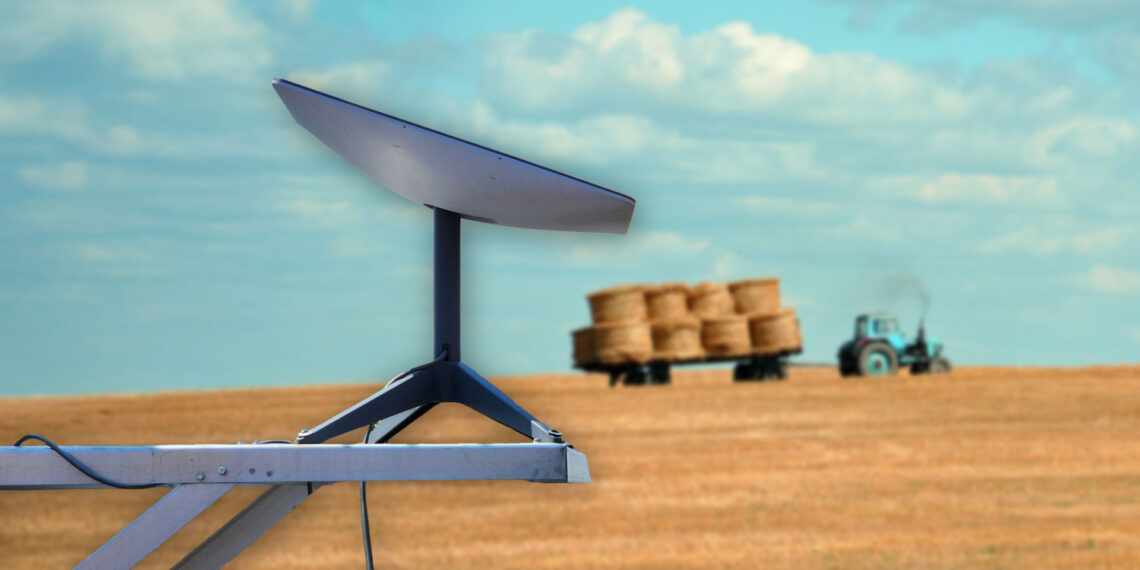
As the debate rages on over whether the government should allow Starlink to operate in South Africa, experts and leaders in the agricultural space have mixed emotions on what could be the way forward. Some cite that the company could improve poor network connectivity on farms.
Rebaone Alecia Paul, a livestock and crop farmer on Ditlharedintsi farm near Ganyesa in North West, said she faces daily challenges due to poor network coverage.
“Reliable internet and cellular communication have become essential in modern agriculture, not just for marketing and communication, but also for using technology like livestock tracking systems, weather updates, online banking, and staying in touch with buyers and suppliers.
“In our area, weak or no signal means I often have to drive kilometres just to send an email, access online markets, or upload documents,” she said.
Paul said that sometimes, even getting veterinary advice or urgent input from agricultural support services is delayed due to poor connectivity.
“I strongly believe that the government should consider bringing in companies like Starlink. Connectivity is no longer a luxury. For us farmers, especially in rural South Africa, it’s a lifeline.
“As a young farmer, it’s disheartening to be cut off from networking with other farmers or attending virtual training sessions,” she said.
Noko Masipa, a member of the provincial legislature in the Western Cape and portfolio chairperson in agriculture, said Starlink’s high-speed, reliable satellite internet can significantly enhance rural safety by enabling digital surveillance and rapid communication to combat livestock theft and farm-related crime.
Pros and cons of connectivity
“Bridging the digital divide with solutions like Starlink supports not only economic growth but also long-term sustainability for rural livelihoods. Stable connectivity becomes more than a convenience; it’s a critical enabler for rural development and resilience.
“Improved digital infrastructure would empower farmers with tools such as remote livestock monitoring, GPS tracking, health diagnostics, and access to real-time market prices, enabling better herd management, reduced losses, and improved productivity,” he said.
According to Masipa, bridging the digital divide is therefore not just about economic growth; it is about long-term sustainability for rural livelihoods.
“The broader economic imperative cannot be ignored. The government of national unity has made a clear commitment to growing the economy and creating jobs,” he said.
Related stories
- 5G rollout to propel agritech development in Africa
- How satellite-enabled apps can improve agriculture from space
Professor Lerothodi Leeuw of the University of the Western Cape’s department of physics and astronomy said that while there is excitement about the company helping rural communities in South Africa struggling with network connectivity, astronomy experts are raising concerns about the unintended consequences of satellite constellations on the country’s world-class radio telescopes.
“South Africa has invested significantly in its radio telescope infrastructure, and authorities have implemented strict regulations to minimise interference from terrestrial sources. Some scientists have already approached Starlink to explore solutions, leading to adjustments in satellite design.
“There is potential to mitigate the problem by turning off satellites for just a few seconds as they cross the region, without affecting transmission elsewhere,” Leeuw said.
Leeuw further noted that a balance between global connectivity and preserving the integrity of astronomical research is a delicate one, and finding solutions will require coordinated effort between governments, scientists and satellite providers alike.
Due processes must be followed
Meanwhile, telecommunications expert Takalane Nemangowe said that for the interest of communities in rural areas and farms, any service provider who provides clear and undisturbed services will be a win.
According to South Africa’s Electronic Communications Act, foreign telecommunications companies must have at least 30% of their local subsidiaries owned by historically disadvantaged South Africans to obtain operating licenses. However, Starlink, operated by Elon Musk’s SpaceX, has not met this requirement, resulting in challenges in securing the necessary licenses.
“It is understandable why farming communities will urgently need service providers to come through to their rescue, we see that a lot of farms are cut of network, making it extremely difficult to operate their companies, more so it becomes a security risk when one cannot get connected with other people while we know our country’s crime is way out of hand.
“However, regulations and laws are there for a reason, and Starlink cannot be an exception; it needs to follow what the laws of the country stipulate for it to do business here,” Nemangowe said.
READ NEXT: Climate change threatens half of SA’s food production
Sign up for Mzansi Today: Your daily take on the news and happenings from the agriculture value chain.