Geo-political tensions have caused a storm of food, energy, and financial crises in Africa, writes agriculture, land reform and rural development minister Thoko Didiza. Going unmanaged, these crises have the propensity to erode the gains made towards achieving food security and development goals.
In the aftermath of the Covid-19 pandemic, world hunger increased substantially. Estimates from the State of Food Security and Nutrition around the World reveal that as many as 161 million people fell into hunger between 2019 and 2020, bringing the world’s total to 811 million people facing food insufficiency.
In other words, about one in ten people in the world went to bed without enough nutrition in the first year of the Covid-19 pandemic. South Africa is facing several challenges in relation to food security. Adverse economic impacts are experienced and this negatively affects income and the food security situation.
The rise in agricultural commodity prices, domestically and globally, along with rising fuel costs, presents significant upside risks to consumer food price inflation due to the Russia-Ukraine war.
The series of shocks, socioeconomic impact, and unemployment have resulted in food insecurity in the country, which generally undermines the livelihoods of households.
However, in the midst of all the shocks and hazards, South Africa continues to meet food requirements at national level, with a combination of domestic food production and imports.
Out of about 60 million people in South Africa, households with inadequate or severely inadequate access to food increased from 13.6 million in 2020 to 14.4 million in 2021 (Stats SA, 2021).

Actions to be taken to address food insecurity
The pressures to the continental food insecurity situation are real, but the challenge of growing hunger in Africa does not need to become a worse tragedy.
Countries have learned from past experiences and national governments, and the international community should act in unison to deal with the challenge of food insecurity. Responses should include the following:
Humanitarian assistance and social protection
In the short term, countries need to provide humanitarian assistance and effective social protection measures to effectively improve food security and nutrition.
To avoid a significant disaster, national governments and the international community must focus on employment and income protection for the citizens whose livelihoods have been negatively affected. These could be through self-employment programmes, unemployment insurances or cash transfers.
Investment in agriculture
Over the longer term, countries will need to invest in agriculture and related sectors, as well as in water, health, and in education services to reduce vulnerabilities, and build capacities and resilience to withstand shocks from climate change and conflicts, as well as economic downturns and slowdowns.
In addition, there needs to be readiness to protect the health and education of members of households under food stress to avoid long-term consequences of the food shock.
Enabling policies and investments
It is evident that Africa’s food systems are rapidly evolving towards intensified production-driven systems, as such strengthening resilience of food systems through support of the local value chains is critical.
Last year we presented the African common position on food systems to the UN Food Systems Summit, where the African continent showcased a strong commitment to dealing with issues of food and nutrition security, as well as climate change, among other things.
In the longer term, policies and investments to make local food systems more resistant to climate change and external shocks is key.
Action across various sectors
There is a need to develop and implement cross-sectoral strategies at the national, regional and global levels. Food security not only carries significant benefits for human health, but also serves as the basis to achieve sustained economic growth.
For this reason, it is essential that we understand that a food security strategy needs to be seen as more than a single-sector issue; it requires a combination of coordinated actions in various sectors.
Farming smart and nutrition interventions
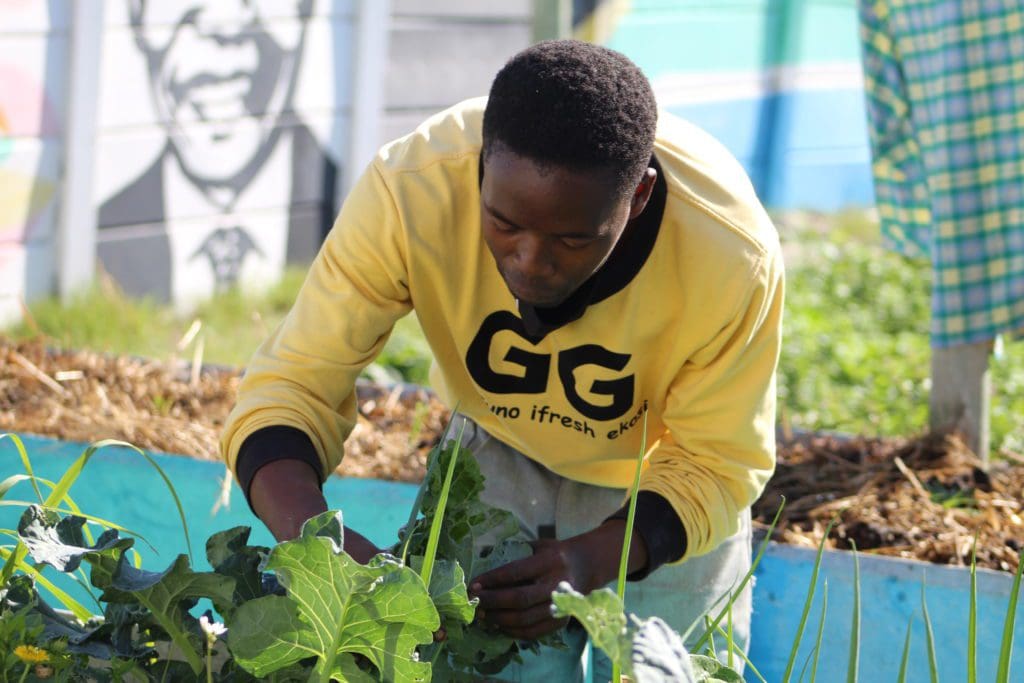
There is also a need for advanced climate-smart food production practices in urban and rural areas and awareness raising about the support that can be accessed by smallholder farmers.
Expand high-impact nutrition interventions that target children under age five, adolescent girls and women of reproductive age to accelerate stunting reduction in the region.
The role of traditional, indigenous crops
Food insecurity and hunger continue to be a challenge not only for South Africa but globally.
Generally high levels of poverty continue to worsen due to low economic growth rates, high level of unemployment, rising inequality, increasing frequency and intensity of shocks, weak social protection systems, and poor provision of basic services.
In this regard, there must be intentional investments towards increased productivity and production in traditional and indigenous crops.
This is because the continent’s food systems and those directly dependent on them are still vulnerable to environmental degradation and climate change shocks such as droughts and floods, which are projected to increase in both frequency and intensity.
- Thoko Didiza is the minister of agriculture, land reform and rural development. Didiza delivered this speech at a high-level food and nutrition conference in Addis Ababa, Ethiopia. The views and opinions expressed in this article are those of the author and do not necessarily reflect the views or positions of Food For Mzansi.
ALSO READ: World Food Day: ‘Africa shouldn’t be importing food’
Sign up for Mzansi Today: Your daily take on the news and happenings from the agriculture value chain.