While the World Food Programme warns of worsening levels of acute food insecurity, South Africans are pulling out all stops to support charity initiatives as part of today’s World Food Day commemoration.
Across the country, non-profits, corporates and community organisations are hosting initiatives to highlight the millions of people who cannot afford a healthy diet and the need for regular access to nutritious food.
“Africa should not be importing food,” says the African Development Bank Group president Dr Akinwumi Adesina. He predicts that Africa’s food and agriculture market will reach $1 000 billion by 2030.
“If there is one thing Africa can do, it is to help the world feed itself. Africa offers … enormous opportunities in agriculture, with 65% of the world’s uncultivated arable land still available to feed the world’s population, so its actions will determine the future of global nutrition.”
FarmSol invests in a food-secure future
Meanwhile, FarmSol highlights that the World Food Day commemoration also coincides with its six-year anniversary of “being at the forefront of supporting black farmers to become more sustainable commercial producers.”
Over the past six years, FarmSol has paid over R100 million in profits to smallholder and up-and-coming farmers participating in its programmes, bringing about significant improvements in poverty alleviation, raising incomes, and improving food security.
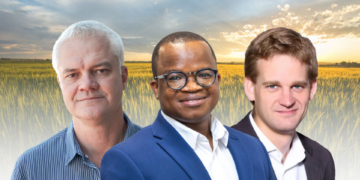
FarmSol managing director Aron Kole says the organisation plays a crucial role to connect new era farmers to markets – a critical component in ensuring food security. It will continue to play this role as part of its contribution to alleviating hunger and poverty and building a stronger South Africa, says Kole. “This is of extreme importance in a country with approximately 11% (6.5 million) of its population suffering from hunger and food insecurity and an unemployment rate of 34%.”
As the leading grain farmer development company in South Africa, FarmSol has expanded its network of partners over the years to include Siqalo Foods, South African Cultivar Technology Agency, the Maize Trust, Oil and Protein Seeds Development Trust, and Oilseeds Advisory Committee, among others.
FarmSol is also an implementing partner of South African Breweries, providing production loans, access to markets, and mentorship to farmers in all nine provinces covering about 53 000 hectares of maize, barley, and sunflower crops.

Fast-forward with FoodForward SA
In the Western Cape, FoodForward SA launched a food-banking facility to better connect “the world of surplus to a world of need.” The Cape Town-based unit of 1 600 square metres will help the non-profit food redistribution organisation to scale its impact across South Africa.
“The new facility is an evolution of how we innovatively address food insecurity, allowing for larger warehouse space and cold chain capability, while also having our national head office under the same roof,” said Andy du Plessis, managing director of FoodForward SA.
“This impetus will allow for further scaling up of our unique food-banking model, making sure that we reach millions more suffering from malnutrition and severe hunger.”
FoodForward SA addresses widespread food insecurity using a unique model that involves the in-time recovery of quality, edible surplus food from the consumer goods supply chain and redistributes it to local organisations that implement feeding programmes in under-served communities. It provides this edible surplus food to 2 750 charities within its national network every month, reaching 950 000 vulnerable people daily with healthy, nutritious food.

Unlocking the power of ‘collaborative action’
Meanwhile, the Do More Foundation is currently preparing over 570 000 meals for people in eight provinces. This “collaborative event” has 18 partners, including RCL Foods, CHEP and Buckman who have recruited volunteers. The meals will go to early-childhood development centres.
The foundation has also partnered with Meals on Wheels who will be cooking 140 155 litres of soup at sites in Kwa-Zulu Natal, Eastern Cape, Northern Cape, Western Cape and Gauteng. This is in addition to food gardens being built.
Recent child mortality audits also show that almost a third of children who die are severely malnourished, says Do More Foundation partnership manager Iris Naidoo.
“These markers showcase the need for us to work together and use the power of collective action to find sustainable solutions. World Food Day gives us the opportunity to raise awareness about these issues and highlight the role of collective impact in addressing the problems head-on.”

Tech world addressing food challenges
The range of food-related concerns addressed by the technology community continues to grow, says Google South Africa’s country director, Alistair Mokoena. This spans from improvements across the agro-ecosystem to choosing more sustainable dishes by consumers.
“It is clear that food and agriculture companies need solutions throughout the whole farm to table journey to help them make food production more efficient,” says Mokoena. This, after the internet giant commissioned new research to unlock value through digital transformation.
According to Mokoena, these companies should “adapt to shifting trends in consumer diets and how and where they buy their food, [and] build in flexibility and resilience in an increasingly unpredictable world of weather events, trade restrictions, [and] even wars – all of this while reducing the environmental impact across the agri-food value chains.”

Hlophe supports household food production
Meanwhile, Mbali Hlophe will on Tuesday lead a high-level delegation visiting four food production initiatives in the Sedibeng district of Gauteng. Hlophe is the newly-appointed MEC for social development, agriculture and rural development and environment in the province.
She will be flanked by agriculture, land reform and rural development minister Thoko Didiza.
The projects in Emfuleni, Lesedi and Midvaal will receive agricultural inputs to promote household food production as part of the World Food Day commemoration. In addition to this, some households will receive food parcels and other support to grow home food gardens.