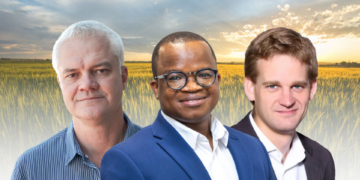
The hemp planting season is here, and farmers are gearing up to sow their fields. However, securing an off-take agreement is a crucial step to complete before planting begins. Dr Siphe Zantsi, an agricultural economist in the economics analysis unit at the Agricultural Research Council (ARC), explores essential details of this process.
Hemp is a new agricultural crop that farmers now can consider planting. It is envisaged to be a game-changer by policymakers and development practitioners due to its high value, which can be a panacea for income and jobs –contributing to the growth of rural economies.
However, there’s not much information about its market, yet it is the very first issue that a farmer needs to address before putting a seed into the ground. In this piece, we discuss some of the issues that farmers wishing or having already planted hemp must consider.
Hemp is one of the cannabis sativa. L species and is a multipurpose industrial crop. Its stem (stalk) is used for extracting fibre in the textile industry and the seeds are used for extracting oil.
The oil fetches higher prices than stalk but yields are higher for stalk than seeds. Yield is manipulated by agronomic practices, so it is important that the farmer is clear from the get-go about which part of the plant s/he wants the most. All of this is also influenced by the type of market one wants to supply.
Securing a market and seed access
Hemp is an industrial crop – meaning there is limited use for household consumption, unlike other crops like vegetables and maize that can be sold in informal markets, for example to hawkers. This entails that a farmer must first secure a market before planting.
This process of securing a market includes negotiating and signing an off-take agreement with a legitimate buyer – a process which the majority of small-scale farmers are not familiar with. Smallholders in South Africa, irrespective of what crop or livestock they farm with, mainly sell to informal markets.
Such an agreement spells out the conditions of the market for example the price of hemp per tonne, the form in which hemp is required: raw, retted, semi-processed, baled or in bulk and so on.
Other factors include quantities to be bought and transportation. These are issues the farmer who has started planting hemp or is planning to plant needs to sort out.
Related stories
- How Fluence’s LED solutions are boosting indoor cannabis farming
- Cannabis law: Traditional farmers still left out
In many parts of the country, farmers who hold permits to plant hemp might have started to plant, especially farmers from the Eastern Cape who have access to hemp seeds thanks to the bulk imports done by the Eastern Cape Rural Development Agency.
Since the only registered hemp seed varieties are from the Agricultural Research Council and have just been registered (in October) and are not yet available for sale, farmers are only dependent on imported seeds. To do so, they must obtain an import authorisation permit from the department of agriculture.
Small-scale farmers: Power in collaboration
To determine if you will make money or not, farmers need to know the distance to the market. Markets longer than 100km mean that a farmer will spend a larger share of their income on transportation. This will even be more costly if the production scale is smaller than 10 hectares. This means that small-scale farmers might need to send their produce to the market as a group to cut costs.
Hemp is a relatively new crop in South Africa, it was only declared as an agricultural crop in 2021 and as of 2024 November, only 1110 permits have been issued by DALRRD to farmers wishing to plant hemp. So, there are not many legitimate and reliable markets for hemp, or it is difficult to ascertain that for the very same reasons that hemp is a relatively new crop in the country.
Farmers also have to be on the lookout for fly-by-night markets who would want to take advantage of the situation knowing they are desperate to sell.
In my view, it would help if provincial agriculture departments could scrutinise all the hemp markets, negotiate on behalf of small-scale farmers, and ensure that the off-take agreements are valid and companies involved are legitimate at least for the first few years in the development of the hemp industry.
Finally, it is now an opportune time to revive the idea of an agri-park that the government had lined up a couple of years ago. This was meant to deal with the challenge of market access and distant markets from small-scale farmers especially those from former homelands.
While this will still serve all small-scale farmers’ market needs, it could help to develop the hemp industry and unlock its potential as it has been envisaged by President Ramaphosa in his 2022 State of the Nation Address.
- Dr Siphe Zantsi is an agricultural economist at the Agricultural Research Council’s economic analysis unit. The views and opinions expressed in this article are those of the author and do not necessarily reflect the views or positions of Food For Mzansi.
READ NEXT: Malnutrition, food poisoning: A deadly and costly challenge in SA
Sign up for Mzansi Today: Your daily take on the news and happenings from the agriculture value chain