Tuesday, July 21, 2026
SUBSCRIBE
22 GLOBAL MEDIA AWARDS
Food For Mzansi
  • News
  • Changemakers
  • Lifestyle
  • Farmer’s Inside Track
  • Food for Thought
No Result
View All Result
  • News
  • Changemakers
  • Lifestyle
  • Farmer’s Inside Track
  • Food for Thought
No Result
View All Result
Food For Mzansi
No Result
View All Result
in News

How to keep an agri college healthy and growing

As Mzansi’s agri colleges came into the spotlight in recent months - some of them for the wrong reasons - other leading institutions are keeping quality education for future farmers alive and well. Food For Mzansi asks one of them how they do it

by Tiisetso Manoko
6th September 2022
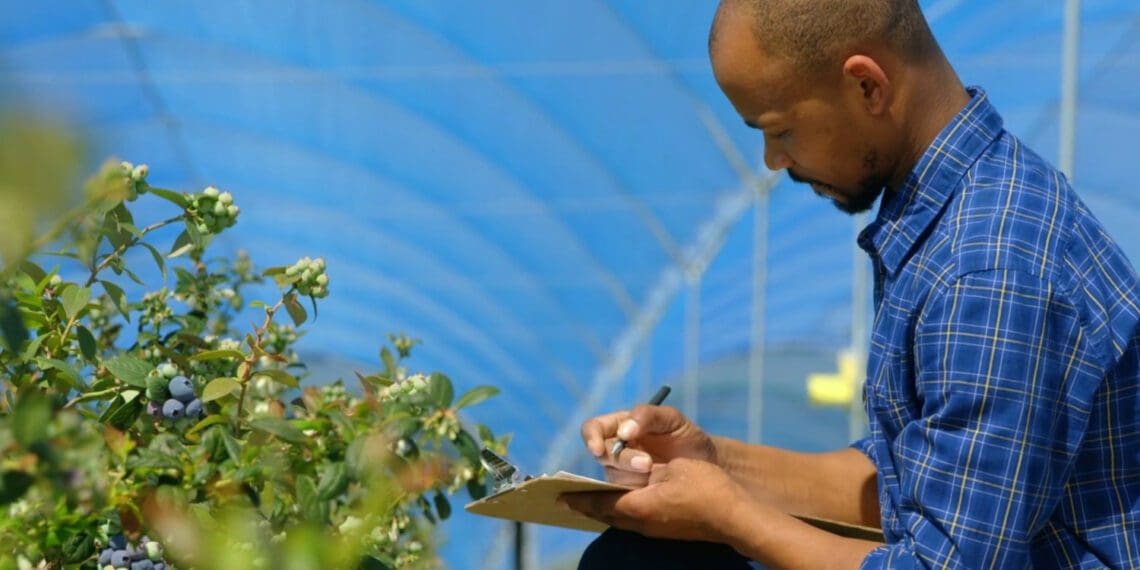
The Elsenburg Agricultural Training Institute in the Western Cape actively strives to produce workplace-ready students. Photo: Supplied

The Elsenburg Agricultural Training Institute in the Western Cape actively strives to produce workplace-ready students. Photo: Supplied

Share on FacebookShare on TwitterShare on WhatsApp

The quality of education at Mzansi’s agri colleges, unemployment amongst agricultural graduates, and a debate about whether the department of higher education and training should take over the management of agri colleges across the country.

As issues like these came into the spotlight in recent months, some leading institutions are keeping quality training for the future farmers of Mzansi alive and well. Food For Mzansi spent some time Hayley Rodkin, chief director for agricultural education and training at the Western Cape department of agriculture, to find out how their Elsenburg Agricultural Training Institute does it.

Rodkin says the institution is actively positioning itself as the top agri college in the country and is putting students at the heart of the day-to-day operations.

Management is also working around the clock to add new courses – such as occupational certificates on orchard and vineyard foremanship and livestock farming – to the curriculum, which will get students ready to thrive in the workplace form the get-go.

Rodkin spoke to Tiisetso Manoko and answered five quick questions.

What are your biggest challenges and how do you work around them?

The recruitment of students with appropriate academic profiles from the historically disadvantaged group into the formal education and training programmes remains a challenge. Budgetary and human resource capacities are another element of challenge.

However, the college and the Western Cape department of agriculture are continuously promoting agriculture as a lucrative sector to work in, with numerous careers that exist within the sector.

The department and the college are also engaging [continuously] with school kids through career exhibitions to highlight agriculture as a career choice.

Where do you think you need to improve as a college?

We need to increase our accommodation availability. We need to increase the reach of Bachelor of Agriculture and diploma students by providing telematic classes at our decentralised centres and increase the offering of learnership programmes to create articulation opportunities for the students in the province.

Hayley Rodkin, chief director for agricultural education and training at the Western Cape department of agriculture. Photo: Supplied

The Western Cape is an agricultural province. What are you doing differently to ensure that as many young people as possible, especially in far-flung areas, get access to learning about agriculture?

The college has successfully facilitated short courses in agriculture at the four decentralised centres, situated in George, Oudtshoorn, Bredasdorp and Clanwillian, as well as the main campuses.

The college recently implemented successful recognition of prior learning where workers within the industry got the opportunity to be assessed on their experience and prior learning to obtain a full or part-time qualification.

Do you think placing agricultural colleges under the auspices of the department of higher education and training will be beneficial to the colleges?

The discussion around this topic is taking place on various levels and I am aware of the current narrative, but agricultural colleges will not be best served if they were shifted to the department of higher education and training. This is more so, given the significant role of the (agricultural) industry in the delivery of the curriculum at these colleges.

What have been your milestone as a college?

One of the biggest highlights will have to be the successful three-year diploma, which includes workplace-integrated learning in the third year on farms across the province. [Also, the] successful completion of the 2020 and 2021 academic year in the same calendar year, and still producing good results. This could not have been done without implementing a hybrid model of teaching and learning, which combined online and contact classes.

[Other highlights include] developing and improving partnerships with stakeholders in and out of the industry to ensure that students, and the college at large, benefit from such.

ALSO READ: New policy could revive neglected agri colleges

Sign up for Mzansi Today: Your daily take on the news and happenings from the agriculture value chain.

Tiisetso Manoko

Tiisetso Manoko is a seasoned journalist with vast experience in community media. He possesses diploma in media studies majoring in journalism, certificate in civic leadership. He loves news from all angles with particular interest in local government, agriculture and politics. He is a staunch Mamelodi Sundowns Football club supporter.

The Forest of Renewal at Rustlers Valley celebrates the intertwined legacies of Frik Grobbelaar, Anton Chaka and Riky Rick, inviting South Africans to restore the land while cultivating hope, belonging and community. Illustration: ChatGPT
Food for Thought

Rustlers Valley offers a blueprint for South Africa’s renewal

by Ivor Price
18th July 2026

As the Rustlers Valley Memorial Forest is launched in the eastern Free State this weekend, Ivor Price reflects on why...

Read moreDetails
Grain SA appoints Mabuza to lead farmer development

Rising stars: 2026 PGP finalists redefining SA grain farming

18th July 2026
Rooibos heads to space in groundbreaking Mzansi experiment

Rooibos heads to space in groundbreaking Mzansi experiment

18th July 2026

Seriti Institute CEO wins prestigious Best Woman 2026 CSI award

17th July 2026
Farmers and brewers call for budget that builds, not breaks

Minister details Land Bank’s success in boosting black farmers

17th July 2026

Minister details Land Bank’s success in boosting black farmers

Rustlers Valley offers a blueprint for South Africa’s renewal

How this KZN agricultural advisor is bringing tech to rural fields

Climate change: SA’s food processors are feeling the heat

Mother’s legacy, neighbour’s grace: Venessa Simelane’s farm story

Join Food For Mzansi's WhatsApp channel for the latest updates!

JOIN NOW!
Next Post
Ecological farming is a way of working with nature in agriculture, while increasing crop yields. Photo: Pixabay

Explore how ecological farming can make a difference

THE NEW FACE OF SOUTH AFRICAN AGRICULTURE

With 21 global awards in the first six years of its existence, Food For Mzansi is much more than an agriculture publication. It is a movement, unashamedly saluting the unsung heroes of South African agriculture. We believe in the power of agriculture to promote nation building and social cohesion by telling stories that are often overlooked by broader society.

Smart vineyard irrigation starts below the ground

Treat food processing as essential national infrastructure – Khoury

Farmers urged to embrace uncertainty and build resilience

SA poultry industry calls for urgent bird flu vaccine rollout

Mother’s legacy, neighbour’s grace: Venessa Simelane’s farm story

Deadline looms: Register water use by 23 July or risk penalties

  • Awards & Global Impact
  • Our Story
  • Contact Us
  • Cookie Policy
  • Privacy Policy
  • Copyright

Contact us
Office: +27 21 879 1824
News: info@foodformzansi.co.za
Advertising: sales@foodformzansi.co.za

Contact us
Office: +27 21 879 1824
News: info@foodformzansi.co.za
Advertising: sales@foodformzansi.co.za

  • Awards & Global Impact
  • Our Story
  • Contact Us
  • Cookie Policy
  • Privacy Policy
  • Copyright

Chat Options

I'm Lerato, your AI assistant!
No Result
View All Result
  • News
  • Changemakers
  • Lifestyle
  • Farmer’s Inside Track
  • Food for Thought

Copyright © 2024 Food for Mzansi

This website uses cookies. By continuing to use this website you are giving consent to cookies being used. Visit our Privacy and Cookie Policy.