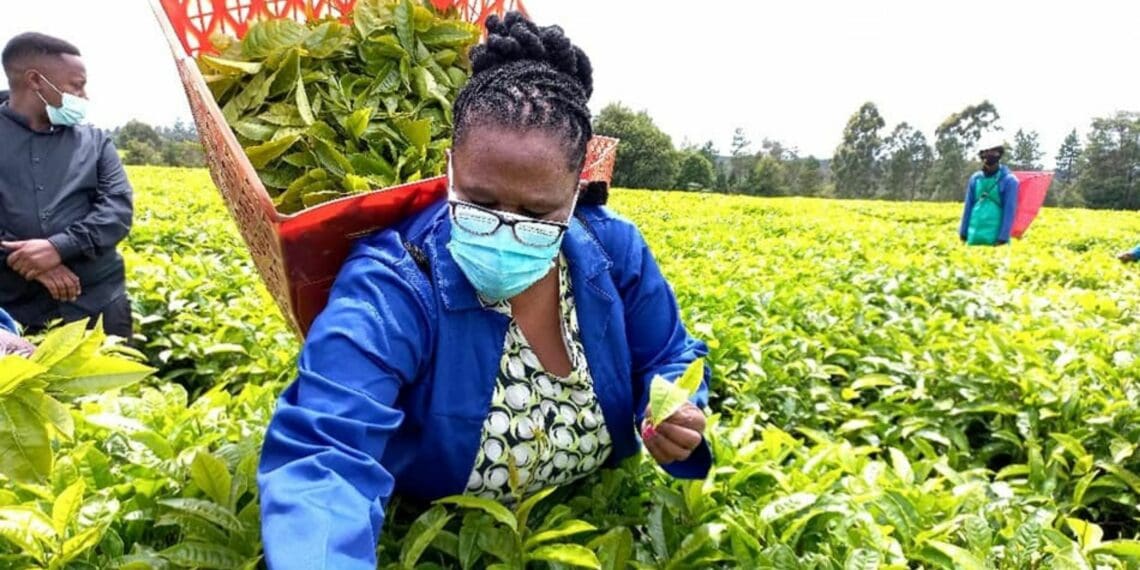
The Eastern Cape MEC for rural development and agrarian reform, Nonkqubela Pieters, announced this week that Magwa Enterprise Tea (MET) will reach breakeven point in 2024 and reduce its overreliance on government support.
Pieters was leading a tea harvesting ceremony of 1 443 hectares of tea and touring the Magwa processing factory when she said government was making inroads in the MET turnaround process.
“Government is not throwing away money by investing here. We have created employment opportunities in an economically depressed region. Through this development, Magwa has created sustainable livelihoods supporting multitudes of families. Indeed, we are making inroads, though we are not yet where we want it to be.”
Her department is engaging prospective investors and Pieters is confident that – once there is private-sector capital injected into tea production, tourism and high-value commodities – the enterprise will be able to make a profit.
MET general manager Chuma Velani announced that the Majola estate – alongside Magwa the second estate to form the MET company – has been awarded an organic tea certificate by Ecocert (an international certification body). They are hopeful that this will open doors for them to niche and export markets.
“Being one of the leaders in the tea market over the years, Magwa has embarked on an aggressive path in its marketing approach to ensure an advantage over its competitors as a single-origin product,” Velani said.
He added that by 2024, they expect to employ about 2 500 employees while other value crops and tourism planned for MET might take the employment number to 5 000.
One of the longest-serving employees in Magwa, Nontshumayelo Vonqongo, who started in 1989 as a casual worker and is now a permanent section manager, hailed the estate as a “great job creator in this region”.
“Working here has changed our lives. It has made me a better person as I have built a house for my family out of the money I earn from Magwa.”
Raisin industry to prioritise sustainability
South Africa’s raisin industry is working hard to advance its sustainable performance in future.
According to a report by FreshPlaza.com, the raisin industry deems it crucial that Mzansi’s youth are involved in sustainability strategies, on of which being the advancement of soil health. In a workshop hosted by the organisation this year, Raisins South Africa highlighted the importance of healthy soil properties, and demonstrated how different soil preparation techniques can be applied to ensure optimum use of this natural resource.
Stefan Jordaan, Raisins South Africa’s agri specialist, explains, “For any raisin grower, sustainable production over the long term is crucial, therefore soil health is at the heart of raisin production.”
Approximately 16 000 hectares are planted in South Africa with dedicated raisin cultivars including Sultana, Merbein, Selma Pete and Sugra 39.
Raisin production requires good and healthy soils, sufficient water and good climatic conditions. Without these basic resources, it would not be possible to produce quality fruit. Jordaan adds, “Safeguarding and managing our soils are key to future productivity of quality raisins.”
ALSO READ: This week’s agriculture events: 15 – 21 November
Sign up for Mzansi Today: Your daily take on the news and happenings from the agriculture value chain.